 Peruvian Images are for illustrative purposes only, may be inaccurate, and do not guarantee the presence or absence of specific ingredients.
  Serving Images are for illustrative purposes only, may be inaccurate, and do not guarantee the presence or absence of specific ingredients.
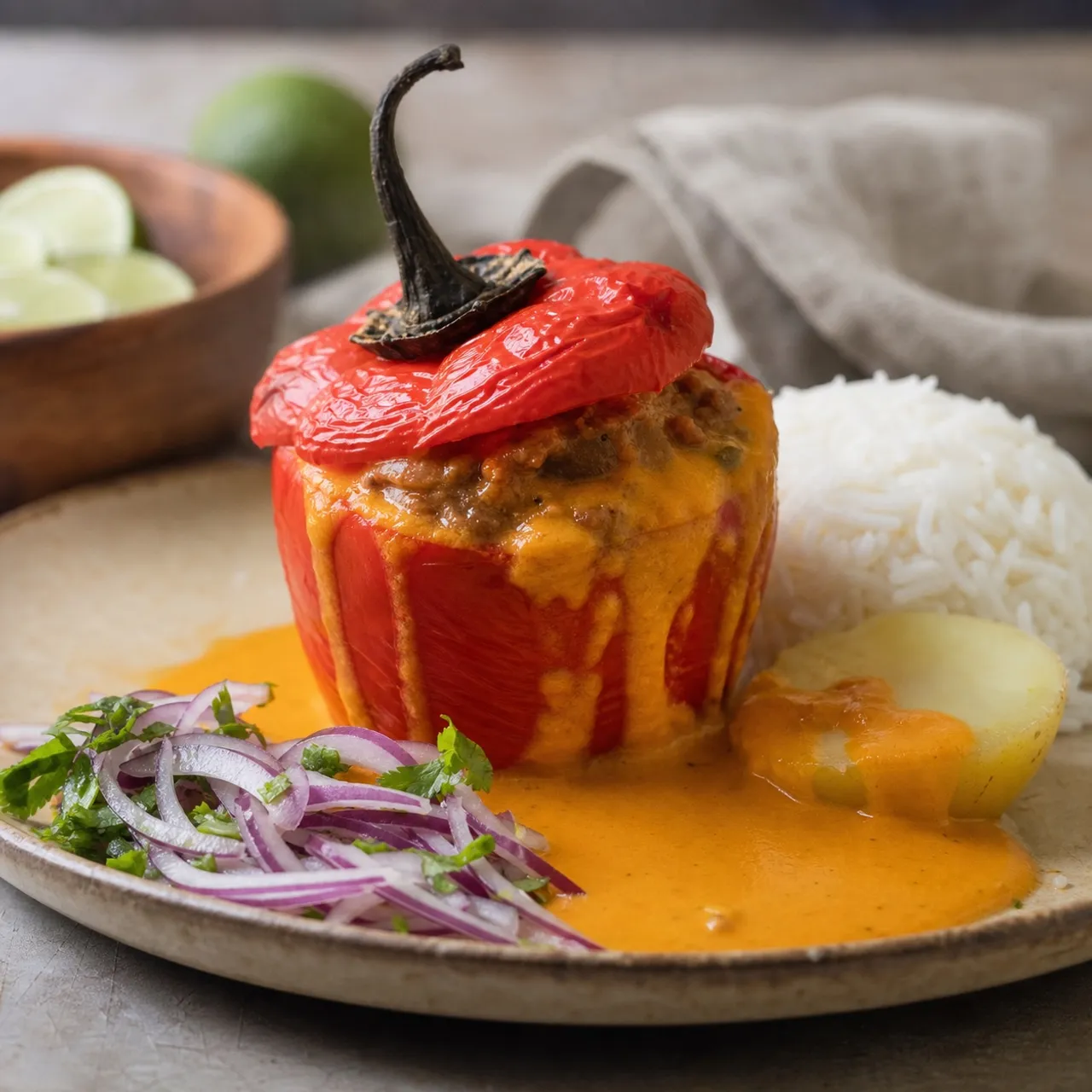
 Rocoto Relleno (Peruvian Stuffed Spicy Peppers)
Fiery rocoto peppers hollowed out and stuffed with a savory beef and cheese filling, baked until bubbling, an Arequipa signature dish.
Contains common allergens
In the app, Listahan checks these against your household automatically.
Instructions
7 steps- 1
Cut the tops off the rocoto peppers and remove the seeds and veins, taking care to handle them with gloves.
- 2
Boil the peppers in water with sugar and vinegar for 5 minutes to mellow the heat, then drain.
- 3
Cook the ground beef with onion, garlic, and aji panca paste until browned, then mix in the raisins, olives, and chopped hard-boiled eggs to make the filling.
- 4
Stuff each pepper generously with the beef filling and top with shredded queso fresco.
- 5
Whisk the evaporated milk with the beaten eggs and pour a little over each stuffed pepper.
- 6
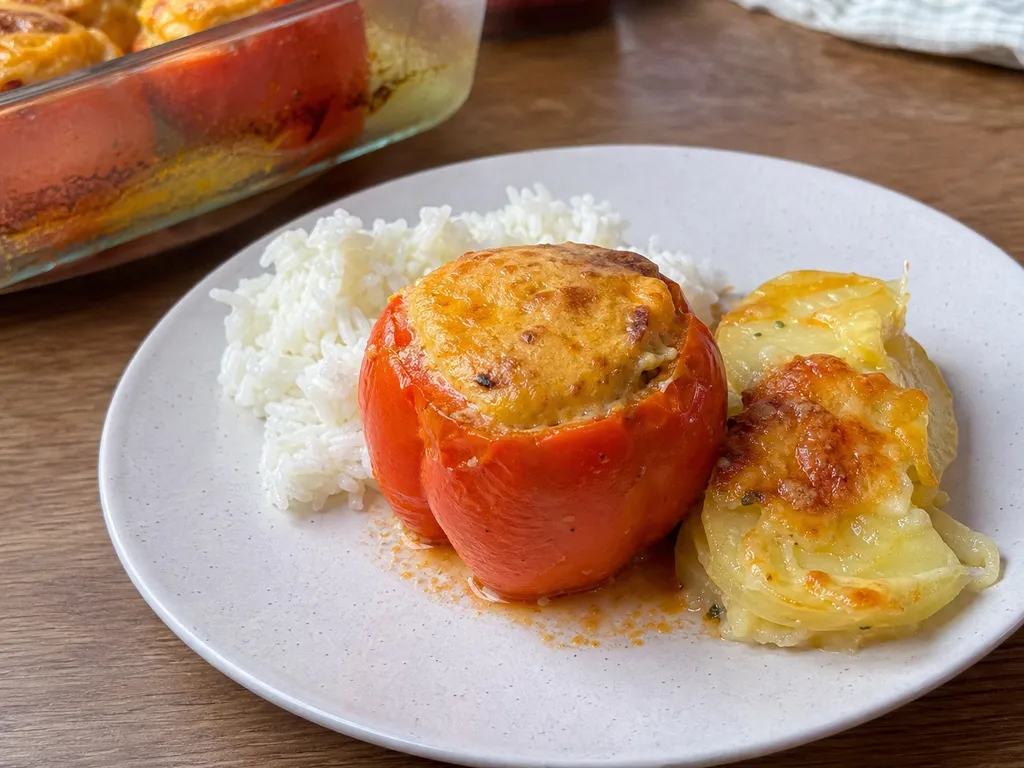
Bake at 375°F (190°C) for 20-25 minutes until the cheese is melted and golden.
- 7
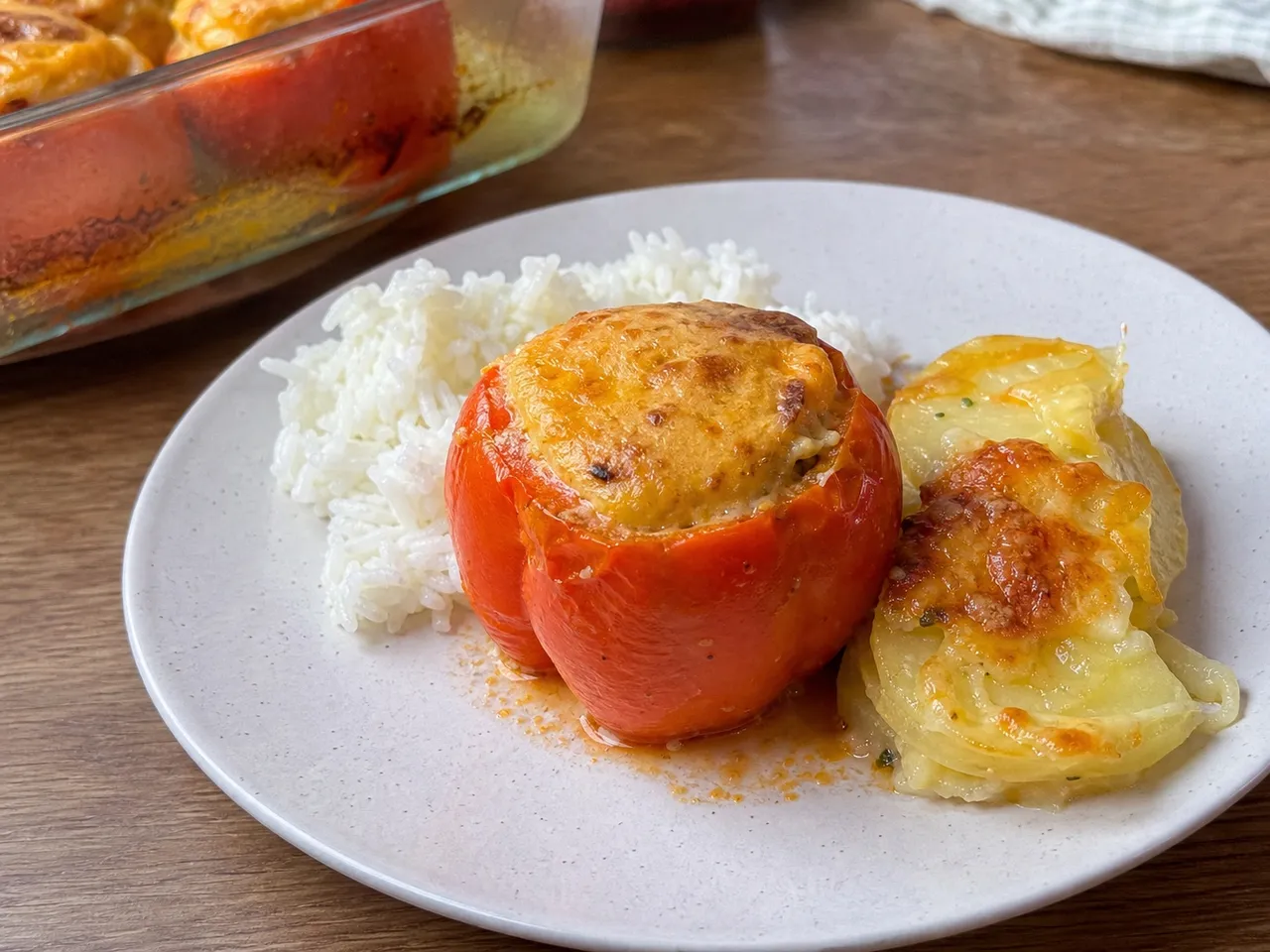
Serve hot with a slice of potato gratin or rice.
 Images are for illustrative purposes only, may be inaccurate, and do not guarantee the presence or absence of specific ingredients.
 Listahan Family Score™
62/100
Works for many families
Score reflects how well this recipe fits a typical busy household. In the app, your Family Score is personalized to your household's allergens, kids, and pantry.
Nutrition
per serving590
Calories
46 g
Protein
23 g
Carbs
34 g
Fat
Estimated per serving. Actual values depend on the brands and portions you use.
Listahan cooking guide
Chef notes & practical guide
Technique notes, ingredient swaps, serve-alongside ideas, storage guidance, and equipment for this recipe.
Cultural context
Rocoto relleno is the signature dish of Arequipa, built around the rocoto pepper, a fiery, apple-shaped chile that's notably hotter than most peppers used in Peruvian cooking and requires careful handling and parboiling to make it edible rather than punishing. The dish is a point of regional pride and a rite of passage for anyone new to Arequipeno food.
Listahan note
This version parboils the peppers with sugar and vinegar first, which is the step that determines whether the final dish is fiery-hot but balanced or simply overwhelming.
Technique cues
- Rocoto peppers carry real heat that's meaningfully sharper than jalapeno or even serrano, and their thick walls need the parboil in sugared, vinegared water specifically to mellow that heat rather than just to soften the flesh.
- Removing the seeds and white veins thoroughly, while wearing gloves, is not a suggestion - that's where the bulk of the pepper's heat is concentrated, and careless deseeding can make the dish nearly inedible.
- The custard-like topping of egg and evaporated milk poured over each stuffed pepper before baking is what sets rocoto relleno apart from a simple stuffed pepper - it bakes into a light, savory crust that Arequipa's version is known for.
Kitchen flow
- Parallel prep
- Parboil the peppers while the beef filling cooks, so both are ready to combine as soon as the peppers have drained.
- Make-ahead
- Stuff the peppers up to a day ahead and refrigerate unbaked, adding the milk-egg topping just before they go into the oven.
- Leftover move
- Reheat leftover stuffed peppers in the oven rather than the microwave to keep the custard topping from turning rubbery.
- Cleanup rhythm
- Handle and discard rocoto seeds and veins directly into a trash bag rather than the sink, and wash the cutting board immediately with soap.
Ingredient brief
Role, handling, and swap guidance for each key ingredient.
rocoto peppers
the dish's namesake and defining ingredient
Purpose: rocoto's fruity heat and thick, apple-like walls make it sturdy enough to stuff and bake while carrying far more intensity than a typical bell or poblano pepper
Handling: cut the tops off, remove seeds and veins while wearing gloves, then parboil in sugared vinegar water to mellow the heat before stuffing
Adaptation: poblano peppers are the most common substitute outside Peru for a much milder, more accessible version, though it changes the dish's core character.
ground beef
the filling's protein base
Purpose: a well-browned beef filling seasoned with aji panca gives the stuffed pepper substance and savoriness to balance the rocoto's heat
Handling: cook until well browned before mixing in the raisins, olives, and egg
Adaptation: ground chicken or turkey lightens the dish, though beef is traditional.
shredded queso fresco
the topping's melting cheese
Purpose: queso fresco's mild, slightly salty flavor and soft melt are what create the dish's signature golden, bubbling cap once baked
Handling: shred or crumble and pile generously on top of each stuffed pepper before the milk-egg mixture is added
Adaptation: a mild mozzarella or a mix of mozzarella and a little feta approximates the flavor and melt if queso fresco isn't available.
evaporated milk and beaten eggs, for topping
the custard crust
Purpose: whisked together and poured over the stuffed peppers, this mixture bakes into a light, savory custard that binds the cheese topping and adds richness
Handling: whisk thoroughly so the eggs and milk fully combine before pouring evenly over each pepper
Adaptation: a light cream mixed with a splash of milk can substitute for evaporated milk, though the topping will be slightly less firm.
raisins and black olives
sweet and briny contrast in the filling
Purpose: this pairing appears across several Peruvian stuffed dishes because the sweetness of raisins against the saltiness of olives keeps the rich beef filling from tasting one-note
Handling: stir in toward the end of cooking the beef so they stay intact rather than breaking down
Adaptation: chopped dried apricot can stand in for raisins for a different but still balancing sweetness.
Technique notes
- Wear gloves the entire time you're handling raw rocoto peppers, including washing the cutting board and knife afterward - the capsaicin lingers and transfers easily to eyes or skin.
- Don't skip the sugar-vinegar parboil even if a milder pepper is used as a substitute; it's what keeps the pepper's skin from splitting awkwardly during baking as well as tempering heat.
- Bake just until the cheese topping turns golden and bubbling, not longer - overbaking dries out the beef filling underneath the custard cap.
Ingredient swaps
- Milder heat direction
- Substitute poblano peppers for rocoto for a fraction of the heat while keeping the same stuffing and baking method.
- Dairy-free direction
- Omit the queso fresco and evaporated milk topping and finish with a light brushing of oil before baking — the dish loses its custard cap. The filling is beef, onion, raisins, eggs and peanuts; note the peanuts.
- Egg-free direction
- Skip the beaten egg in both the filling and the topping, using only the evaporated milk poured over; the topping will be thinner and less set.
Serve alongside
- Potato gratin (pastel de papa)
- White rice
- A simple green salad to cool the palate
- Crusty bread
- A cold Peruvian lager
- Chicha morada
- Sparkling water with lime
Serving suggestions only — check pairings for your household's allergens.
Storage & reheating
- Refrigerate baked stuffed peppers up to 3 days in an airtight container
- Reheat in a 350F oven until warmed through rather than microwaving, which can make the custard topping rubbery
- Not recommended for freezing; the custard topping and pepper texture both suffer
Equipment
- Baking dish
- Gloves for handling rocoto peppers
- Mixing bowls
- Whisk
Make this household-aware
Listahan Pro checks this recipe against your household's allergens, finds pantry-aware swaps, builds the shopping list, and helps you plan the week around it.
Plan it in Listahan
Add Rocoto Relleno (Peruvian Stuffed Spicy Peppers) to your week, check it against your household's allergens, and build the shopping list automatically.
More Peruvian recipes
 Peruvian Lens Verified Images are for illustrative purposes only, may be inaccurate, and do not guarantee the presence or absence of specific ingredients.
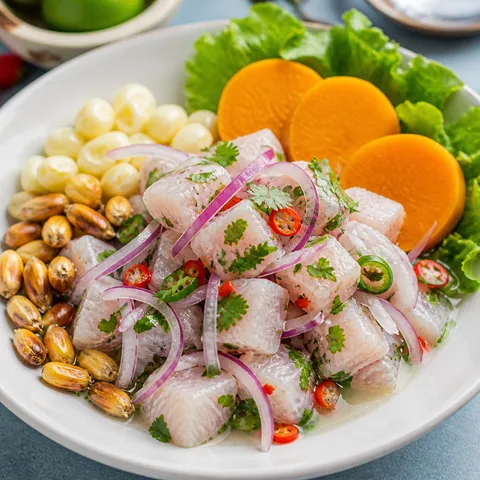
 Ceviche de Pescado
The iconic dish of Peru—exquisitely fresh, raw white fish "cooked" purely by the acidity of freshly squeezed lime juice, infused with chili heat and red onion bite.
 Peruvian Lens Verified Images are for illustrative purposes only, may be inaccurate, and do not guarantee the presence or absence of specific ingredients.
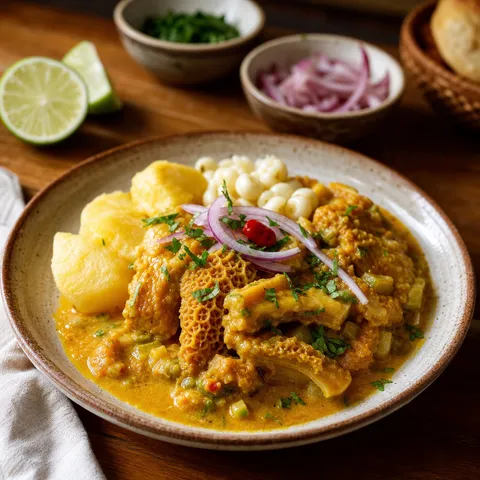
 Cau Cau (Peruvian Tripe Stew)
A hearty yellow stew of tender beef tripe and potatoes simmered in aji amarillo and mint, spooned over rice for a classic home-style meal.
 Peruvian Lens Verified Images are for illustrative purposes only, may be inaccurate, and do not guarantee the presence or absence of specific ingredients.
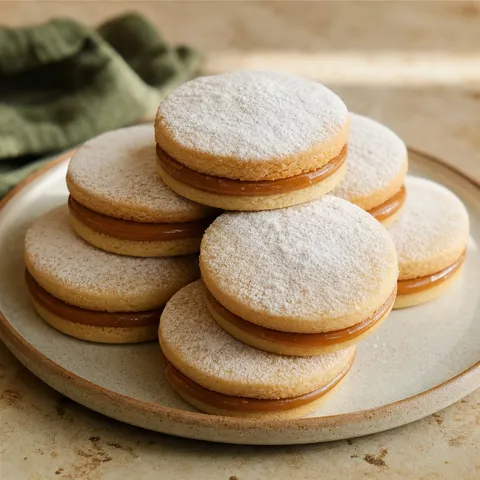
 Alfajores (Peruvian Dulce de Leche Sandwich Cookies)
Delicate, crumbly shortbread cookies sandwiched with rich dulce de leche and dusted with powdered sugar, a favorite Peruvian teatime treat.