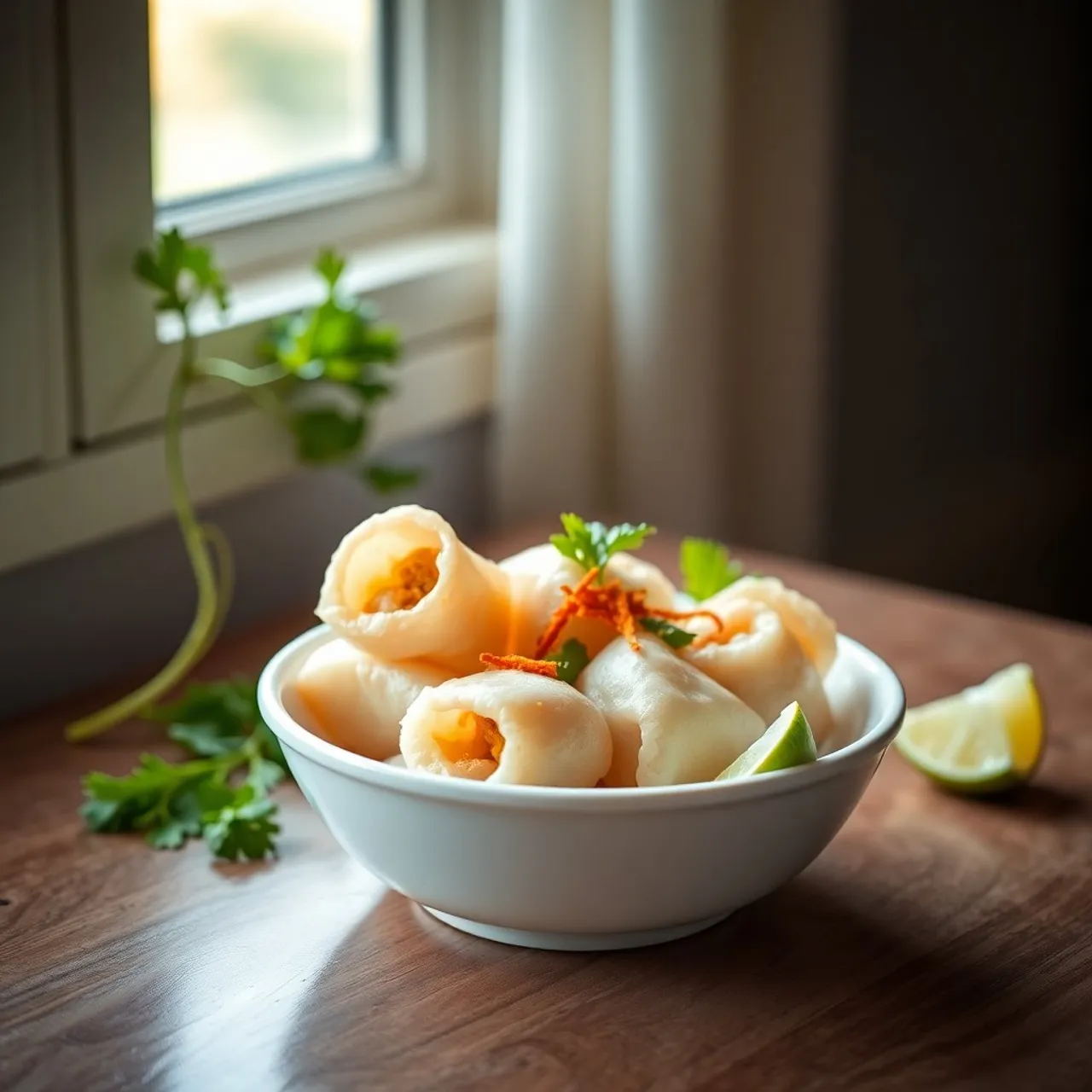
 Vietnamese Images are for illustrative purposes only, may be inaccurate, and do not guarantee the presence or absence of specific ingredients.
 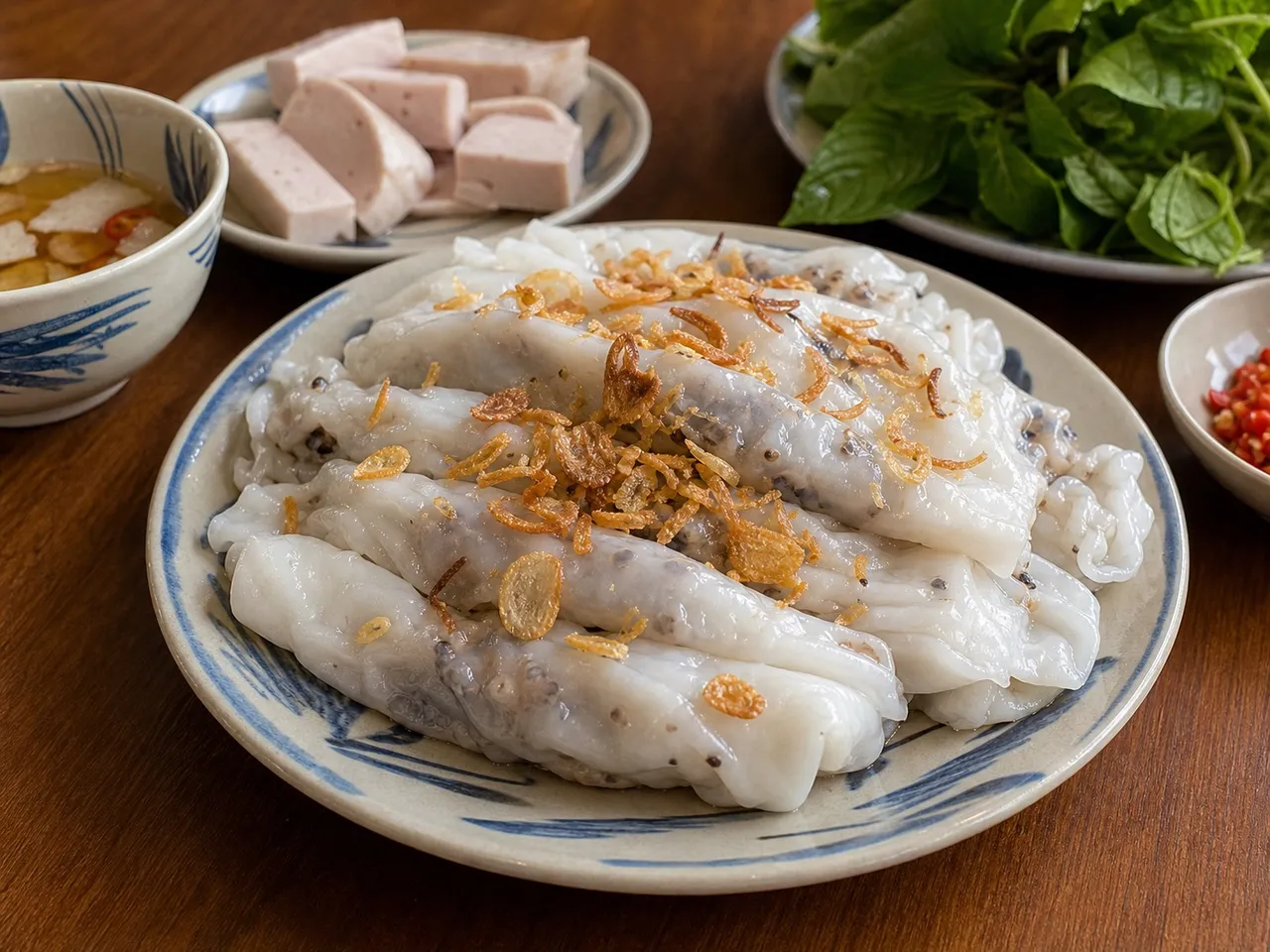 Serving Images are for illustrative purposes only, may be inaccurate, and do not guarantee the presence or absence of specific ingredients.
 Bánh Cuốn (Steamed Rice Rolls)
Made from a thin, wide sheet of steamed fermented rice batter filled with a mixture of cooked seasoned ground pork.
Contains common allergens
In the app, Listahan checks these against your household automatically.
Instructions
6 steps- 1
Mix Batter: Whisk together rice flour, tapioca starch, water, 1 tbsp oil, and a pinch of salt. Let the batter rest for at least 1 hour.
- 2
Cook Filling: Sauté minced shallot in a pan until fragrant. Add ground pork and minced wood ear mushrooms. Season with fish sauce and black pepper. Cook until the pork is fully browned and dry. Set aside.
- 3
Prepare Steamer/Pan: If you don't have a traditional cloth steamer, use a non-stick crepe pan. Lightly oil the pan and heat over medium-low.
- 4
Steam the Batter: Pour a very thin layer of batter into the pan, swirling to cover the bottom. Cover with a lid and steam for 1 minute until the batter turns translucent and solidifies into a delicate sheet.
- 5
Fill and Roll: Carefully invert the pan onto a lightly oiled cutting board to release the rice sheet. Place a spoonful of the pork mixture in the center and fold the sides over to create a delicate roll.
- 6
Serve: Cut the rolls into bite-sized pieces using scissors. Top generously with crispy fried shallots and serve warm with slices of Chả Lụa and a bowl of Nước Chấm for dipping.
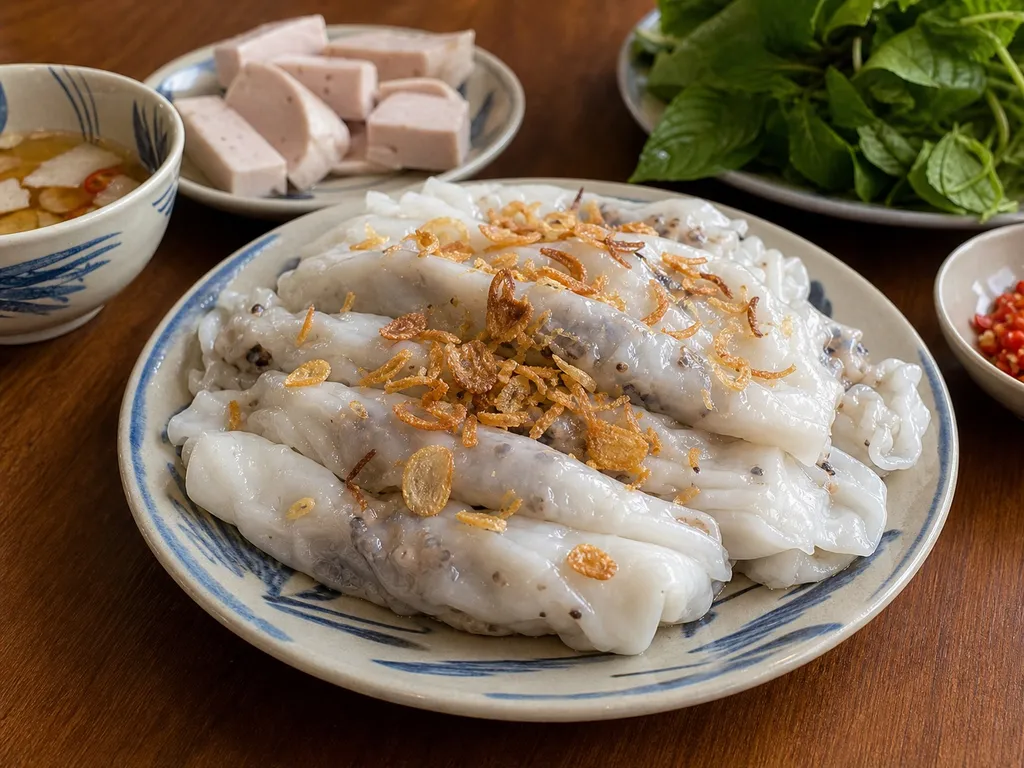 Images are for illustrative purposes only, may be inaccurate, and do not guarantee the presence or absence of specific ingredients.
 Listahan Family Score™
66/100
Works for many families
Score reflects how well this recipe fits a typical busy household. In the app, your Family Score is personalized to your household's allergens, kids, and pantry.
Nutrition
per serving1280
Calories
82 g
Protein
153 g
Carbs
34 g
Fat
Estimated per serving. Actual values depend on the brands and portions you use.
Listahan cooking guide
Chef notes & practical guide
Technique notes, ingredient swaps, serve-alongside ideas, storage guidance, and equipment for this recipe.
Cultural context
Banh cuon originated in northern Vietnam, where it is a beloved breakfast food in Hanoi and the surrounding Red River Delta region; it is distinct from the various southern Vietnamese rice rolls in its extremely thin, almost translucent wrapper made from a poured batter rather than pre-formed rice paper. The dish is named for the rolling technique -- banh means cake or bread, cuon means to roll -- and the filling of ground pork and wood ear mushroom is a standard that has remained consistent for generations of Hanoi street vendors. Banh cuon vendors in Hanoi often specialize exclusively in this single dish, perfecting the batter consistency and steaming technique over years.
Listahan note
This version prioritizes getting the batter thin enough to produce a translucent wrapper that rolls without cracking -- the tapioca starch addition is the key to making the rice flour batter elastic enough to handle without tearing.
Technique cues
- The tapioca starch in the batter is not interchangeable with more rice flour: tapioca starch adds elasticity that pure rice flour lacks, preventing the wrapper from cracking when rolled -- the ideal batter ratio produces a steamed sheet thin enough to see your hand through while remaining strong enough to fold around the filling.
- Steam the batter in the thinnest possible layer over already-boiling water; too thick a pour produces a gummy, opaque sheet that is not authentic banh cuon -- spread the batter immediately after pouring by tilting the steaming surface (or pan) to coat as thin as possible, cover for exactly 2-3 minutes, then slide off with a lightly oiled spatula.
- Fried shallots are not a garnish in banh cuon -- they are a textural component that provides the crunch the soft wrapper cannot; add them generously over the finished rolls just before serving so they stay crisp.
Kitchen flow
- Parallel prep
- Rest the batter while you cook the filling; by the time the filling cools to room temperature, the batter has had its minimum 30-minute rest and the steamer can be brought to a boil.
- Make-ahead
- The filling can be made up to 2 days ahead and refrigerated; the batter is best used the same day, though it can rest overnight in the refrigerator and should be whisked again before cooking.
- Leftover move
- Finished banh cuon does not reheat well in the microwave -- the wrappers become rubbery; warm in a steamer basket for 2-3 minutes and re-garnish with fresh fried shallots before serving.
- Cleanup rhythm
- The steaming surface (pan or specialized tray) should be wiped and re-oiled between each roll while still warm; clean the filling skillet and batter bowl during the steaming session rather than after, since the steaming process is inherently one at a time.
Ingredient brief
Role, handling, and swap guidance for each key ingredient.
1 cup rice flour
wrapper base
Purpose: Rice flour provides the neutral, slightly slippery quality of the steamed wrapper and the characteristic translucency that makes banh cuon visually distinctive.
Handling: Whisk with tapioca starch and water until completely smooth, then rest for at least 30 minutes; the resting time allows the starch to fully hydrate and reduces the risk of lumps or uneven cooking.
Adaptation: Do not substitute wheat flour or any other starch for the rice flour base; the dish requires rice starch for the correct texture and translucency.
1/2 cup tapioca starch
elasticity agent for the wrapper
Purpose: Tapioca starch gives the otherwise brittle rice-flour sheet just enough stretch to be rolled without cracking; it also contributes to the silky, slightly gelatinous texture of the finished wrapper.
Handling: Whisk thoroughly into the rice flour before adding water to prevent clumping; the combined dry mix should be well integrated before adding liquid.
Adaptation: Arrowroot starch can substitute in a 1:1 ratio; potato starch is less ideal as it produces a slightly gummy, denser wrapper.
1/2 lb ground pork
primary filling protein
Purpose: Ground pork provides the savory, juicy filling that contrasts with the delicate, neutral wrapper; it is seasoned minimally so it does not overpower the subtlety of the rice sheet.
Handling: Cook the ground pork in a skillet with the minced shallot and mushrooms until just cooked through, breaking it into very small crumbles; cool before filling so steam from the hot filling does not tear the delicate wrapper.
Adaptation: A combination of pork and shrimp is a common variation; for a vegetarian version, minced king oyster mushrooms and tofu provide similar bulk.
1/2 cup dried wood ear mushrooms, soaked and finely minced
texture and earthy depth in the filling
Purpose: Wood ear mushrooms add a pleasantly chewy, slightly crunchy texture to the filling that prevents it from feeling dense and uniform.
Handling: Soak in hot water for 20 minutes, squeeze completely dry, and mince very finely so no large fibrous pieces remain -- coarse pieces tear the wrapper during rolling.
Adaptation: Shiitake mushrooms can substitute with a more pronounced flavor; fresh mushrooms work but should be salted and squeezed to remove excess moisture before mincing.
Fried shallots for garnish
textural contrast and aromatic finish
Purpose: Fried shallots are the crunch element of banh cuon, providing what the soft wrapper cannot and adding a savory, caramelized onion sweetness that ties the dish together.
Handling: Slice shallots paper-thin and fry in neutral oil at 300F until golden, then drain on paper towels; homemade fried shallots are significantly better than packaged ones.
Adaptation: Store-bought crispy fried shallots (available at Asian grocery stores) are a reliable convenience substitute; avoid packaged French fried onions, which are seasoned differently.
Technique notes
- A nonstick skillet with a lid can substitute for a dedicated banh cuon steaming tray: fill the pan with 1 inch of water, bring to a boil, lay a piece of oiled plastic wrap or a dampened muslin cloth across the rim, secure, pour a thin layer of batter, and cover with a lid to steam -- the technique mimics the professional drum steamer used by Vietnamese vendors.
- Oil your spatula and the rolling surface generously before each wrapper; rice starch sticks aggressively to itself and to metal when it first comes off the heat, and insufficient oiling is the most common cause of torn wrappers in home kitchens.
- Banh cuon is traditionally eaten warm, not hot, and immediately -- the wrapper toughens and sticks to itself as it cools; serve in small batches straight from the steamer rather than plating everything at once.
Ingredient swaps
- Gluten-free direction
- Rice flour and tapioca starch are naturally gluten-free; verify the fish sauce label for the nuoc cham dipping sauce, as most are gluten-free but some brands contain wheat.
- Pork-free direction
- Replace ground pork with finely minced shrimp or a shrimp and crab combination; cook gently and do not overcook, as seafood fillings dry out faster than pork.
- Vegan direction
- Replace ground pork with finely minced firm tofu and extra mushrooms; add a small amount of soy sauce and sesame oil to the filling for depth, and serve with a soy-lime dipping sauce instead of nuoc cham.
Serve alongside
- nuoc cham dipping sauce with lime, fish sauce, garlic, and chili
- sliced Vietnamese pork sausage (cha lua) on the side
- simple cucumber slices with a sprinkle of sea salt
- hot jasmine tea
- Vietnamese iced coffee
- cold coconut water
Serving suggestions only — check pairings for your household's allergens.
Storage & reheating
- Finished banh cuon should be eaten within 30 minutes; the wrappers stick together and toughen quickly after rolling.
- Reheat in a bamboo steamer or metal steamer basket over boiling water for 2-3 minutes; do not microwave.
- The filling keeps refrigerated for up to 2 days; the batter keeps refrigerated for up to 24 hours, whisked again before using.
Equipment
- large nonstick skillet with a fitted lid (for home steaming method) or dedicated banh cuon steaming tray
- wide, thin-edged spatula (silicone or offset metal) for lifting the wrapper
- bamboo steamer for reheating
- small skillet for frying shallots and cooking the filling
Make this household-aware
Listahan Pro checks this recipe against your household's allergens, finds pantry-aware swaps, builds the shopping list, and helps you plan the week around it.
Plan it in Listahan
Add Bánh Cuốn (Steamed Rice Rolls) to your week, check it against your household's allergens, and build the shopping list automatically.
More Vietnamese recipes
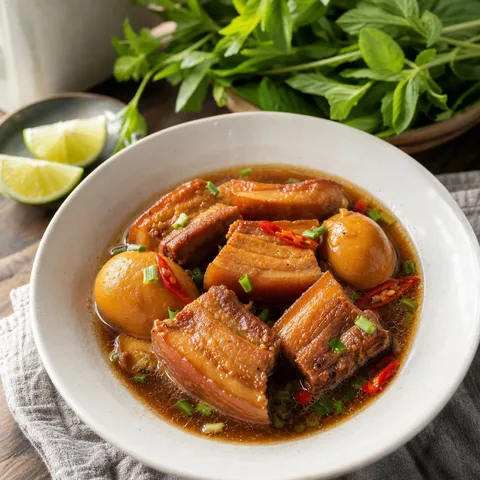 Vietnamese Lens Verified Images are for illustrative purposes only, may be inaccurate, and do not guarantee the presence or absence of specific ingredients.
 Thịt Kho Tàu (Caramelized Pork and Eggs)
Meltingly tender pork belly and hard-boiled eggs braised in a rich, sweet, and savory coconut juice caramel, perfect over steamed rice.
 Vietnamese Lens Verified Images are for illustrative purposes only, may be inaccurate, and do not guarantee the presence or absence of specific ingredients.
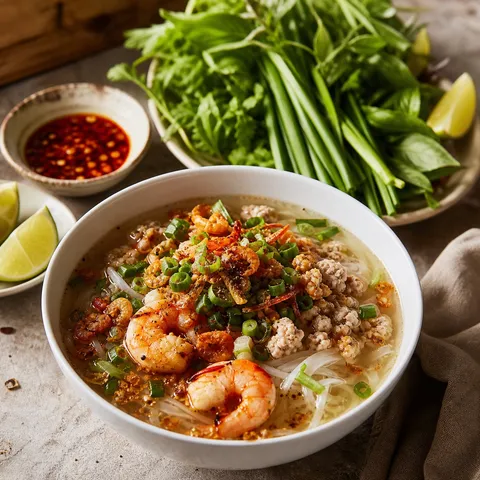
 Hủ Tiếu (Pork and Seafood Noodle Soup)
A Vietnamese pork-bone broth noodle soup loaded with ground pork, shrimp, and dried shrimp over chewy tapioca noodles, finished with garlic chives and fried garlic.
 Vietnamese Lens Verified Images are for illustrative purposes only, may be inaccurate, and do not guarantee the presence or absence of specific ingredients.
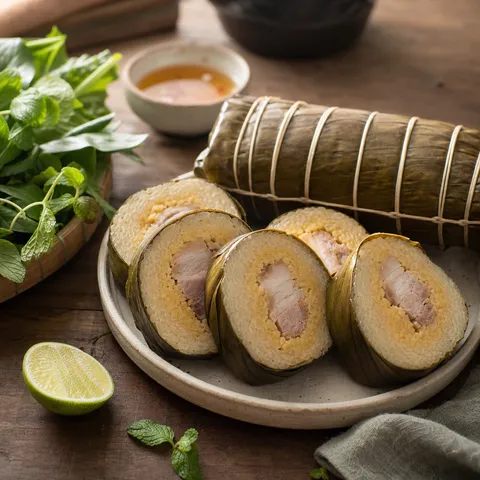
 Bánh Tét (Cylindrical Sticky Rice Cake)
The Southern equivalent of Bánh Chưng, rolled into a cylinder.