 Food Lens Images are for illustrative purposes only, may be inaccurate, and do not guarantee the presence or absence of specific ingredients.
 Food Lens · Recipe ingredients
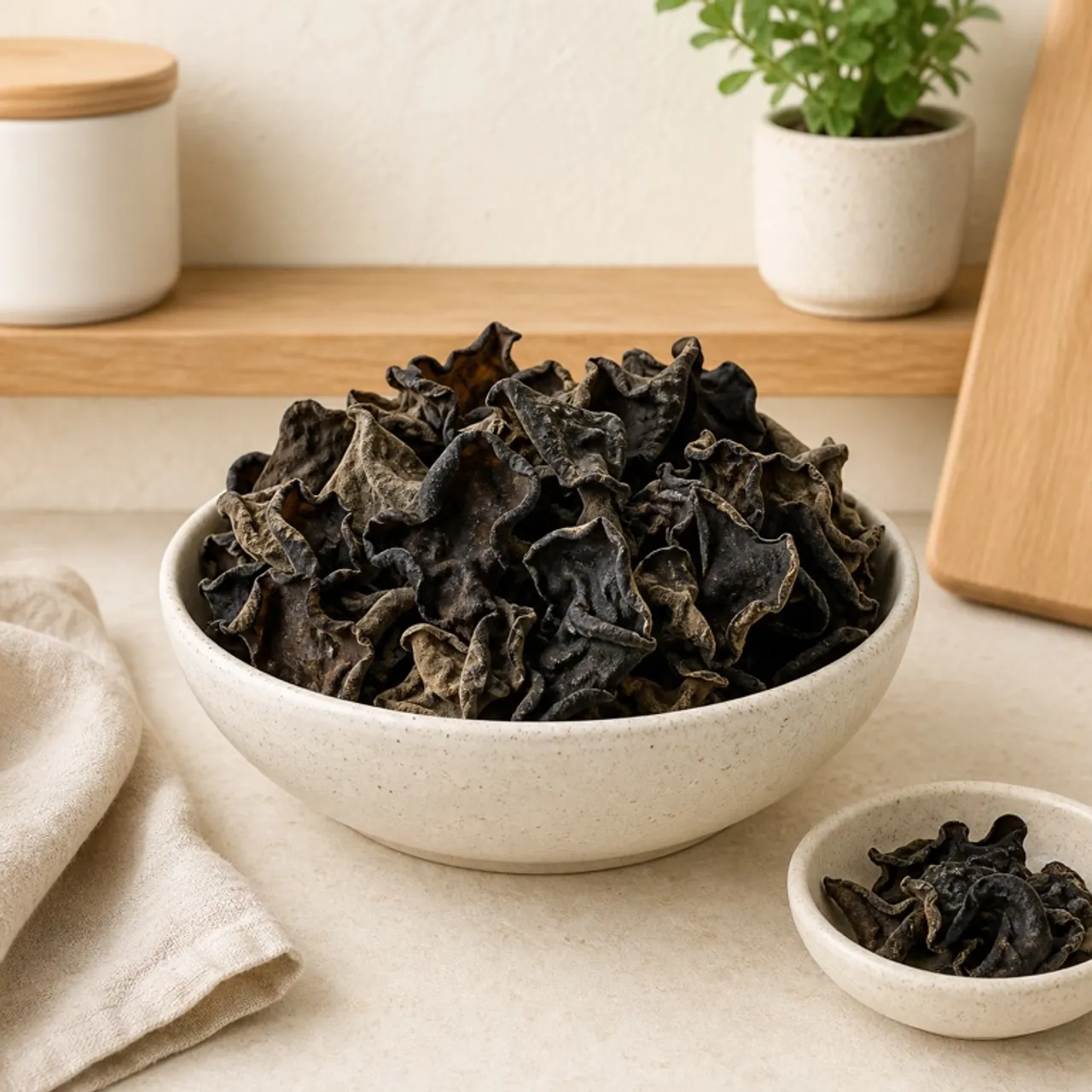
Wood Ear Mushrooms
Very mild, faintly earthy flavor with almost no assertive taste; the appeal is primarily textural — firm, crunchy, and slightly gelatinous, with a satisfying bite even when fully cooked.
Lens VerifiedWood ear mushrooms are a thin, ear-shaped fungus with a distinctive crunchy texture that persists even after cooking, used widely in Chinese, Korean, and other East Asian cuisines for texture contrast in stir-fries, soups, and cold salads. They are sold almost exclusively in dried form in North America and require rehydration before use.
Where it comes from
Wood ear mushrooms have been foraged and cultivated in China for over 2,000 years, mentioned in ancient Chinese agricultural texts. Their wide distribution across Asia made them a common ingredient in Korean, Japanese, and Southeast Asian cooking as well. In North America, dried wood ear mushrooms have been available in Chinese grocery stores for decades and are now found in many Asian supermarkets.
Varieties — Black wood ear mushrooms (Auricularia auricula-judae) are the most common; silver ear mushrooms (Tremella fuciformis) are a white relative used primarily in Chinese dessert soups. Dried wood ear may be sold as 'black fungus,' 'cloud ear,' or 'mu er' (木耳) in Chinese.
Wood ear mushrooms appear in classic Chinese hot and sour soup (酸辣汤) and are an iconic component of the Lunar New Year feast in many Chinese families — their black color and crunchy texture provide both visual contrast and a pleasing chew.
In a modern kitchen — Rehydrate in cold or room-temperature water for 20–30 minutes (not hot — hot water can make them slimy). They expand significantly, so start with less than you think you need. After rehydrating, trim any tough woody base pieces and slice to desired size.
Buying it
Available at Chinese, Korean, and pan-Asian grocery stores in the dried goods section. Look for 'wood ear mushroom,' 'black fungus,' or 'cloud ear fungus.' They're sold in bags ranging from small (2 oz) to larger bulk quantities. Avoid any that smell musty or show signs of moisture.
Storing it
Dried wood ear mushrooms keep well in a sealed container in a cool, dark spot. Rehydrate only what you need — once soaked, refrigerate and use within a day or two.
Keeps about 1 year in the pantry.
Out of wood ear mushrooms? Good swaps
- Dried shiitake mushrooms — Richer flavor; will not replicate the crunchy texture but works as a flavor substitute.
- Fresh oyster mushrooms — Different texture (softer); use in stir-fries as a stand-in for flavor.
General cooking guidance — always check the labels on the products you use. Listahan’s allergen checks run automatically when you plan a recipe in the app. Not medical advice.
Recipes that use wood ear mushrooms
Common questions about wood ear mushrooms
Is wood ear mushrooms vegan?
Wood Ear Mushrooms is generally plant-based and suitable for a vegan diet, but brands differ — confirm on the label.
What can I use instead of wood ear mushrooms?
Good swaps include Dried shiitake mushrooms, Fresh oyster mushrooms. Each behaves a little differently — see the swaps above for notes, and always check labels for allergens.
How do I store wood ear mushrooms?
Dried wood ear mushrooms keep well in a sealed container in a cool, dark spot. Rehydrate only what you need — once soaked, refrigerate and use within a day or two. It keeps about 1 year in the pantry.
More recipe ingredients
See all


Make wood ear mushrooms about your kitchen — with Listahan Pro
Everything above is free, forever. Pro adds the Household Lens — the same food, seen for your family:
-
Checked for each member
Flags wood ear mushrooms per person against your household's allergies and school rules — not just a generic "contains" tag.
-
Pantry-aware
Knows whether you already have it, what is running low, and the best swap from what is in your kitchen tonight.
-
What it costs near you
A real price from the Presyo community index, so you can plan the budget — not guess.
-
Your household memory
Who likes it, plus your own private notes — brand, where you keep it, who skips it.
Allergen safety is always free — Pro adds the automation, never the safety.
Cook with wood ear mushrooms — safely
Plan a recipe in Listahan and the household allergen check runs automatically — every plan, every swap, every lunchbox. Safety is never paywalled.