 Vietnamese Images are for illustrative purposes only, may be inaccurate, and do not guarantee the presence or absence of specific ingredients.
  Serving Images are for illustrative purposes only, may be inaccurate, and do not guarantee the presence or absence of specific ingredients.
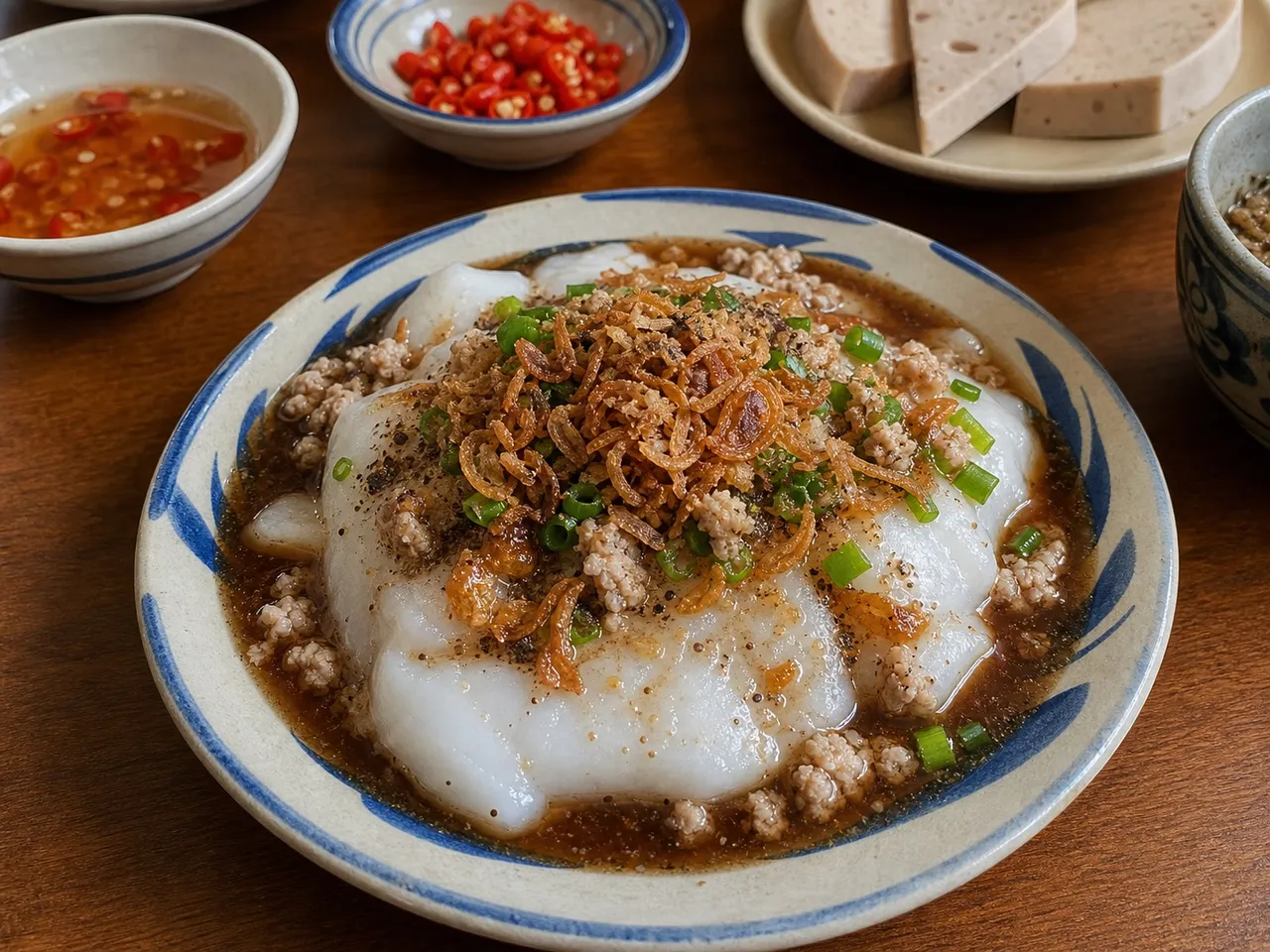
 Bánh Đúc (Savory Rice Cake)
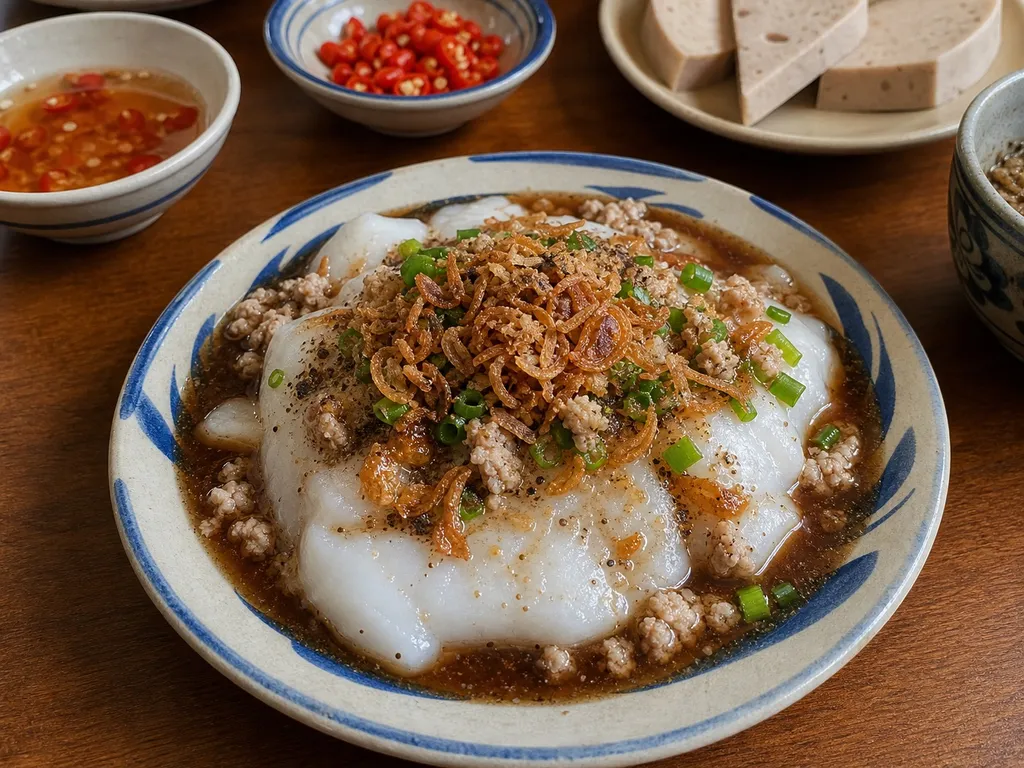
A smooth, jelly-like savory rice cake served with ground pork and fish sauce.
No common allergens detected
Based on this recipe's ingredient list. Always verify with your own brands and labels.
Instructions
6 steps- 1
Cook Filling: In a pan, sauté minced shallots in oil. Add ground pork and chopped wood ear mushrooms. Season with a splash of fish sauce and black pepper. Cook until fully browned and set aside.
- 2
Mix Batter: In a pot, whisk together the rice flour, tapioca starch, water, 1 tbsp oil, and limewater until smooth.
- 3
Cook the Cake: Place the pot over medium-low heat. Stir continuously and vigorously with a wooden spoon. As it heats, the batter will thicken dramatically into a heavy, gluey paste. Keep stirring for 10-15 minutes until it becomes smooth, glossy, and slightly translucent.
- 4
Mold: Pour the hot, thick mixture into a greased shallow dish. Smooth the top with a wet spatula. Let it cool completely until it sets into a firm, jelly-like cake.
- 5
Assemble: Cut the cooled cake into diamond shapes or bite-sized pieces. Place in a shallow bowl.
- 6
Serve: Top the rice cake with the savory pork mixture. Drizzle generously with warm Nước Chấm, and garnish with crispy fried shallots and cilantro.
 Images are for illustrative purposes only, may be inaccurate, and do not guarantee the presence or absence of specific ingredients.
 Listahan Family Score™
81/100
Good fit for most families
Score reflects how well this recipe fits a typical busy household. In the app, your Family Score is personalized to your household's allergens, kids, and pantry.
Nutrition
per serving1140
Calories
78 g
Protein
124 g
Carbs
34 g
Fat
Estimated per serving. Actual values depend on the brands and portions you use.
Listahan cooking guide
Chef notes & practical guide
Technique notes, ingredient swaps, serve-alongside ideas, storage guidance, and equipment for this recipe.
Cultural context
Banh duc is one of Vietnam's oldest street foods, traced to northern Vietnam where it was sold by street vendors carrying bamboo trays of the firm, translucent cakes through neighborhoods in the early morning. The savory version topped with pork and mushrooms is the northern style; southern versions lean sweet with coconut milk and pandan. The addition of limewater or edible lye water is an ancient technique borrowed from Chinese alkaline noodle-making, used here to firm the starch gel so the cake holds a slice rather than collapsing.
Listahan note
This version uses both rice flour and tapioca starch to achieve the ideal texture — slightly firm from the rice flour, with just enough chew from the tapioca — and tops the cakes with a savory pork-mushroom mixture that makes the dish a complete light meal.
Technique cues
- The limewater or lye water is a pH modifier that restructures the starch chains during cooking, producing a firmer, more cohesive gel than plain water; even a small amount (1 tablespoon) makes the difference between a cake that slices cleanly and one that crumbles.
- Cook the batter over medium-low heat with constant stirring from the moment it goes into the pot; the starch begins gelling around 160F and can scorch on the bottom in under a minute if left unattended.
- Allow the set cake to cool completely at room temperature before cutting — cutting a warm banh duc tears it because the starch gel is still relaxing; a fully cooled cake slices with a single press of a knife.
Kitchen flow
- Parallel prep
- While the rice cake batter cools and sets (at least 1 hour), cook the pork and mushroom topping and prepare the nước chấm and fried shallots so assembly is instant when the cakes are ready.
- Make-ahead
- The rice cakes can be made up to 2 days ahead and stored covered in the refrigerator; bring to room temperature before serving, as cold cakes lose their soft texture.
- Leftover move
- Pan-fry leftover slices in a thin film of oil over medium heat until golden and slightly crispy on the outside — a completely different texture that makes a great snack with chili sauce.
- Cleanup rhythm
- Soak the pot used for the batter in hot water immediately after pouring the batter out; set starch is much harder to remove once it dries on the pot walls.
Ingredient brief
Role, handling, and swap guidance for each key ingredient.
1 cup rice flour
starch base
Purpose: Rice flour provides the neutral, slightly grainy texture that gives banh duc its characteristic body and opaque-white appearance.
Handling: Whisk the rice flour into cold water before heating to prevent lumps from forming when the batter hits the pot.
Adaptation: Do not substitute all-purpose flour — it sets into a gummy, bread-like texture instead of the desired smooth starch gel.
1/4 cup tapioca starch
chew and translucency
Purpose: Tapioca starch contributes a slight glossy translucency and the bouncy chew that keeps banh duc from feeling starchy and heavy.
Handling: Mix with the rice flour dry before adding water so both starches hydrate evenly.
Adaptation: Arrowroot starch works but sets slightly softer and can weep liquid after refrigeration.
1 tbsp limewater (nước vôi trong) or edible lye water (gives firmness)
firming agent
Purpose: The alkaline solution raises the pH of the batter, strengthening the starch network and producing a firm, sliceable cake rather than a soft pudding.
Handling: Add it to the mixed batter and stir well before cooking; it integrates completely and leaves no discernible taste in the finished cake.
Adaptation: A very small pinch of food-grade sodium carbonate dissolved in water can substitute, but use carefully — more is not better.
1/2 lb ground pork
savory topping protein
Purpose: Ground pork cooked with shallots and mushrooms provides the savory, textured contrast that makes banh duc a meal rather than just a starch component.
Handling: Cook the pork over medium-high heat until just done, breaking it up finely; excess moisture in the pork topping will pool on top of the cake.
Adaptation: Ground chicken or finely diced firm tofu can substitute for a lighter or vegetarian topping.
1/4 cup wood ear mushrooms, finely chopped
texture and umami in topping
Purpose: Wood ear mushrooms add a distinct crunch that survives cooking and contribute a mild, earthy umami note to the pork topping.
Handling: Soak dried wood ear mushrooms in hot water for 20 minutes until fully hydrated, then squeeze out excess liquid before chopping.
Adaptation: Finely diced shiitake mushrooms (stems included) replicate the umami and provide a softer but still satisfying texture.
Technique notes
- Lightly oil the container or dish before pouring in the hot batter; this prevents sticking and allows the finished cake to unmold cleanly without tearing the edges.
- Use a wet knife or dip the blade in cold water between cuts when slicing the finished cake — the starch clings to a dry blade and the slices tear rather than cutting cleanly.
- The fried shallots should go on at the last second before serving; placed too early, they absorb moisture from the topping and lose their crunch, which is their main contribution to the dish.
Ingredient swaps
- Gluten-free direction
- Rice flour and tapioca starch are naturally gluten-free; confirm your fish sauce brand is gluten-free (most are, but check).
- Vegan direction
- Replace the ground pork with finely diced firm tofu pan-fried until golden, use soy sauce instead of fish sauce in the nước chấm, and add extra wood ear mushrooms for umami.
- No lye water option
- Increase tapioca starch to 1/3 cup and reduce water slightly (about 2.5 cups) for a firmer gel without any alkaline additive; the cake will be slightly softer but still sliceable.
Serve alongside
- simple cucumber slices dressed with rice vinegar and sesame oil
- pickled bean sprouts with chili and garlic
- fried shallot rice crackers for extra crunch
- unsweetened hot green tea
- fresh lime soda with a pinch of salt
Serving suggestions only — check pairings for your household's allergens.
Storage & reheating
- Store cooled rice cakes covered in plastic wrap or in an airtight container in the refrigerator for up to 2 days.
- Bring to room temperature for 20-30 minutes before eating; microwave very briefly (20 seconds) if needed, but cold banh duc becomes firm and loses its silkiness.
- Do not freeze — frozen and thawed starch gels become grainy and weep water.
Equipment
- medium heavy-bottomed saucepan for cooking the batter
- silicone spatula or wooden spoon for constant stirring
- 8x8 inch dish or round mold, oiled, for setting the cake
- wet knife for slicing
Make this household-aware
Listahan Pro checks this recipe against your household's allergens, finds pantry-aware swaps, builds the shopping list, and helps you plan the week around it.
Plan it in Listahan
Add Bánh Đúc (Savory Rice Cake) to your week, check it against your household's allergens, and build the shopping list automatically.
More Vietnamese recipes
 Vietnamese Lens Verified Images are for illustrative purposes only, may be inaccurate, and do not guarantee the presence or absence of specific ingredients.
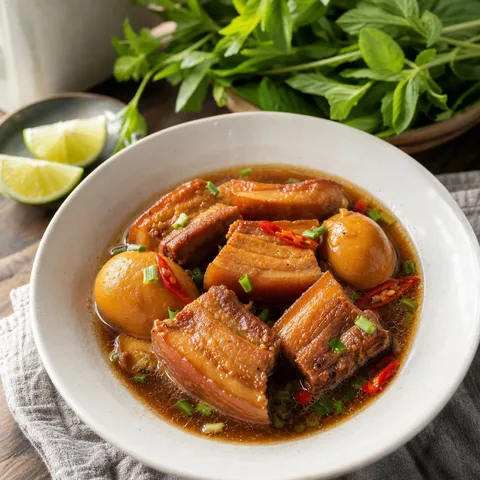
 Thịt Kho Tàu (Caramelized Pork and Eggs)
Meltingly tender pork belly and hard-boiled eggs braised in a rich, sweet, and savory coconut juice caramel, perfect over steamed rice.
 Vietnamese Lens Verified Images are for illustrative purposes only, may be inaccurate, and do not guarantee the presence or absence of specific ingredients.
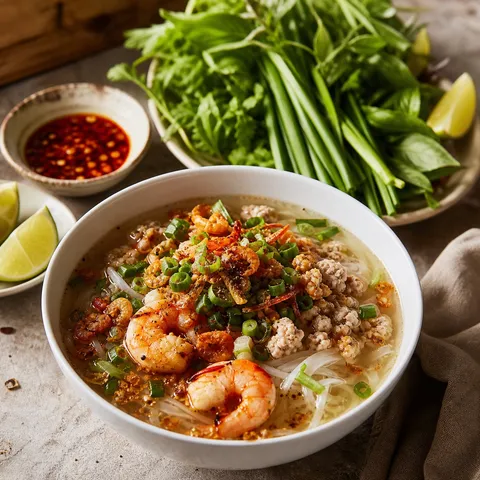
 Hủ Tiếu (Pork and Seafood Noodle Soup)
A Vietnamese pork-bone broth noodle soup loaded with ground pork, shrimp, and dried shrimp over chewy tapioca noodles, finished with garlic chives and fried garlic.
 Vietnamese Lens Verified Images are for illustrative purposes only, may be inaccurate, and do not guarantee the presence or absence of specific ingredients.
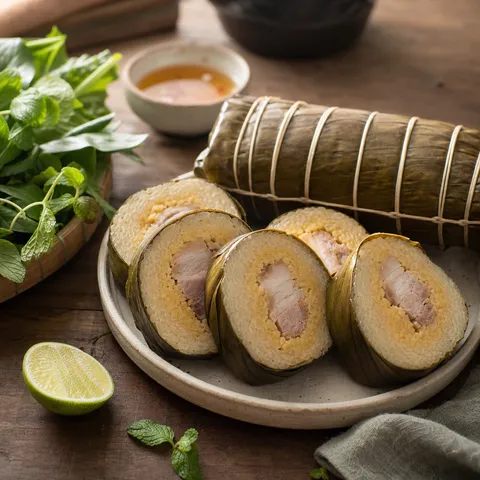
 Bánh Tét (Cylindrical Sticky Rice Cake)
The Southern equivalent of Bánh Chưng, rolled into a cylinder.