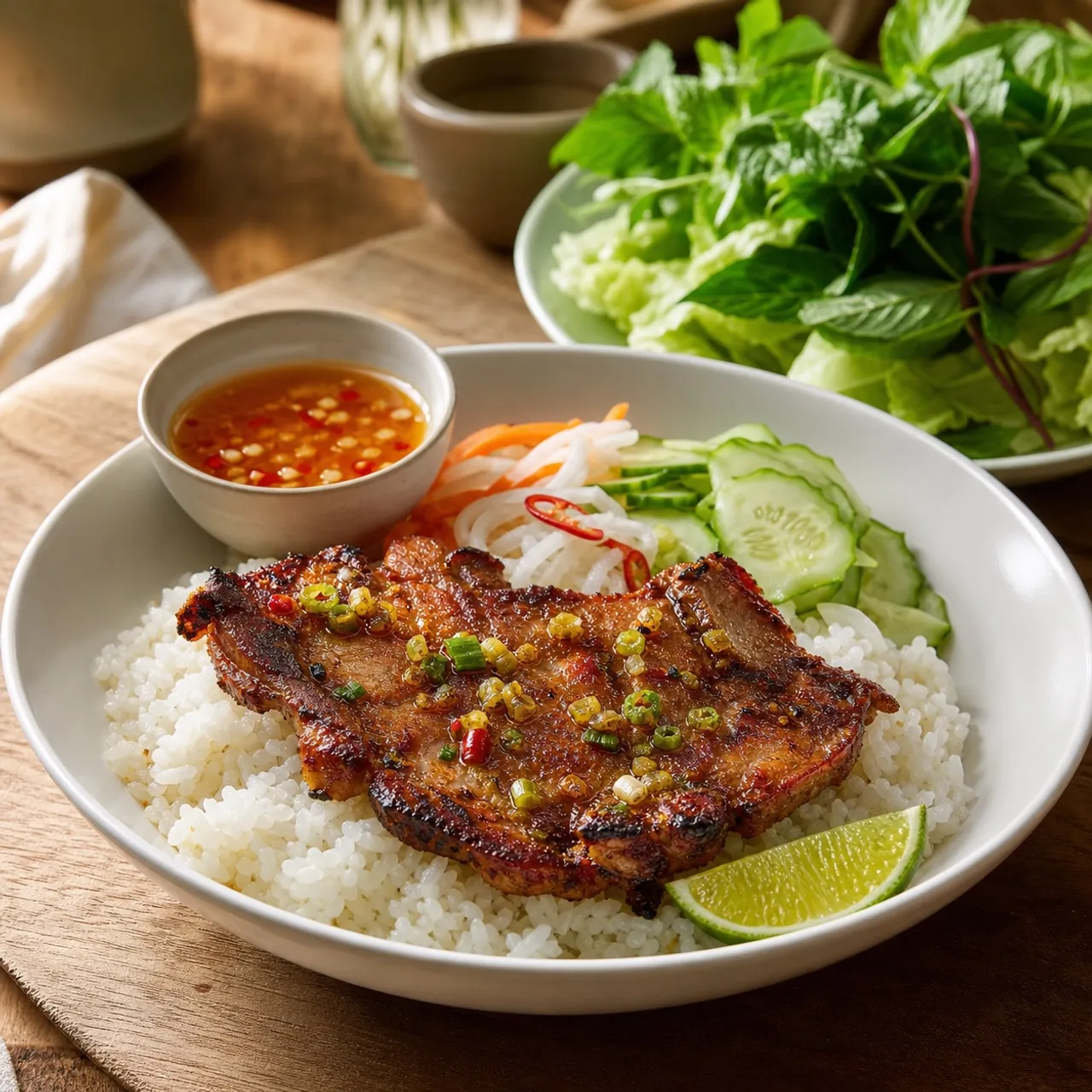
 Vietnamese Images are for illustrative purposes only, may be inaccurate, and do not guarantee the presence or absence of specific ingredients.
 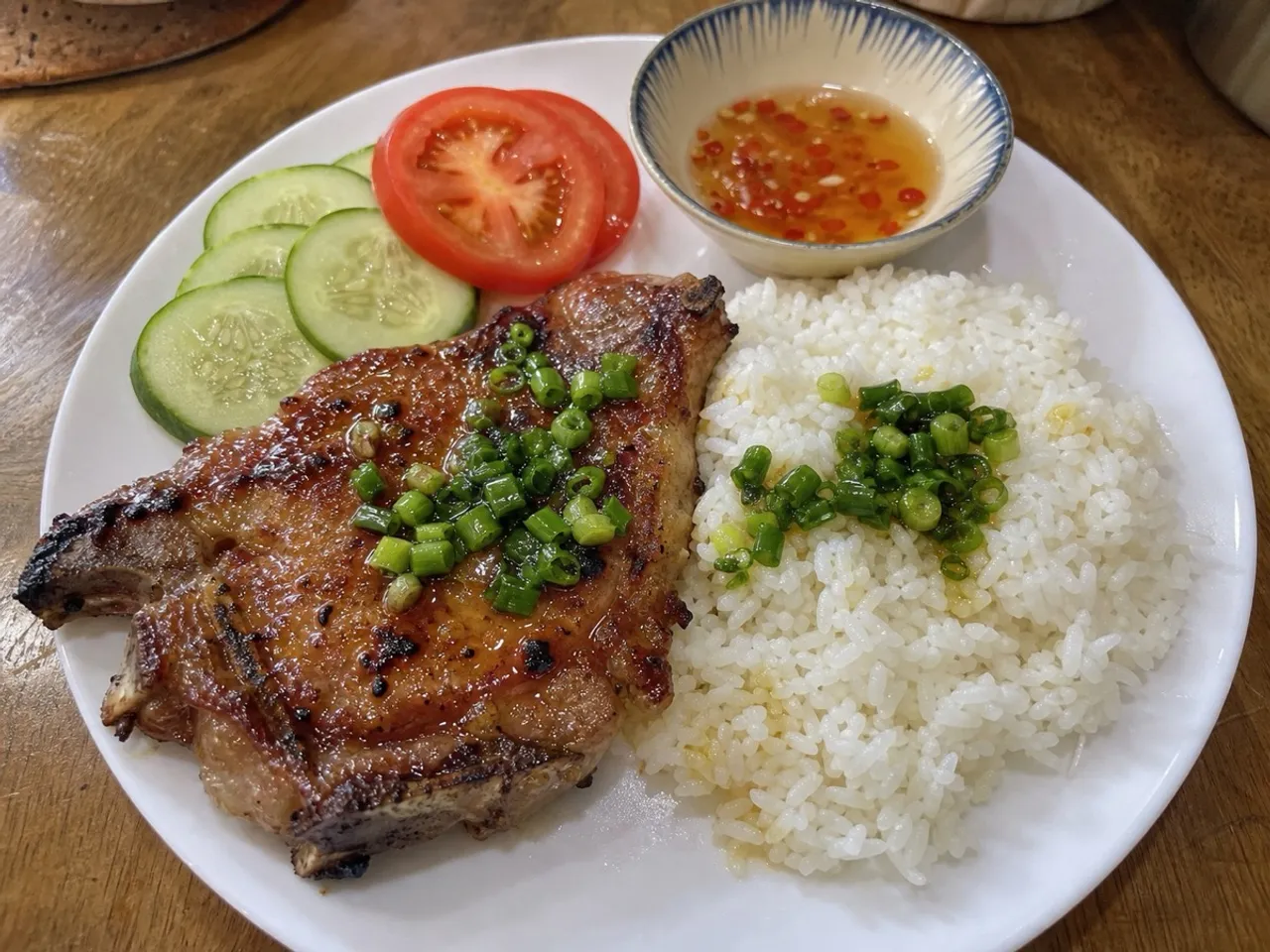 Serving Images are for illustrative purposes only, may be inaccurate, and do not guarantee the presence or absence of specific ingredients.
 Cơm Tấm (Broken Rice with Grilled Pork)
A Vietnamese dish made from rice with fractured rice grains, traditionally served with grilled pork.
Contains common allergens
In the app, Listahan checks these against your household automatically.
Instructions
6 steps- 1
Cook Broken Rice: Rinse the broken rice thoroughly until the water runs clear. Cook in a rice cooker with slightly less water than standard rice (about a 1:1.2 ratio of rice to water) to maintain a slightly firm texture.
- 2
Marinate Pork Chops: In a large bowl, whisk together fish sauce, soy sauce, sugar, minced lemongrass, garlic, and oil. Add the pork chops, coat thoroughly, and marinate for at least 1 hour in the refrigerator.
- 3
Grill Pork Chops: Preheat a grill or broiler to high heat. Grill the pork chops for 4-5 minutes per side until beautifully caramelized and slightly charred, ensuring the internal temperature reaches 145°F (63°C). Rest the meat for 5 minutes.
- 4
Prepare Scallion Oil: Heat 2 tbsp of oil in a small pan until shimmering, then pour it over a bowl of thinly sliced scallions and a pinch of salt.
- 5
Assemble Plate: Place a mound of cooked broken rice on a plate. Lay the grilled pork chop next to it. Drizzle the scallion oil generously over the rice and the pork.
- 6
Serve: Garnish the plate with fresh slices of cucumber and tomato. Serve with a small bowl of Nước Chấm on the side for drizzling over the rice and meat.
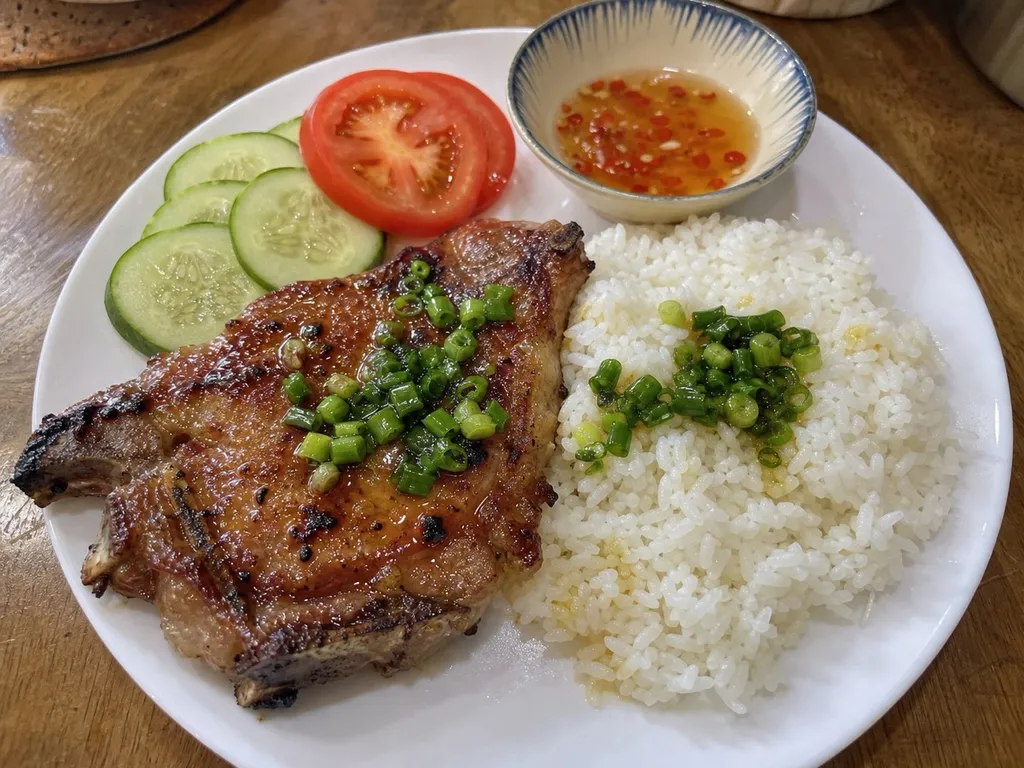 Images are for illustrative purposes only, may be inaccurate, and do not guarantee the presence or absence of specific ingredients.
 Listahan Family Score™
59/100
Works for many families
Score reflects how well this recipe fits a typical busy household. In the app, your Family Score is personalized to your household's allergens, kids, and pantry.
Nutrition
per serving415
Calories
8 g
Protein
84 g
Carbs
4 g
Fat
Estimated per serving. Actual values depend on the brands and portions you use.
Listahan cooking guide
Chef notes & practical guide
Technique notes, ingredient swaps, serve-alongside ideas, storage guidance, and equipment for this recipe.
Cultural context
Com tam -- literally 'broken rice' -- originated as a poverty food in southern Vietnam, specifically Ho Chi Minh City (Saigon), where the broken grains rejected by mills and restaurants were sold cheaply to workers. The slightly uneven texture of broken rice absorbs sauces and marinades differently from whole-grain rice, creating a toothsome bite that Saigonese cooks came to prefer specifically for grilled pork dishes. Today com tam is Saigon's most beloved street food breakfast and lunch, eaten at any hour, and the dish has become a point of regional pride that distinguishes southern Vietnamese food culture.
Listahan note
This version focuses on the lemongrass-and-fish-sauce pork marinade and the scallion oil finish (mo hanh), because the combination of charred pork and the warm, grassy oil drizzled over the rice is what separates com tam from a generic grilled pork plate.
Technique cues
- Broken rice (gao tam) cooks slightly differently from whole jasmine rice: the grains absorb water faster and can turn mushy if you use the standard 1:1.5 rice-to-water ratio; reduce to 1:1.25 and check for doneness 2-3 minutes earlier than your usual rice routine.
- The lemongrass in the pork marinade must be minced very finely -- almost to a paste -- not just roughly chopped; coarsely cut lemongrass does not penetrate the meat and the fibrous outer stalks char and burn on the grill before the inside of the chop is done.
- Scallion oil (mo hanh) is made by pouring hot oil over thinly sliced scallions, which is a technique that blooms the onion's sulfur compounds into a sweeter, more fragrant form; add the hot oil all at once rather than slowly to get the signature sizzle and aroma.
Kitchen flow
- Parallel prep
- Start the rice in the cooker while the grill heats; make the scallion oil and slice the cucumber and tomatoes while the pork cooks so the plate comes together at once.
- Make-ahead
- Marinate the pork chops overnight in the refrigerator -- the lemongrass flavor deepens significantly after 8 hours compared to a 2-hour marinade.
- Leftover move
- Slice leftover grilled pork thin and reheat in a skillet; serve over leftover rice with a fried egg on top and a drizzle of nuoc cham for a fast next-day meal.
- Cleanup rhythm
- The grill grates are the messiest element; clean while hot after removing the pork, then tackle the marinade bowl and rice cooker while the pork rests.
Ingredient brief
Role, handling, and swap guidance for each key ingredient.
2 cups broken rice (gao tam)
base and textural foundation
Purpose: Broken rice has a softer, more porous texture than whole grains that absorbs the scallion oil and nuoc cham more readily, making each bite saucy and cohesive.
Handling: Rinse thoroughly until the water runs mostly clear, then use a 1:1.25 rice-to-water ratio to avoid mushiness; steam or cook in a rice cooker.
Adaptation: Short-grain white rice (sushi rice) is the closest substitute in texture and sauce absorption; long-grain jasmine rice is drier and less ideal but functional.
4 thin-cut bone-in pork chops
primary protein
Purpose: Thin-cut chops cook fast over high heat, giving maximum char on the outside while staying just cooked through -- the bone adds flavor to the caramelized crust.
Handling: Score the fat cap in a crosshatch pattern to prevent curling on the grill, then marinate for at least 2 hours or overnight for full flavor penetration.
Adaptation: Boneless pork loin chops work but are leaner and dry out faster; pork shoulder steaks are fattier and more forgiving on the grill.
2 stalks lemongrass, finely minced
aromatic marinade backbone
Purpose: Lemongrass provides the floral, citrusy top note that is the signature flavor of com tam's pork and distinguishes it from Chinese or Japanese grilled pork preparations.
Handling: Remove the tough outer layers until you reach the pale, soft inner stalk, then mince finely or pound in a mortar and pestle to break down the fibers.
Adaptation: Lemon zest plus a small amount of lime zest can approximate the citrus note but lacks the floral quality; no clean substitute exists for full lemongrass flavor.
3 tbsp fish sauce
primary marinade seasoning
Purpose: Fish sauce penetrates the meat and caramelizes during grilling, creating the savory-lacquered crust that makes the pork taste complex rather than simply salty.
Handling: Combine with soy sauce and sugar in the marinade bowl before adding the pork so the salt distributes evenly without pockets of intensity.
Adaptation: For soy-based: use 2 tbsp soy sauce plus 1 tsp Worcestershire for a similar fermented depth without the fish funk.
Scallion oil (mo hanh) for garnish
aromatic finishing oil
Purpose: Scallion oil bridges the grilled pork and the rice, tying the components of the plate together with its grassy, savory aroma.
Handling: Slice 4-5 scallions thinly, place in a heat-proof bowl, heat 3 tablespoons of neutral oil until it just begins to smoke, then pour over the scallions all at once.
Adaptation: Fried shallot oil is a richer variation; garlic oil is common and adds more punch.
Technique notes
- Let the pork chops come to room temperature for 20-30 minutes before grilling; cold-center chops from the refrigerator cause the outside to scorch before the interior reaches a safe temperature on a hot grill.
- The full com tam plate traditionally includes a steamed egg meatloaf (cha trung hap) and a small shrimp paste cake (bi) alongside the pork; even a single fried egg placed on the rice at serving brings the dish closer to the street version.
- Nuoc cham is poured over or served alongside for the diner to add; do not pre-dress the rice with it, as the rice will become waterlogged and the plate loses the contrast of dry rice against the wet sauce that is part of the experience.
Ingredient swaps
- Gluten-free direction
- Rice and fish sauce are naturally gluten-free; substitute tamari or coconut aminos for the soy sauce in the marinade to keep the dish safe.
- Pork-free direction
- Chicken thighs with the bone in are an excellent substitute -- use the same marinade and grill time; the lemongrass flavor pairs equally well with chicken.
- Vegan direction
- Marinate thick-cut king oyster mushroom steaks or firm tofu slabs in the same lemongrass marinade with soy sauce replacing fish sauce; the texture is different but the aromatic profile carries through.
Serve alongside
- sliced cucumbers and fresh tomatoes arranged on the plate
- braised pork and egg (thit kho trung) as a second protein
- clear pork bone and daikon soup (canh)
- Vietnamese iced coffee with sweetened condensed milk
- cold soda water with a wedge of lime
- hot chrysanthemum tea
Serving suggestions only — check pairings for your household's allergens.
Storage & reheating
- Grilled pork chops keep refrigerated for up to 3 days; reheat in a skillet over medium heat rather than the microwave to restore caramelization.
- Cooked broken rice keeps refrigerated for up to 3 days; reheat with a small splash of water in a covered pan or in the rice cooker on warm.
- Assembled plates do not store well; keep all components separate and assemble to order.
Equipment
- rice cooker or heavy-bottomed saucepot for broken rice
- charcoal or gas grill (or cast-iron grill pan)
- mortar and pestle or mini food processor for mincing lemongrass
- small heat-proof bowl for scallion oil
Make this household-aware
Listahan Pro checks this recipe against your household's allergens, finds pantry-aware swaps, builds the shopping list, and helps you plan the week around it.
Plan it in Listahan
Add Cơm Tấm (Broken Rice with Grilled Pork) to your week, check it against your household's allergens, and build the shopping list automatically.
More Vietnamese recipes
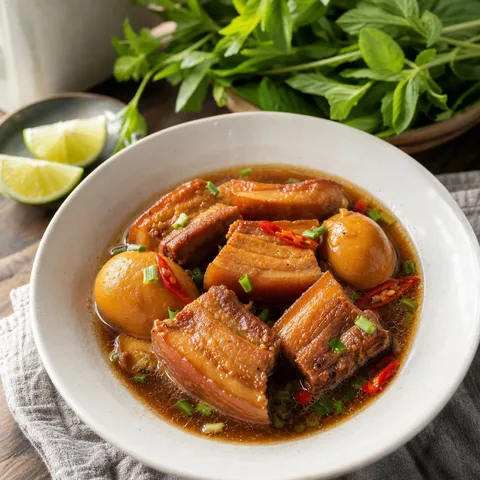 Vietnamese Lens Verified Images are for illustrative purposes only, may be inaccurate, and do not guarantee the presence or absence of specific ingredients.
 Thịt Kho Tàu (Caramelized Pork and Eggs)
Meltingly tender pork belly and hard-boiled eggs braised in a rich, sweet, and savory coconut juice caramel, perfect over steamed rice.
 Vietnamese Lens Verified Images are for illustrative purposes only, may be inaccurate, and do not guarantee the presence or absence of specific ingredients.
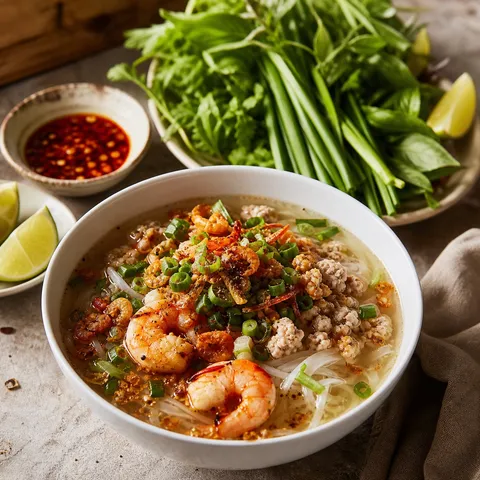
 Hủ Tiếu (Pork and Seafood Noodle Soup)
A Vietnamese pork-bone broth noodle soup loaded with ground pork, shrimp, and dried shrimp over chewy tapioca noodles, finished with garlic chives and fried garlic.
 Vietnamese Lens Verified Images are for illustrative purposes only, may be inaccurate, and do not guarantee the presence or absence of specific ingredients.
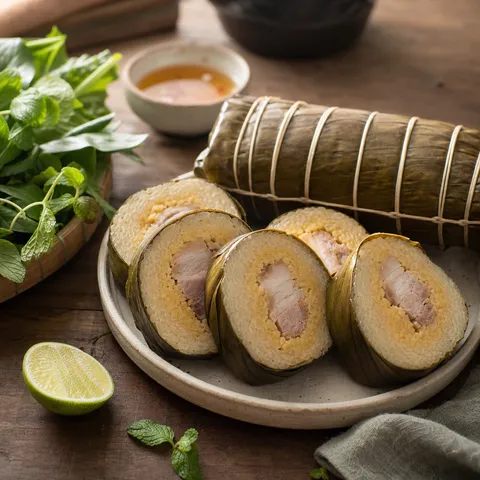
 Bánh Tét (Cylindrical Sticky Rice Cake)
The Southern equivalent of Bánh Chưng, rolled into a cylinder.