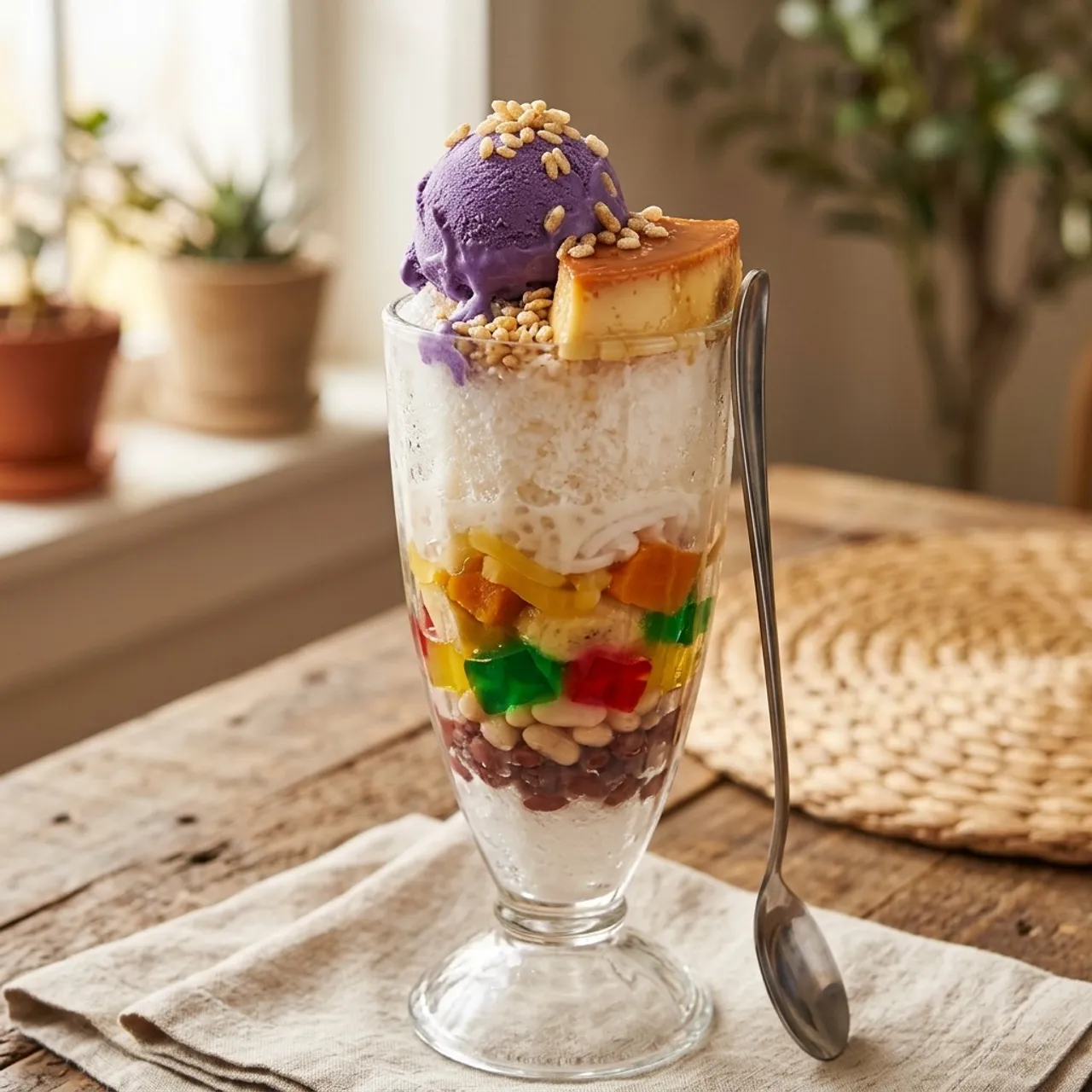
 Filipino Images are for illustrative purposes only, may be inaccurate, and do not guarantee the presence or absence of specific ingredients.
 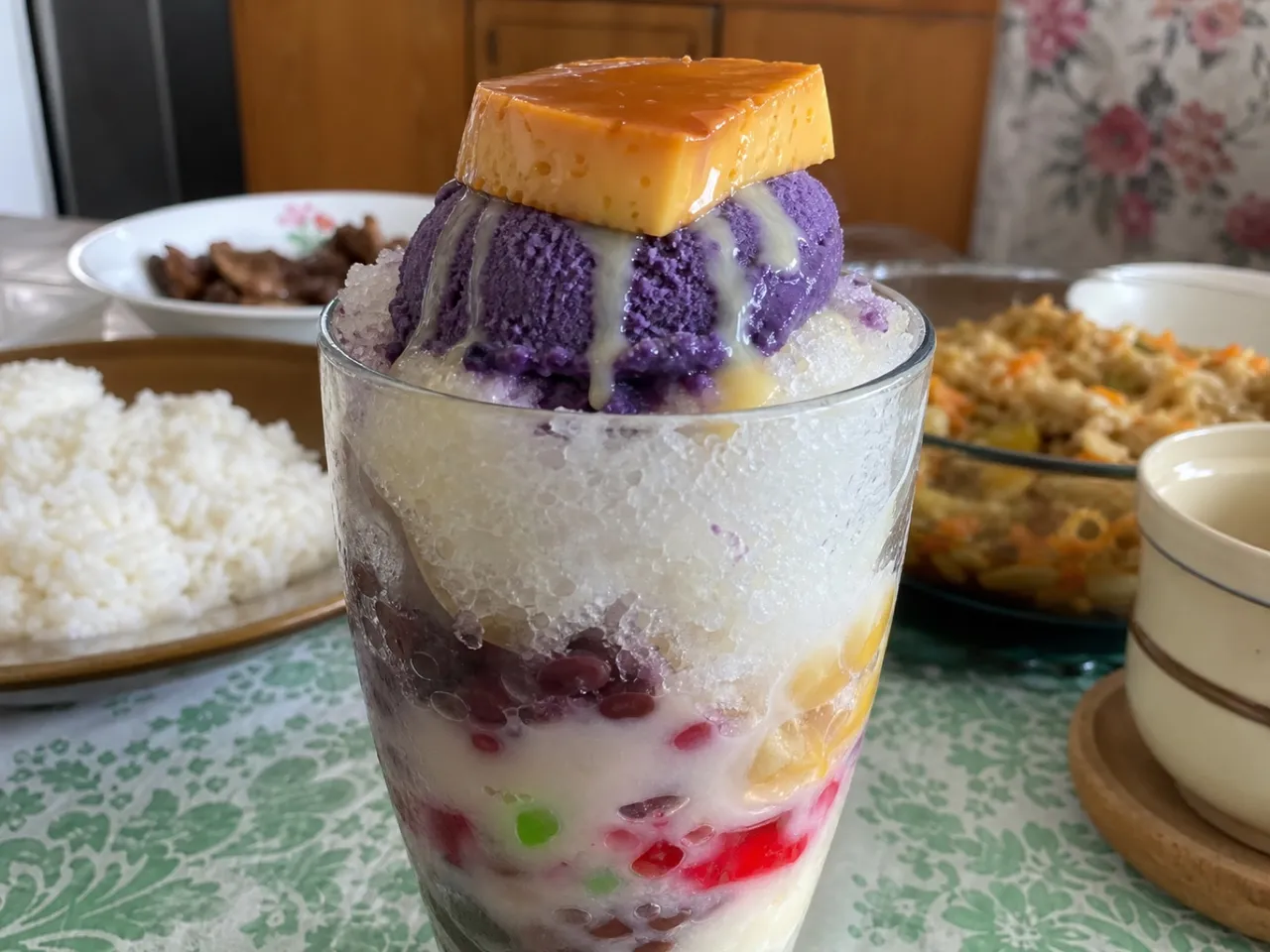 Serving Images are for illustrative purposes only, may be inaccurate, and do not guarantee the presence or absence of specific ingredients.
 Halo-Halo
A popular cold dessert combining crushed ice, evaporated milk, and various sweet ingredients.
Contains common allergens
In the app, Listahan checks these against your household automatically.
Good to know
- Ready in under 30 minutes
Matched from this dish's own ingredients and timing. Browse more: 30-minute meals
Instructions
5 steps- 1
Prepare the Base: In a tall, clear glass, meticulously layer the sweet ingredients at the bottom: sweetened red beans, white beans, macapuno, jackfruit, and nata de coco.
- 2
Add Ice: Pack the glass almost to the brim with finely crushed or shaved ice. The ice should be soft and powdery, not chunky.
- 3
Pour the Milk: Generously drizzle the evaporated milk over the shaved ice, allowing it to seep down into the sweet ingredients at the bottom.
- 4
Garnish: Top the mountain of ice with a dollop of ube halaya, a thick slice of creamy leche flan, and a scoop of rich ube ice cream.
- 5
Mix and Eat: Serve immediately with a long spoon. Instruct the eater to mix ("halo") everything vigorously before eating to blend the flavors and textures.
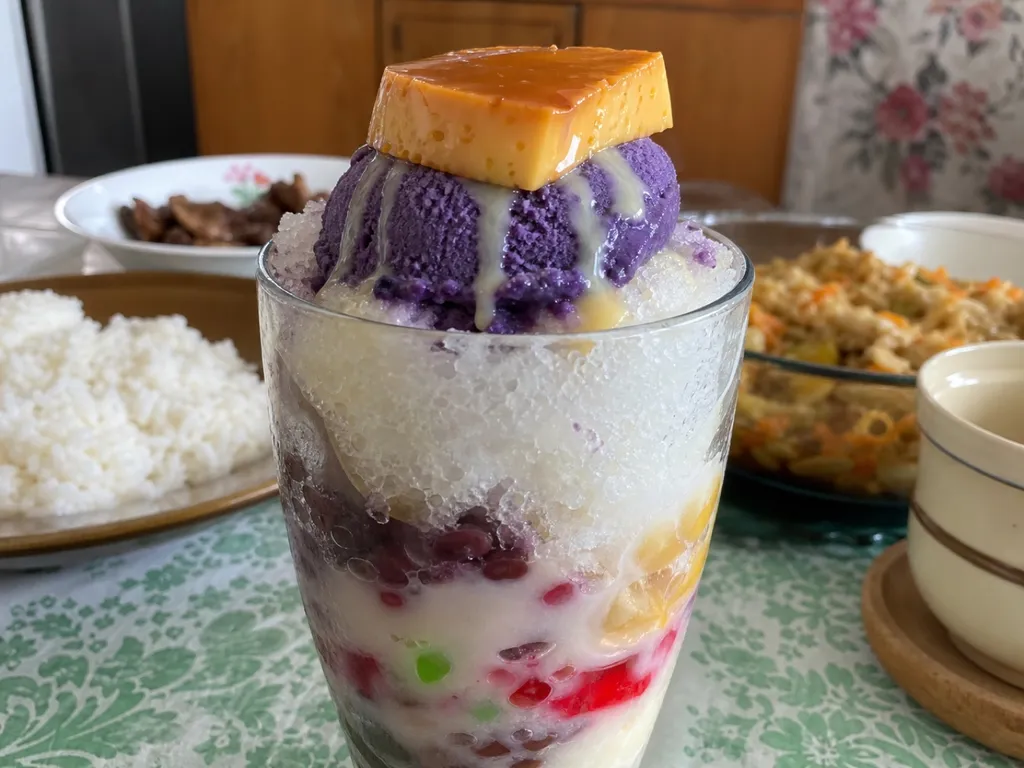 Images are for illustrative purposes only, may be inaccurate, and do not guarantee the presence or absence of specific ingredients.
 Listahan Family Score™
79/100
Good fit for most families
Score reflects how well this recipe fits a typical busy household. In the app, your Family Score is personalized to your household's allergens, kids, and pantry.
Nutrition
per serving15
Calories
1 g
Protein
2 g
Carbs
1 g
Fat
Estimated per serving. Actual values depend on the brands and portions you use.
Listahan cooking guide
Chef notes & practical guide
Technique notes, ingredient swaps, serve-alongside ideas, storage guidance, and equipment for this recipe.
Cultural context
Halo-Halo means mix-mix, an instruction as much as a name. It layers shaved ice, sweet beans, fruits, and jellies under evaporated milk, crowned with ube and leche flan, all stirred together before eating. Descended from Japanese kakigori brought to the islands, it became the Philippines' definitive hot-weather dessert.
Listahan note
This version treats halo-halo as assembly, not cooking: the joy is in arranging colorful sweet components so every spoonful after the mix is a little different.
Technique cues
- Use finely shaved ice, not cubes, so it melts into the milk smoothly.
- Layer the heavy sweet beans at the bottom and the delicate toppings on top.
- Serve with a tall spoon and instruct everyone to mix thoroughly before the first bite.
Kitchen flow
- Parallel prep
- Prep and chill every component ahead so assembly is just layering.
- Make-ahead
- Keep beans, jellies, and flan ready in the fridge; shave the ice only at serving.
- Leftover move
- Store unused components separately; once mixed, halo-halo does not keep.
- Cleanup rhythm
- A few prep bowls and tall glasses; rinse promptly before syrups dry.
Ingredient brief
Role, handling, and swap guidance for each key ingredient.
Shaved ice
Base
Purpose: Fine ice is the canvas that carries the milk and sweet bits.
Handling: Shave or crush as finely as possible just before assembling.
Adaptation: A blender pulse of ice cubes approximates shaved ice.
Evaporated milk
Creamy liquid
Purpose: Binds the ice and sweets into a cohesive, milky dessert.
Handling: Pour generously over the assembled glass right before serving.
Adaptation: Use a chilled oat or coconut milk for a dairy-free version.
Sweet beans and jellies
Sweet components
Purpose: Provide chew, color, and bursts of contrasting sweetness.
Handling: Drain well so excess syrup does not flood the glass.
Adaptation: Any mix of sweetened beans, nata de coco, or fruit works.
Ube ice cream and leche flan
Crowning toppings
Purpose: Add the rich, showpiece finish that makes halo-halo feel special.
Handling: Add at the very end so they do not melt prematurely.
Adaptation: Macapuno or a scoop of vanilla can stand in.
Technique notes
- Assemble at the last minute, since melting ice waits for no one.
- Balance textures deliberately so each spoon has something soft, chewy, and creamy.
- Do not skimp on the milk; it is what ties the whole glass together.
Ingredient swaps
- Dairy-free direction
- Use chilled coconut or oat milk and a dairy-free frozen scoop on top.
- Lower-sugar direction
- Reduce the number of sweetened components and lean on fresh fruit.
- Nut-free direction
- Skip any nut toppings and verify the ice cream brand is nut-safe.
Serve alongside
- Ube halaya
- Leche flan
- Toasted pinipig
- Fresh mango
- Cold water
- Iced calamansi juice
Serving suggestions only — check pairings for your household's allergens.
Storage & reheating
- Store individual components separately in the fridge for several days.
- Do not store assembled halo-halo, as the ice melts and textures collapse.
- Keep ube ice cream and flan frozen or chilled until the moment of serving.
Equipment
- Ice shaver or blender
- Tall glasses
- Long spoons
- Small bowls for components
Make this household-aware
Listahan Pro checks this recipe against your household's allergens, finds pantry-aware swaps, builds the shopping list, and helps you plan the week around it.
Plan it in Listahan
Add Halo-Halo to your week, check it against your household's allergens, and build the shopping list automatically.
More Filipino recipes
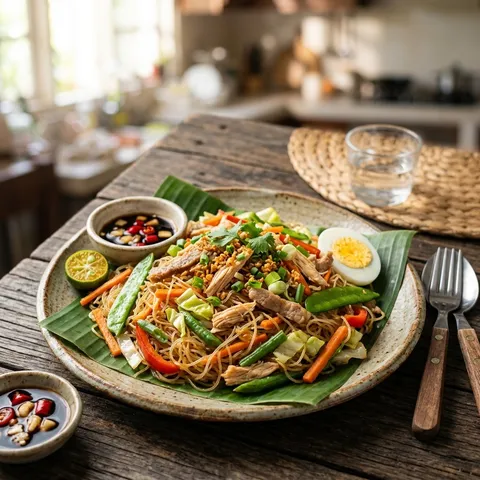 Filipino Lens Verified Images are for illustrative purposes only, may be inaccurate, and do not guarantee the presence or absence of specific ingredients.
 Pancit Bihon
Thin rice vermicelli stir-fried with chicken, shrimp, and vegetables in a savory soy-citrus sauce, a fixture at every Filipino celebration.
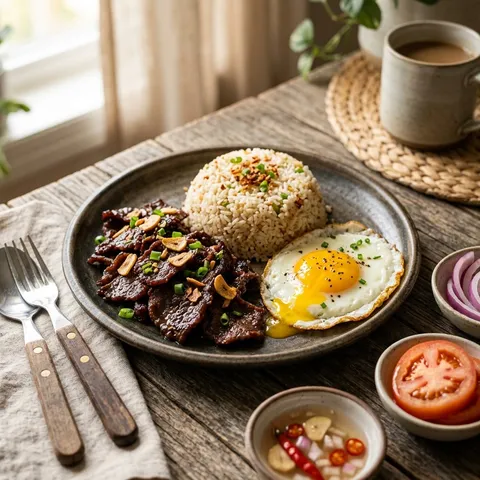 Filipino Lens Verified Images are for illustrative purposes only, may be inaccurate, and do not guarantee the presence or absence of specific ingredients.
 Tapsilog
A hearty breakfast combo of marinated beef (tapa), garlic fried rice (sinangag), and a fried egg (itlog).
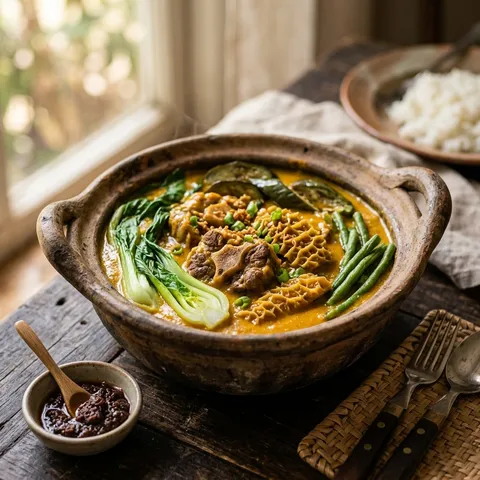 Filipino Lens Verified Images are for illustrative purposes only, may be inaccurate, and do not guarantee the presence or absence of specific ingredients.
 Kare-Kare
A rich peanut stew typically made with oxtail and vegetables, served with shrimp paste.