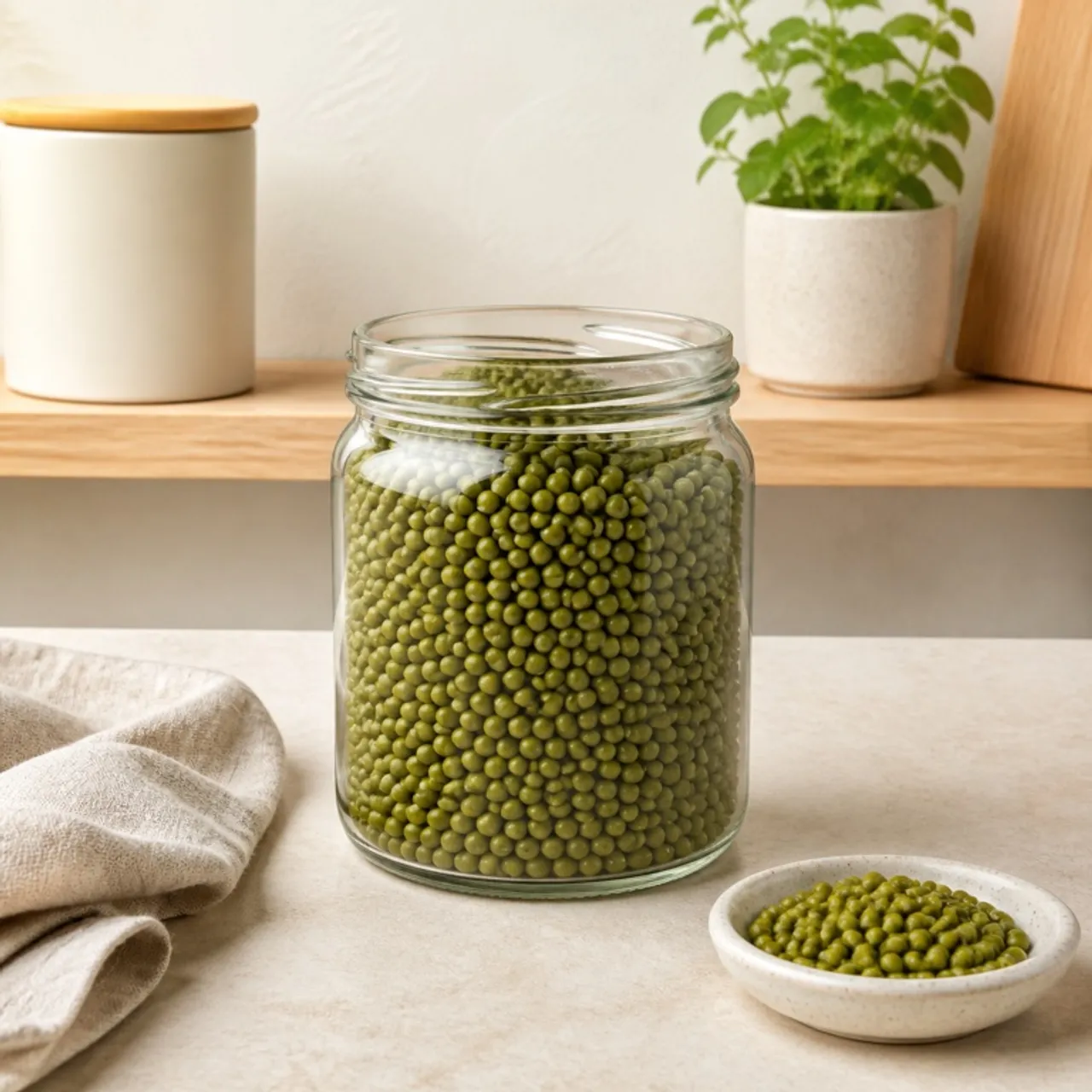
 Food Lens Images are for illustrative purposes only, may be inaccurate, and do not guarantee the presence or absence of specific ingredients.
 Food Lens · Recipe ingredients
Mung Beans
Mild, earthy, and slightly sweet with a creamy, tender texture when fully cooked; fresher beans have a clean, green note that develops into a nuttier depth with longer cooking.
Lens VerifiedMung beans are small, oval legumes with a bright green skin and pale yellow interior that cook relatively quickly compared to other dried beans, making them one of the most practical legumes in the pantry. They are equally at home in savory braises, sweet dessert soups, and sprouted raw in salads. Their mild, earthy flavor and creamy texture when cooked make them adaptable to an enormous range of cuisines from South Asia to East Asia to Southeast Asia.
Where it comes from
Mung beans were first domesticated on the Indian subcontinent around 1500 BCE and gradually spread across Asia via trade and migration, becoming one of the most widely cultivated legumes in tropical and subtropical regions.
Varieties — Whole green mung beans are most common. Split mung beans (moong dal) — with or without skin — cook faster and are used in different preparations. Bean sprouts sold in supermarkets are almost always sprouted mung beans.
In the Philippines, Fridays are traditionally monggo day — a cultural tradition of eating mung bean stew during abstinence days that has become a beloved family ritual. In India, moong dal is among the first solid foods introduced to infants. In China, mung bean paste fills mooncakes and sweet pastries.
In a modern kitchen — Mung beans sprout easily at home in a jar with cheesecloth — soak overnight, drain, and rinse twice daily for fresh bean sprouts in three to four days. They are also ground into starch for glass noodles (cellophane or mung bean thread noodles).
Buying it
Look for beans with uniform green color and no signs of mold, shriveling, or insect damage. Older beans take longer to soften; buy from stores with high turnover. Split yellow mung dal should be bright yellow with a clean, earthy smell.
Storing it
Store dried mung beans in an airtight container in a cool, dry pantry, where they'll keep well for a long time. They get tougher and slower to cook as they age, so check for a musty smell or insects before using an older batch.
Keeps about 1 year in the pantry.
Out of mung beans? Good swaps
General cooking guidance — always check the labels on the products you use. Listahan’s allergen checks run automatically when you plan a recipe in the app. Not medical advice.
Recipes that use mung beans
- Bánh Tét (Cylindrical Sticky Rice Cake)
- Luk Chup
- Chè Ba Màu (Three Color Dessert)
- Bánh Khọt (Mini Savory Pancakes)
- Chè Trôi Nước (Sticky Rice Balls in Ginger Syrup)
- Bindaetteok (Mung Bean Pancake)
- Xôi Xéo (Mung Bean Sticky Rice)
- Bánh Chưng (Sticky Rice Cake)
- Ginisang Monggo
- Bánh Cam (Sesame Balls)
- Halo-Halo
Common questions about mung beans
Is mung beans vegan?
Mung Beans is generally plant-based and suitable for a vegan diet, but brands differ — confirm on the label.
What can I use instead of mung beans?
Good swaps include , , . Each behaves a little differently — see the swaps above for notes, and always check labels for allergens.
How do I store mung beans?
Store dried mung beans in an airtight container in a cool, dry pantry, where they'll keep well for a long time. They get tougher and slower to cook as they age, so check for a musty smell or insects before using an older batch. It keeps about 1 year in the pantry.
More recipe ingredients
See all


Make mung beans about your kitchen — with Listahan Pro
Everything above is free, forever. Pro adds the Household Lens — the same food, seen for your family:
-
Checked for each member
Flags mung beans per person against your household's allergies and school rules — not just a generic "contains" tag.
-
Pantry-aware
Knows whether you already have it, what is running low, and the best swap from what is in your kitchen tonight.
-
What it costs near you
A real price from the Presyo community index, so you can plan the budget — not guess.
-
Your household memory
Who likes it, plus your own private notes — brand, where you keep it, who skips it.
Allergen safety is always free — Pro adds the automation, never the safety.
Cook with mung beans — safely
Plan a recipe in Listahan and the household allergen check runs automatically — every plan, every swap, every lunchbox. Safety is never paywalled.