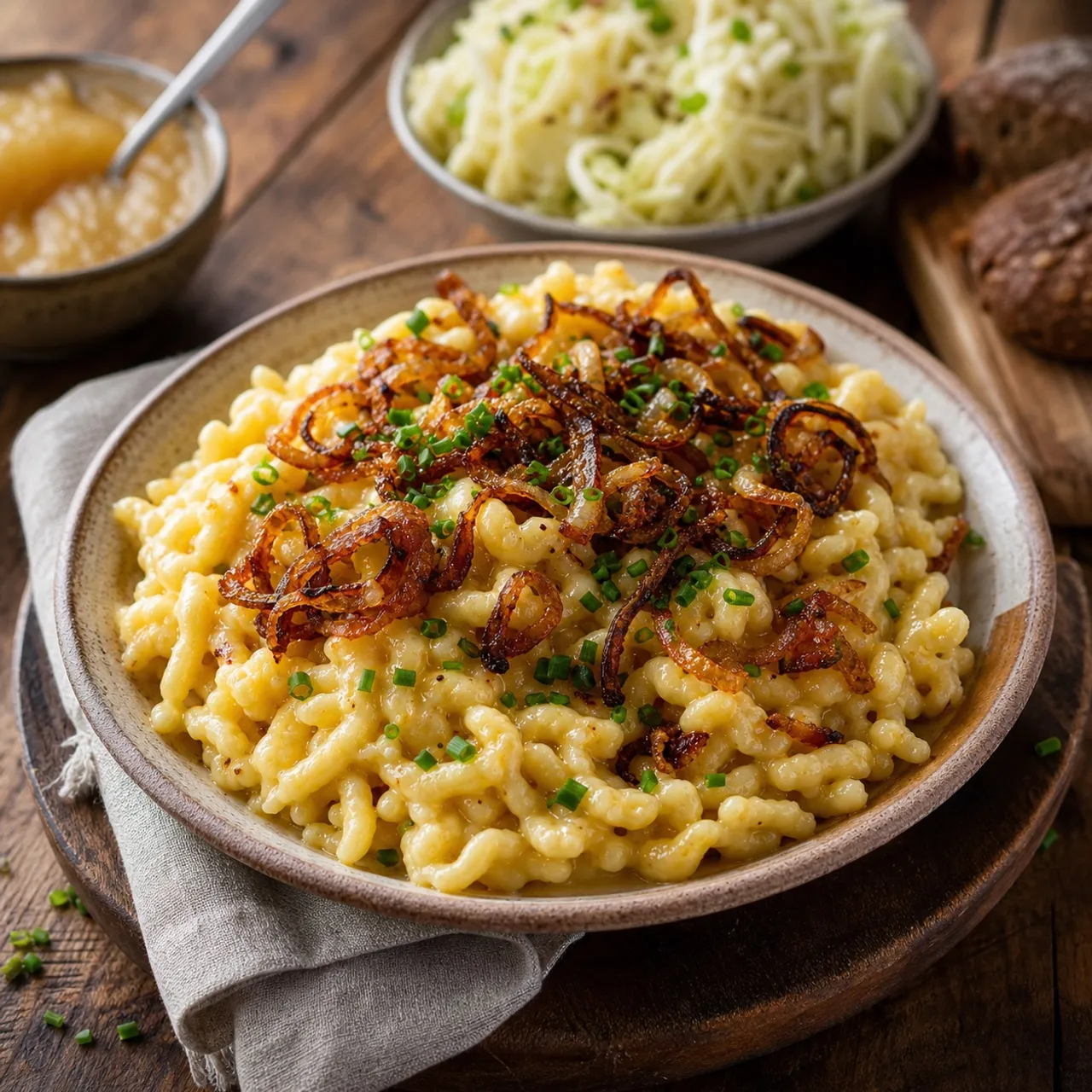
 German Images are for illustrative purposes only, may be inaccurate, and do not guarantee the presence or absence of specific ingredients.
 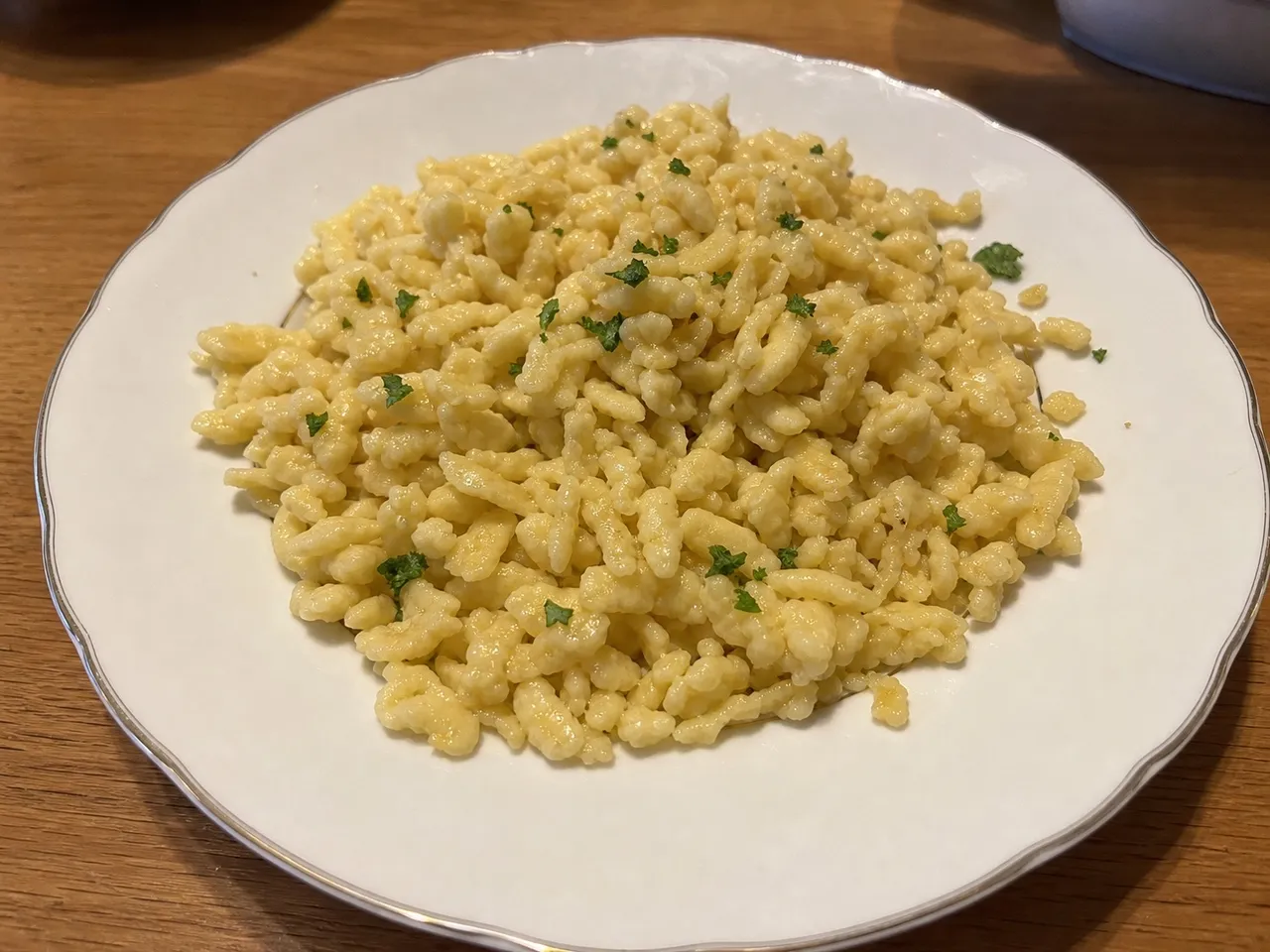 Serving Images are for illustrative purposes only, may be inaccurate, and do not guarantee the presence or absence of specific ingredients.
 Spätzle (German Egg Noodles)
Soft, irregular little egg noodles scraped straight into boiling water, a Swabian staple that soaks up butter and gravy beautifully.
Contains common allergens
In the app, Listahan checks these against your household automatically.
Good to know
- Ready in under 30 minutes
Matched from this dish's own ingredients and timing. Browse more: 30-minute meals
Instructions
6 steps- 1
Whisk together flour, eggs, water, salt, and nutmeg until a thick, elastic, sticky batter forms; let rest for 10 minutes.
- 2
Bring a large pot of salted water to a boil.
- 3
Working in batches, press the batter through a spätzle press or colander directly into the boiling water.
- 4
Cook until the spätzle float to the surface, about 2-3 minutes, then remove with a slotted spoon.
- 5
Melt butter in a skillet and toss the cooked spätzle to coat and lightly crisp the edges.
- 6
Sprinkle with chopped chives and serve hot as a side.
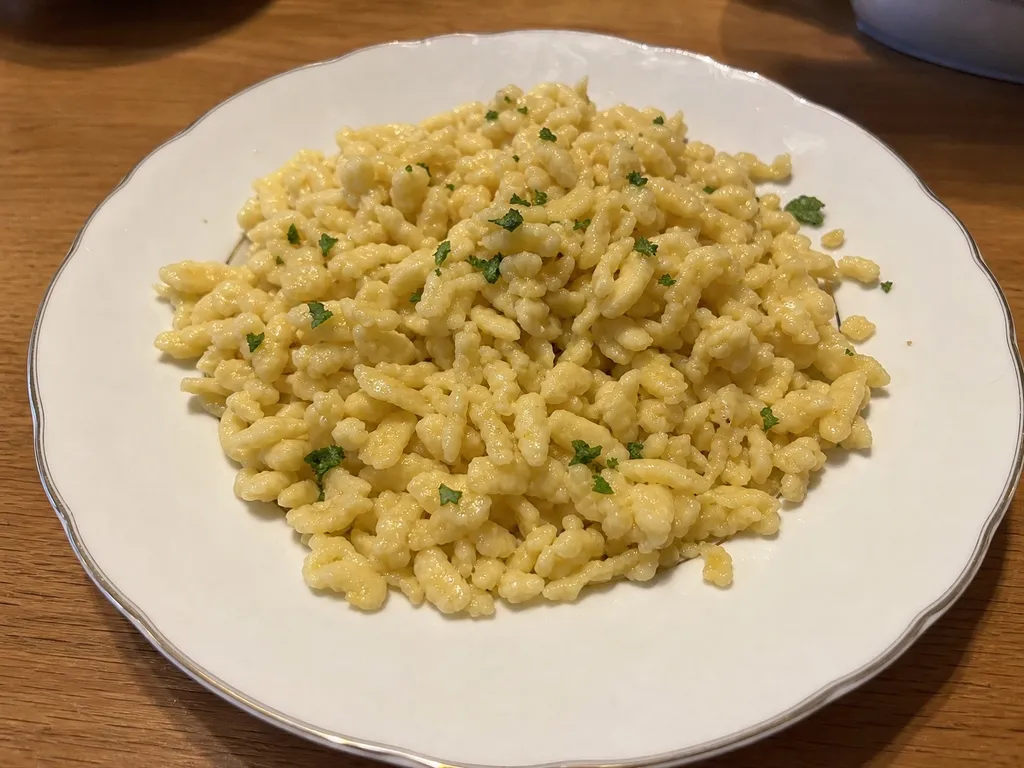 Images are for illustrative purposes only, may be inaccurate, and do not guarantee the presence or absence of specific ingredients.
 Listahan Family Score™
79/100
Good fit for most families
Score reflects how well this recipe fits a typical busy household. In the app, your Family Score is personalized to your household's allergens, kids, and pantry.
Nutrition
per serving510
Calories
17 g
Protein
76 g
Carbs
14 g
Fat
Estimated per serving. Actual values depend on the brands and portions you use.
Listahan cooking guide
Chef notes & practical guide
Technique notes, ingredient swaps, serve-alongside ideas, storage guidance, and equipment for this recipe.
Cultural context
Spatzle is a fresh egg noodle from the Swabian region of southwestern Germany, made not by rolling and cutting dough but by scraping or pressing a thick, sticky batter directly into boiling water. The name means little sparrows, a nod to the irregular, teardrop shapes the dough forms as it hits the pot. It's a defining side of Swabian cooking, standing in for potatoes or rice under saucier dishes like goulash or roast.
Listahan note
This version keeps the batter loose and sticky on purpose, since a stiff dough won't press properly through a spatzle maker, and finishes the noodles in butter so they pick up a little color and chew rather than staying merely boiled.
Technique cues
- The batter should be thick but pourable and quite sticky, closer to a heavy pancake batter than bread dough; if it holds a shape on a spoon, it's too stiff to press.
- Letting the batter rest for 10 minutes lets the flour hydrate fully, which makes it easier to press and gives a more tender noodle.
- Work in small batches through the press or colander so the water stays at a boil; overcrowding drops the temperature and the spatzle turn gummy.
Kitchen flow
- Parallel prep
- Bring the pot of water to a boil while the batter rests, so both are ready at the same time.
- Make-ahead
- Spatzle can be boiled ahead, tossed lightly with oil to prevent sticking, and refrigerated; finish in butter just before serving.
- Leftover move
- Leftover spatzle fries up well the next day in a hot skillet with a little extra butter until the edges turn golden and crisp.
- Cleanup rhythm
- Rinse the press or colander immediately after use, since dried batter is much harder to scrub off than wet batter.
Ingredient brief
Role, handling, and swap guidance for each key ingredient.
All-purpose flour
Base structure
Purpose: It's what gives the batter enough body to hold together once it hits the boiling water, while still staying tender.
Handling: Whisk thoroughly with the eggs and liquid to avoid dry pockets before resting the batter.
Adaptation: A gluten-free 1:1 flour blend can work, though the texture will be softer and less chewy than traditional wheat spatzle.
Eggs
Binding and richness
Purpose: Eggs are what make spatzle a true egg noodle rather than a plain flour dumpling, giving it color and a tender chew.
Handling: Whisk in fully before adding the flour so the batter is smooth rather than streaky.
Adaptation: There isn't a good egg-free substitute that keeps this dish authentic; a different noodle is a more honest swap for an egg allergy.
Ground nutmeg
Warming background spice
Purpose: A small pinch of nutmeg is traditional in spatzle and rounds out the egg and flour flavor without tasting overtly spiced.
Handling: Add directly to the batter while whisking; a little goes a long way.
Adaptation: Ground mace can substitute in a similar small quantity.
Butter (for finishing)
Finishing fat
Purpose: Tossing the boiled spatzle in butter gives the noodles a light sheen and lets the edges pick up some color and crisp in the skillet.
Handling: Melt until just foaming before adding the drained spatzle, then toss rather than stir to avoid breaking them up.
Adaptation: A neutral oil works for a dairy-free version, though the flavor will be less rich.
Technique notes
- A spatzle press or a colander with large holes both work; the goal is thin ribbons dropping straight into the water, not thick blobs.
- Pull the spatzle out with a slotted spoon as soon as they float, rather than waiting for a fixed time, since batches vary slightly in thickness.
- Toss the boiled spatzle in butter over real heat rather than just melted butter off the heat, so the edges get a little color instead of staying pale and soft all over.
Ingredient swaps
- Gluten-free direction
- Use a gluten-free flour blend and expect a softer noodle; letting the batter rest a few extra minutes helps it hold together better.
- Dairy-free direction
- Swap the water-or-milk portion for water only and use oil instead of butter to finish; the flavor will be simpler but still work as a side.
- Make-it-a-meal path
- Toss the finished spatzle with sauteed onions and melted cheese for a quick Kasespatzle instead of serving it plain as a side.
Serve alongside
- Sauerbraten or goulash
- Rotkohl (braised red cabbage)
- Simple green salad
- Roasted pork
- Dry Riesling
- Pilsner
- Sparkling water
Serving suggestions only — check pairings for your household's allergens.
Storage & reheating
- Refrigerate boiled spatzle tossed with a little oil for up to 3 days.
- Reheat in a hot buttered skillet rather than the microwave, so the noodles crisp slightly instead of turning mushy.
- Freezing is not recommended, since fresh egg noodles turn soft and waterlogged once thawed.
Equipment
- Spätzle press or a wide-holed colander
- Large pot
- Slotted spoon
- Skillet for finishing
Make this household-aware
Listahan Pro checks this recipe against your household's allergens, finds pantry-aware swaps, builds the shopping list, and helps you plan the week around it.
Plan it in Listahan
Add Spätzle (German Egg Noodles) to your week, check it against your household's allergens, and build the shopping list automatically.
More German recipes
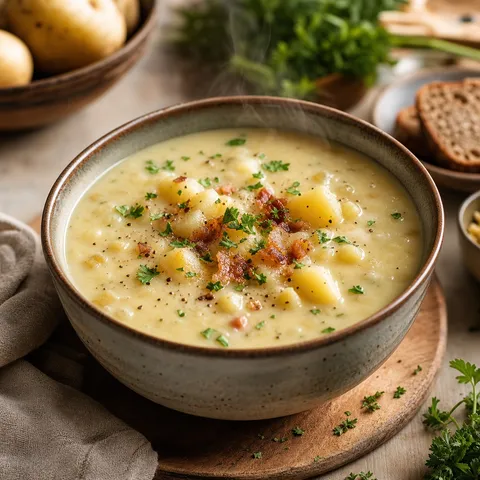 German Lens Verified Images are for illustrative purposes only, may be inaccurate, and do not guarantee the presence or absence of specific ingredients.
 Kartoffelsuppe (Creamy German Potato Soup)
A creamy, comforting German potato soup with leeks, carrots, and a smoky finish of fried sausage or bacon.
 German Lens Verified Images are for illustrative purposes only, may be inaccurate, and do not guarantee the presence or absence of specific ingredients.
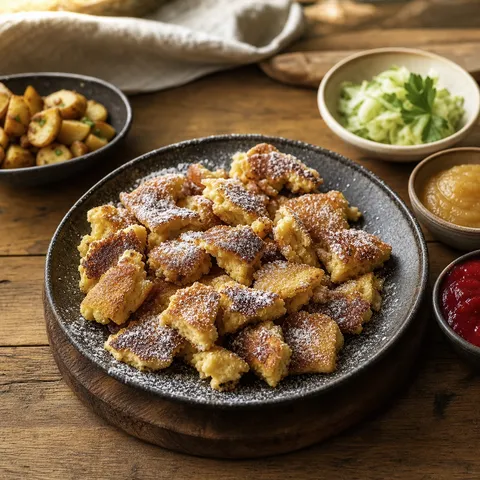
 Kaiserschmarrn (Shredded Sugared Pancake)
A fluffy shredded pancake dusted with powdered sugar and studded with golden raisins, torn into rustic pieces and served with stewed fruit compote.
 German Lens Verified Images are for illustrative purposes only, may be inaccurate, and do not guarantee the presence or absence of specific ingredients.
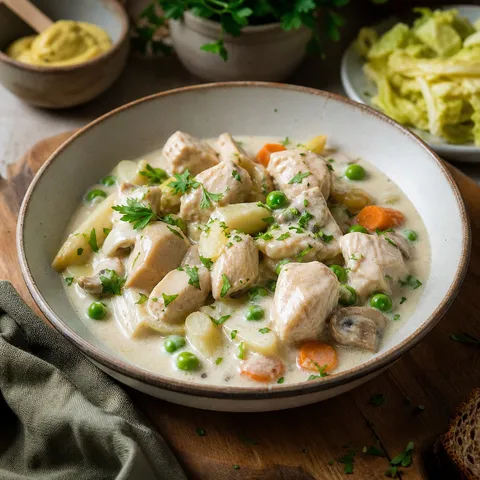
 Hühnerfrikassee (German Chicken Fricassee)
A comforting German chicken fricassee in a silky lemon-cream sauce studded with mushrooms, peas, and capers.