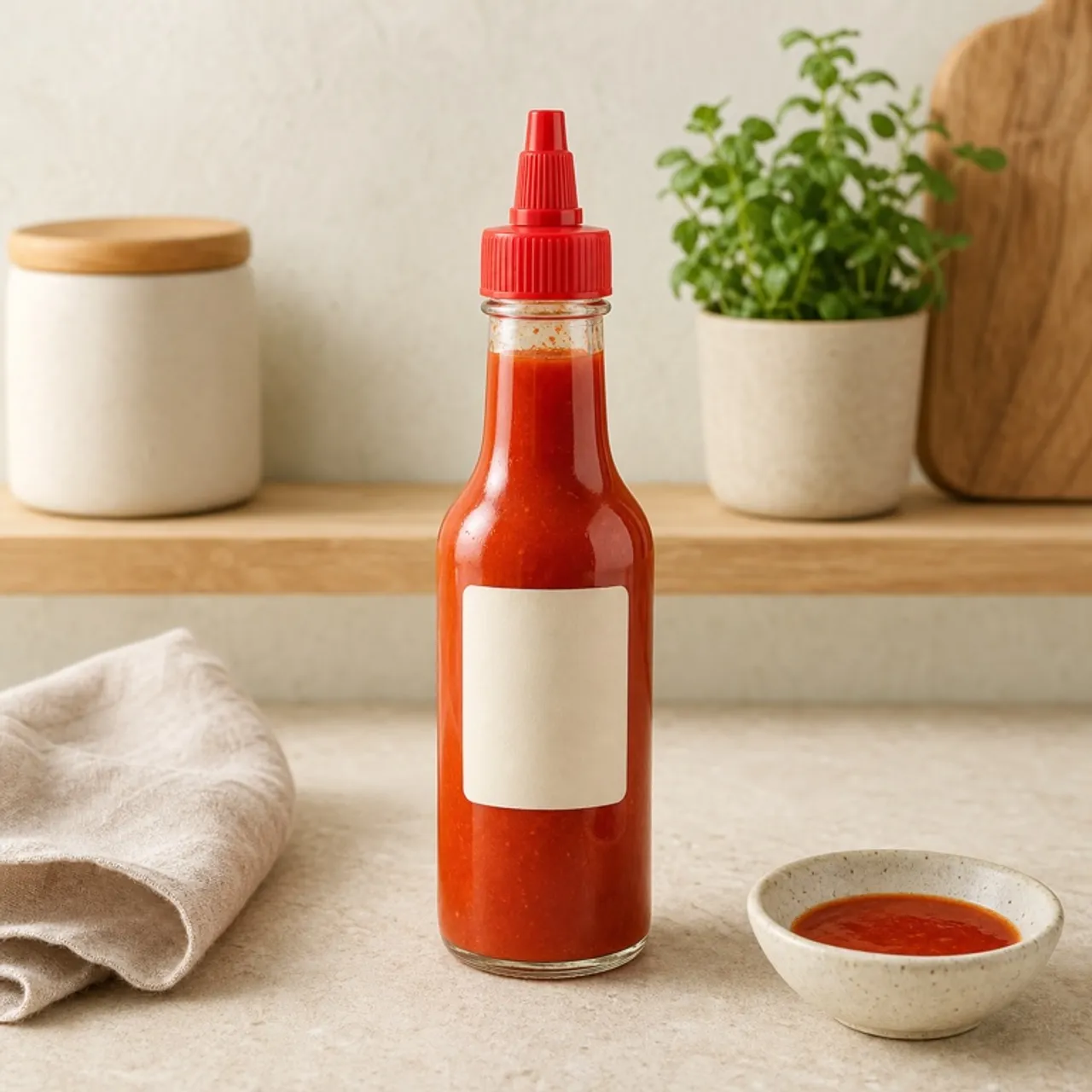
 Food Lens Images are for illustrative purposes only, may be inaccurate, and do not guarantee the presence or absence of specific ingredients.
 Food Lens · Condiments
Hot sauce
Tangy, sharp, and vinegar-bright with a chili warmth that ranges from moderate to face-flushing depending on the variety.
Lens VerifiedHot sauce is a pourable chili-based condiment made from fermented or fresh chili peppers, vinegar, and salt, ranging from tangy and mild to incandescently hot depending on the style. It is a universal condiment across North American, Caribbean, West African, and Mexican cuisines, used to season eggs, tacos, soups, fried chicken, and nearly everything in between.
Where it comes from
Hot sauce's roots span continents — from the chili pepper's origin in the Americas, to its adoption in West African cooking via the slave trade, to its evolution into Louisiana's vinegar-forward tradition and the Caribbean's fruit-forward scotch bonnet sauces. Bottled hot sauce traveled back across the Atlantic and around the world, and today it is one of the fastest-growing condiment categories in North American grocery stores.
Varieties — Louisiana-style (Frank's, Crystal, Tabasco) — thin, tangy, vinegar-forward. Sriracha — thicker, garlicky, slightly sweet. Caribbean-style (Matouk's, Grace) — scotch bonnet and habanero, fruitier and very hot. Mexican salsa-style (Valentina, Cholula) — thicker, with dried chili complexity.
In Nigerian and West African cooking, hot sauce (both imported brands and homemade pepper sauces) is a constant presence at the table. In Mexican restaurants across North America, a bottle of Valentina or Cholula is as expected on the table as salsa. Buffalo hot sauce blended with butter became a quintessentially American bar food staple in the 1960s.
In a modern kitchen — Louisiana-style hot sauces (Tabasco, Frank's) add vinegar tanginess alongside heat — they are seasoning sauces as much as heat delivery. If you want pure heat without vinegar, use a chili paste or dried chili flakes instead.
Buying it
Consider what you need from a hot sauce: tanginess and moderate heat (Frank's RedHot, Crystal), intense heat (Tabasco, Cholula Chipotle), garlic-forward heat (sriracha), or fruity Caribbean fire (Matouk's). Check the pepper type and heat rating on the bottle for a guide. Store in the refrigerator after opening.
Storing it
Once opened, hot sauce keeps its color and heat best in the fridge, though most vinegar-based sauces also hold up fine at cool room temperature for a while. Reseal the cap tightly between uses.
Keeps about 1 year in the fridge.
Out of hot sauce? Good swaps
- Chili flakes + vinegar — Mix ½ tsp red chili flakes with 1 tsp white vinegar per tbsp of hot sauce needed in cooked dishes.
- Sriracha — Use 1:1 as a swap for Louisiana-style — slightly thicker and garlicky, but delivers similar heat and tang in most applications.
- Sambal oelek — Use 1:1 for a chunkier, less vinegary chili heat — excellent in stir-fries, dressings, and marinades.
General cooking guidance — always check the labels on the products you use. Listahan’s allergen checks run automatically when you plan a recipe in the app. Not medical advice.
Recipes that use hot sauce
Common questions about hot sauce
Is hot sauce vegan?
Hot sauce is generally plant-based and suitable for a vegan diet, but brands differ — confirm on the label.
What can I use instead of hot sauce?
Good swaps include Chili flakes + vinegar, Sriracha, Sambal oelek. Each behaves a little differently — see the swaps above for notes, and always check labels for allergens.
How do I store hot sauce?
Once opened, hot sauce keeps its color and heat best in the fridge, though most vinegar-based sauces also hold up fine at cool room temperature for a while. Reseal the cap tightly between uses. It keeps about 1 year in the fridge.
More condiments
See all


Make hot sauce about your kitchen — with Listahan Pro
Everything above is free, forever. Pro adds the Household Lens — the same food, seen for your family:
-
Checked for each member
Flags hot sauce per person against your household's allergies and school rules — not just a generic "contains" tag.
-
Pantry-aware
Knows whether you already have it, what is running low, and the best swap from what is in your kitchen tonight.
-
What it costs near you
A real price from the Presyo community index, so you can plan the budget — not guess.
-
Your household memory
Who likes it, plus your own private notes — brand, where you keep it, who skips it.
Allergen safety is always free — Pro adds the automation, never the safety.
Cook with hot sauce — safely
Plan a recipe in Listahan and the household allergen check runs automatically — every plan, every swap, every lunchbox. Safety is never paywalled.