 Food Lens Images are for illustrative purposes only, may be inaccurate, and do not guarantee the presence or absence of specific ingredients.
 Food Lens · Recipe ingredients
Nori
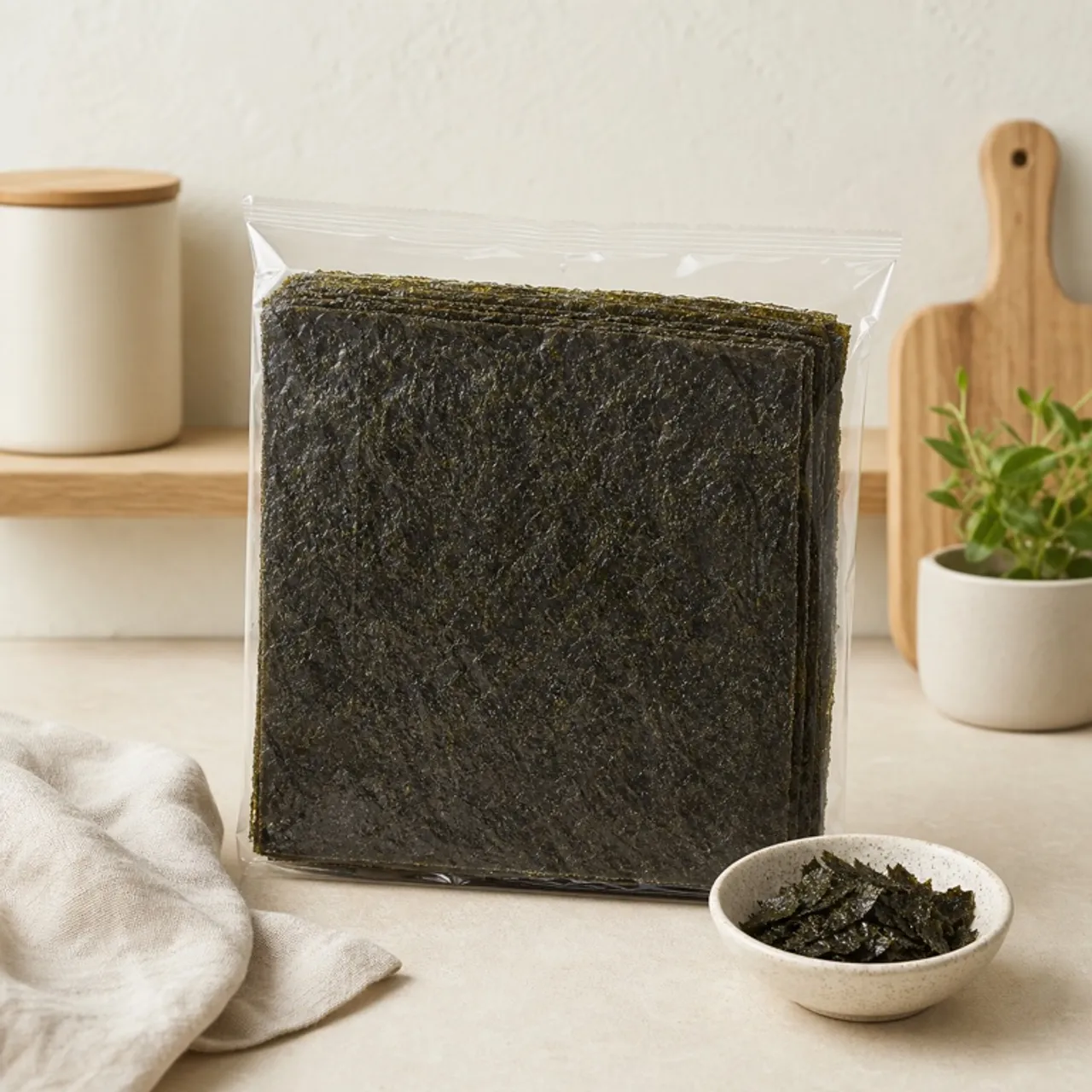
Oceanic and umami-rich with a light, almost savory mineral taste; crisp and papery when fresh, becoming pleasantly chewy around moist rice.
Lens VerifiedNori is a dried, pressed sheet of edible seaweed (red algae, genus Porphyra) with a thin, papery texture and a distinctly oceanic, umami-rich flavor, most recognized as the dark wrapper for sushi rolls and onigiri in Japanese cuisine. It is also crumbled as a seasoning, used in ramen toppings, and eaten as a snack.
Where it comes from
Nori cultivation in Japan dates back to the 7th century, initially harvested wild from coastal waters. By the Edo period, farmers in Tokyo Bay had developed wooden frame cultivation methods that closely resemble modern aquaculture practices. After WWII, British phycologist Kathleen Drew-Baker's research into the life cycle of Porphyra was pivotal in allowing year-round cultivation — she is honored with a monument in Japan. Today, Japan and Korea are the world's largest producers, and nori is available in every Asian grocery store and most mainstream supermarkets in North America.
Varieties — Yaki nori (toasted, crisp) is used for sushi and onigiri; ao nori is a powdered green seaweed for seasoning okonomiyaki and takoyaki; seasoned nori (ajitsuke nori) is pre-seasoned with soy sauce and sesame oil — popular as a snack. Korean gim (김) is a close relative, typically thinner and often seasoned with sesame oil and salt.
Nori is inseparable from Japanese bento culture — a rice ball (onigiri) wrapped in nori is perhaps the most iconic portable Japanese snack, made daily in millions of Japanese households.
In a modern kitchen — Store opened nori sheets in a resealable bag or airtight container immediately — nori absorbs humidity and loses its crisp texture within hours. If sheets become soft, pass them briefly over a gas flame or low oven (275°F for a few minutes) to restore crispness.
Buying it
Nori sheets (yaki nori, toasted) are sold in packs of 10–50 sheets at Asian grocery stores and in most mainstream supermarkets. Look for deep, dark green-black sheets with a uniform thin texture. Seasoned snack nori (Korean or Japanese style) is sold in small individual packs in the snack aisle. For cooking, buy unseasoned yaki nori.
Storing it
Store nori sheets in their sealed package with the included desiccant, in a cool, dry spot — humidity turns crisp sheets limp and chewy. Reseal tightly after opening and use it up promptly for the best snap.
Keeps about 1 year in the pantry.
Out of nori? Good swaps
- Korean gim sheets — Nearly identical; often pre-seasoned — check before adding more salt.
- Rice paper wrappers — For rolling applications only; no seaweed flavor, but provides a wrapper function.
General cooking guidance — always check the labels on the products you use. Listahan’s allergen checks run automatically when you plan a recipe in the app. Not medical advice.
Recipes that use nori
Common questions about nori
Is nori vegan?
Nori is generally plant-based and suitable for a vegan diet, but brands differ — confirm on the label.
What can I use instead of nori?
Good swaps include Korean gim sheets, Rice paper wrappers. Each behaves a little differently — see the swaps above for notes, and always check labels for allergens.
How do I store nori?
Store nori sheets in their sealed package with the included desiccant, in a cool, dry spot — humidity turns crisp sheets limp and chewy. Reseal tightly after opening and use it up promptly for the best snap. It keeps about 1 year in the pantry.
More recipe ingredients
See all


Make nori about your kitchen — with Listahan Pro
Everything above is free, forever. Pro adds the Household Lens — the same food, seen for your family:
-
Checked for each member
Flags nori per person against your household's allergies and school rules — not just a generic "contains" tag.
-
Pantry-aware
Knows whether you already have it, what is running low, and the best swap from what is in your kitchen tonight.
-
What it costs near you
A real price from the Presyo community index, so you can plan the budget — not guess.
-
Your household memory
Who likes it, plus your own private notes — brand, where you keep it, who skips it.
Allergen safety is always free — Pro adds the automation, never the safety.
Cook with nori — safely
Plan a recipe in Listahan and the household allergen check runs automatically — every plan, every swap, every lunchbox. Safety is never paywalled.