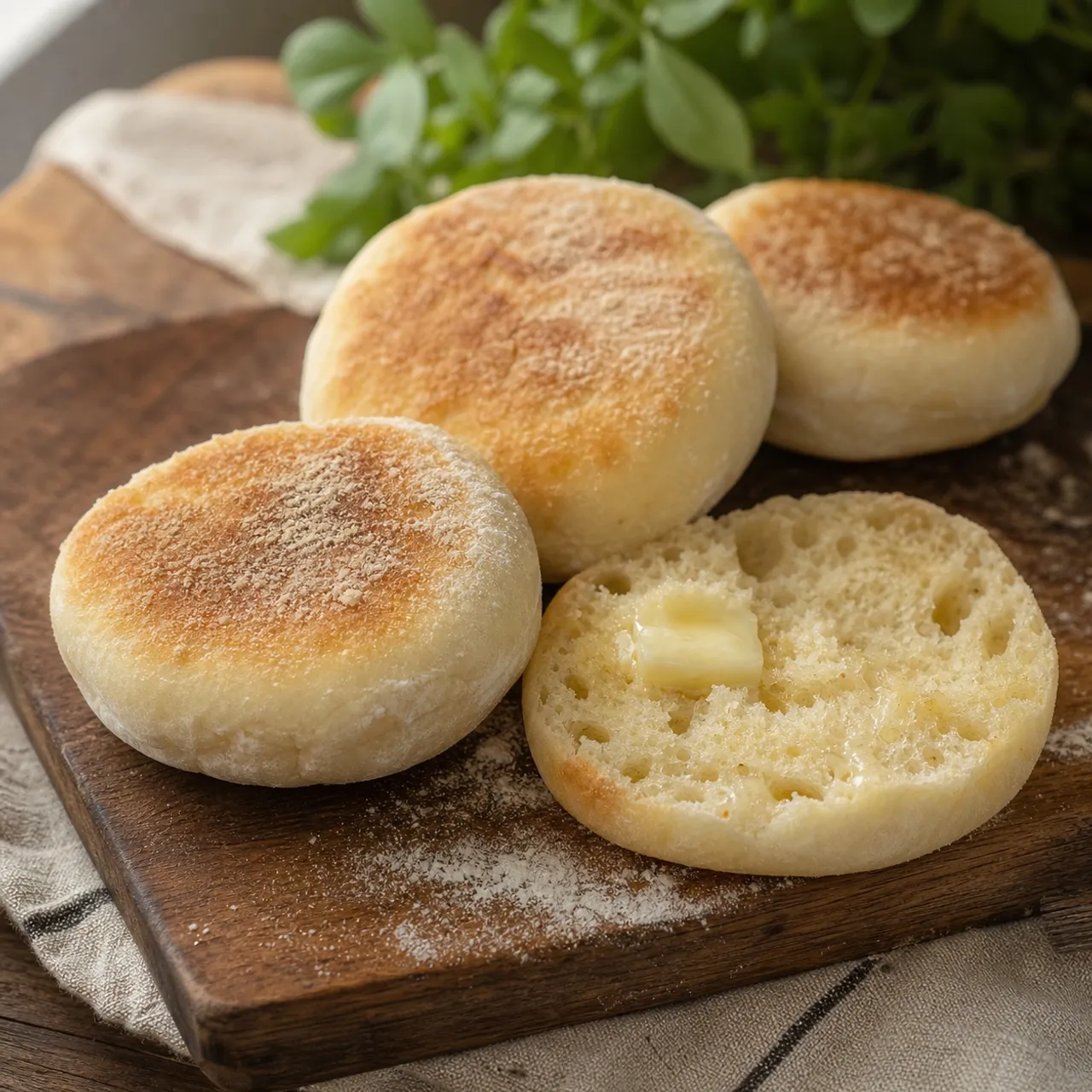
 Breads Images are for illustrative purposes only, may be inaccurate, and do not guarantee the presence or absence of specific ingredients.
 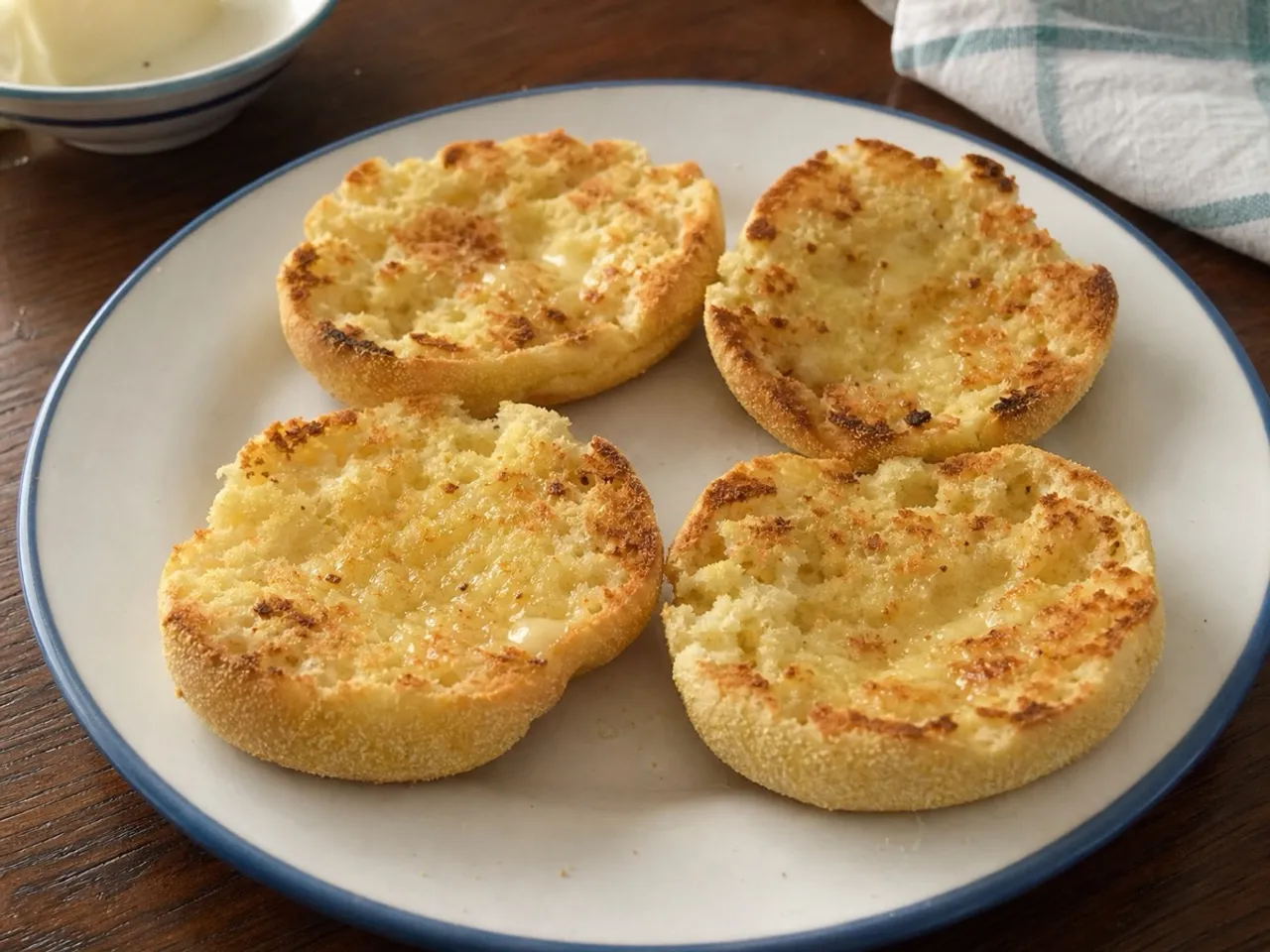 Serving Images are for illustrative purposes only, may be inaccurate, and do not guarantee the presence or absence of specific ingredients.
 Homemade English Muffins
Griddle-cooked muffins with a craggy, nook-and-cranny interior, ideal split, toasted, and buttered.
Contains common allergens
In the app, Listahan checks these against your household automatically.
Instructions
7 steps- 1
Whisk warm milk, yeast, and sugar; let stand 5 minutes until foamy.
- 2
Add flour, salt, and melted butter; knead 8 minutes until a soft, slightly sticky dough forms.
- 3
Cover and rise 1 hour until doubled.
- 4
Turn dough onto a cornmeal-dusted surface, pat to 3/4-inch thickness, and cut into 3-inch rounds.
- 5
Place rounds on a cornmeal-dusted tray, dust tops with more cornmeal, cover, and rest 30 minutes.
- 6
Heat a griddle or heavy skillet over low-medium heat and cook muffins 8-10 minutes per side until golden brown and cooked through (internal temperature 200°F/93°C).
- 7
Cool on a wire rack, then split with a fork (not a knife) to preserve the open crumb before toasting.
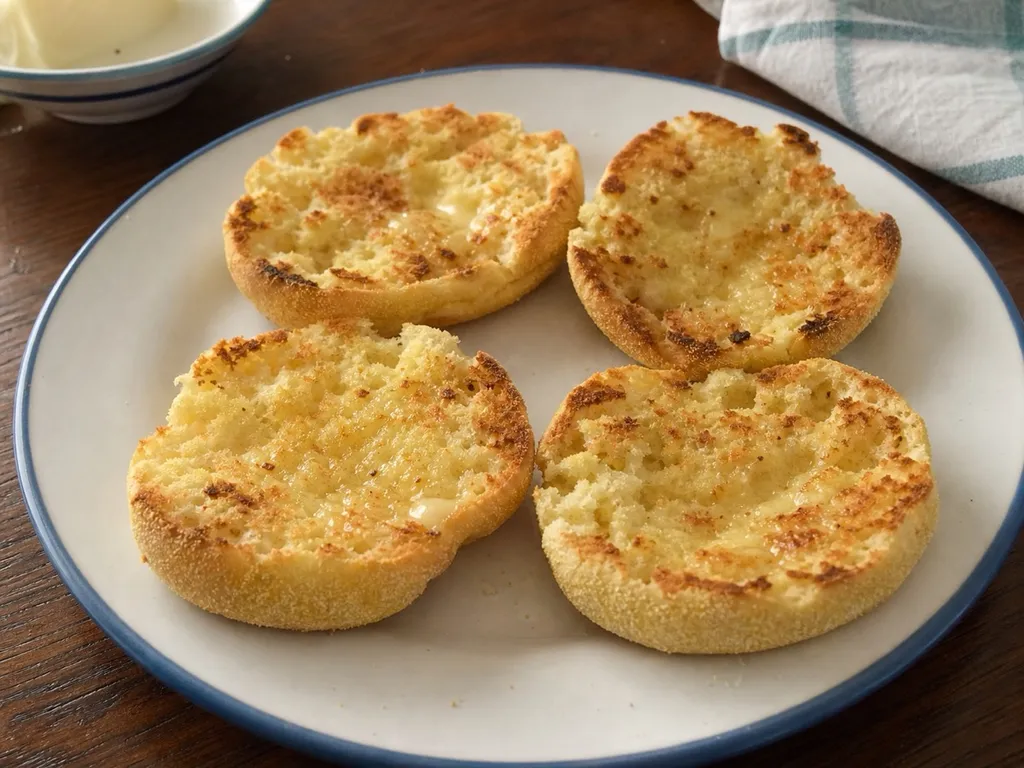 Images are for illustrative purposes only, may be inaccurate, and do not guarantee the presence or absence of specific ingredients.
 Listahan Family Score™
79/100
Good fit for most families
Score reflects how well this recipe fits a typical busy household. In the app, your Family Score is personalized to your household's allergens, kids, and pantry.
Nutrition
per serving215
Calories
6 g
Protein
38 g
Carbs
4 g
Fat
Estimated per serving. Actual values depend on the brands and portions you use.
Listahan cooking guide
Chef notes & practical guide
Technique notes, ingredient swaps, serve-alongside ideas, storage guidance, and equipment for this recipe.
Cultural context
English muffins come from the family of British griddle breads that were cooked on a flat surface instead of baked in an oven. In North America, they became a breakfast staple because the fork-split crumb toasts into crisp ridges while the inside stays chewy.
Listahan note
This version keeps the dough simple and leans on two details that make English muffins feel right: a soft, slightly sticky dough and slow griddle cooking. The fork split at the end matters because it tears open the crumb instead of smoothing it flat.
Technique cues
- Keep the griddle at low-medium heat. Too hot a pan browns the outside before the center has time to cook through.
- Cornmeal is not just for looks; it keeps the dough from sticking during the second rest and gives the finished muffins their sandy, bakery-style surface.
- Let the muffins cool before splitting. A hot muffin can compress and gum up when opened too early.
Kitchen flow
- Parallel prep
- While the dough rises, clear a tray, dust it with cornmeal, and set out the cutter, rack, and griddle so shaping moves quickly.
- Make-ahead
- Cook the muffins fully, cool them, and keep them unsplit until breakfast; they toast best after resting.
- Leftover move
- Turn extra muffins into breakfast sandwiches with egg and cheddar, or toast cubes for a savory strata.
- Cleanup rhythm
- Brush loose cornmeal into the sink before wiping the counter, then clean the griddle after it cools so the dry grains do not smear.
Ingredient brief
Role, handling, and swap guidance for each key ingredient.
All-purpose flour
Dough structure
Purpose: It gives the muffins enough strength to rise and enough tenderness to stay chewy after toasting.
Handling: Measure by weight if possible, and hold back a small spoonful only if the dough feels too wet to handle.
Adaptation: Bread flour makes a chewier muffin with a stronger pull; use it if you like a firmer breakfast sandwich base.
Warm milk
Liquid and tenderness
Purpose: Milk softens the crumb and helps the griddled surfaces brown evenly.
Handling: Use it warm, not hot, so the yeast wakes up without being stressed.
Adaptation: Unsweetened plain oat milk or soy milk changes the crumb slightly but can still make a workable dough.
Instant yeast
Leavening
Purpose: It gives the dough its lift and helps build the open pockets that become nooks after splitting.
Handling: Whisk it with the warm milk and sugar so you can see activity before mixing the dough.
Adaptation: Active dry yeast can be used the same way here; give it a few extra minutes in the warm milk before adding flour.
Sugar
Yeast starter and browning
Purpose: A small amount helps the yeast get moving and supports the golden crust on the griddle.
Handling: Dissolve it in the warm milk with the yeast so it distributes through the dough.
Adaptation: Honey works in a similar amount, but the dough may brown a little faster.
Unsalted butter, melted
Richness and softness
Purpose: Butter rounds out the flavor and keeps the muffins from eating like plain lean bread.
Handling: Let it cool slightly after melting so it blends into the dough without warming it too much.
Adaptation: A neutral oil makes a softer but less buttery muffin.
Cornmeal for dusting
Nonstick coating
Purpose: It keeps the rounds easy to move and gives the muffins their familiar rough exterior.
Handling: Dust both the work surface and the tray so the rested rounds lift cleanly.
Adaptation: Semolina gives a similar gritty coating; flour works in a pinch but gives a plainer surface.
Technique notes
- The dough should be soft and a little tacky after kneading, not stiff like bagel dough. Extra flour makes tighter muffins.
- Pat the dough to an even 3/4-inch thickness so the rounds cook at the same pace.
- Use the internal temperature as a check, but also look for firm sides and a muffin that feels light for its size.
Ingredient swaps
- Milk and butter swap
- Use unsweetened plain oat milk or soy milk with a neutral oil; expect a slightly less rich flavor and a softer crust.
- Chewier muffin path
- Use bread flour in place of all-purpose flour for a stronger, more elastic crumb that holds up well to sandwich fillings.
- No cutter method
- Divide the dough into 10 equal pieces, shape them into rounds by hand, and flatten gently before the second rest.
- Extra-craggy finish
- Always split with a fork, working around the edge with small pokes before pulling the halves apart.
Serve alongside
- Soft scrambled eggs
- Smoked salmon with cucumber
- Maple breakfast sausage
- Roasted tomato hash
- Black tea with milk
- Drip coffee
- Fresh orange juice
Serving suggestions only — check pairings for your household's allergens.
Storage & reheating
- Refrigerate cooled muffins in a sealed container if you want to hold them longer than a day.
- Reheat by splitting with a fork and toasting until the ridges are crisp and the center is warm.
- Freeze split or whole muffins in a freezer bag; thaw at room temperature, then toast to bring back the texture.
Equipment
- Large mixing bowl
- Bench scraper
- 3-inch round cutter
- Heavy skillet or griddle
- Wire cooling rack
Make this household-aware
Listahan Pro checks this recipe against your household's allergens, finds pantry-aware swaps, builds the shopping list, and helps you plan the week around it.
Plan it in Listahan
Add Homemade English Muffins to your week, check it against your household's allergens, and build the shopping list automatically.
More Breads recipes
Rice Crust for Quiches or Pies
A simple pressed crust made from cooked rice that holds savory quiche and pie fillings beautifully.
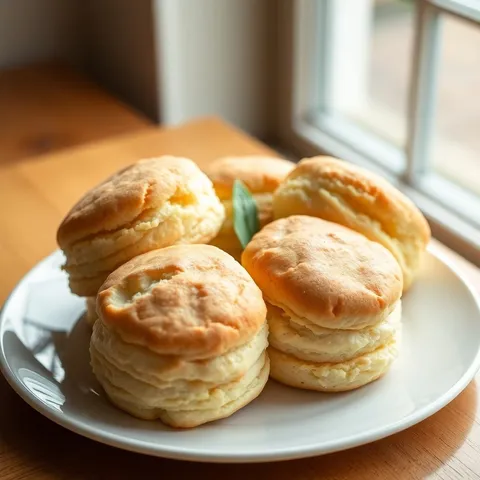 Breads Lens Verified Images are for illustrative purposes only, may be inaccurate, and do not guarantee the presence or absence of specific ingredients.
 Kentucky Biscuits
Tall, flaky Southern-style biscuits with a tender crumb, perfect with butter and jam.
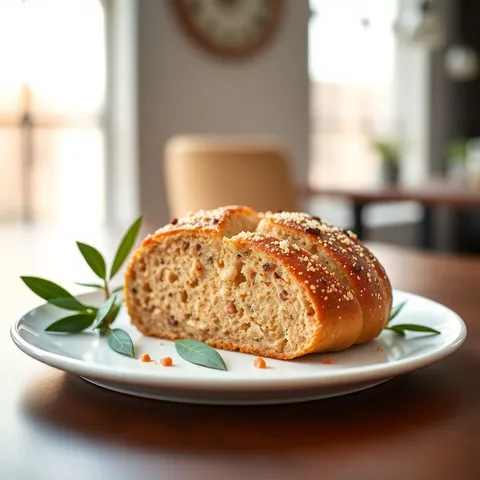 Breads Lens Verified Images are for illustrative purposes only, may be inaccurate, and do not guarantee the presence or absence of specific ingredients.
 Bread Machine Sage-Wheat Bread
A fragrant whole-wheat loaf scented with sage and a hint of cornmeal, made effortlessly in a bread machine.