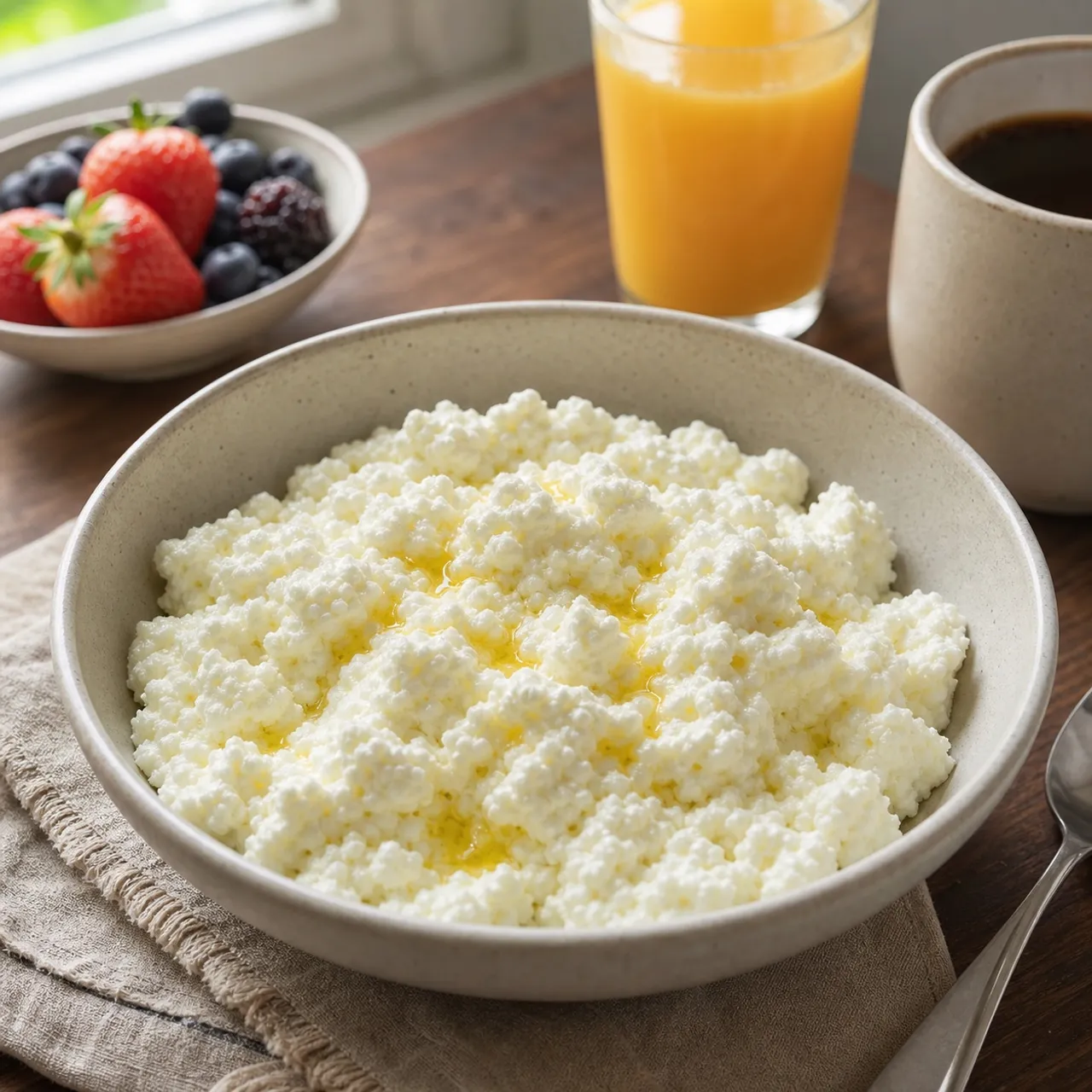
 Breakfast Images are for illustrative purposes only, may be inaccurate, and do not guarantee the presence or absence of specific ingredients.
 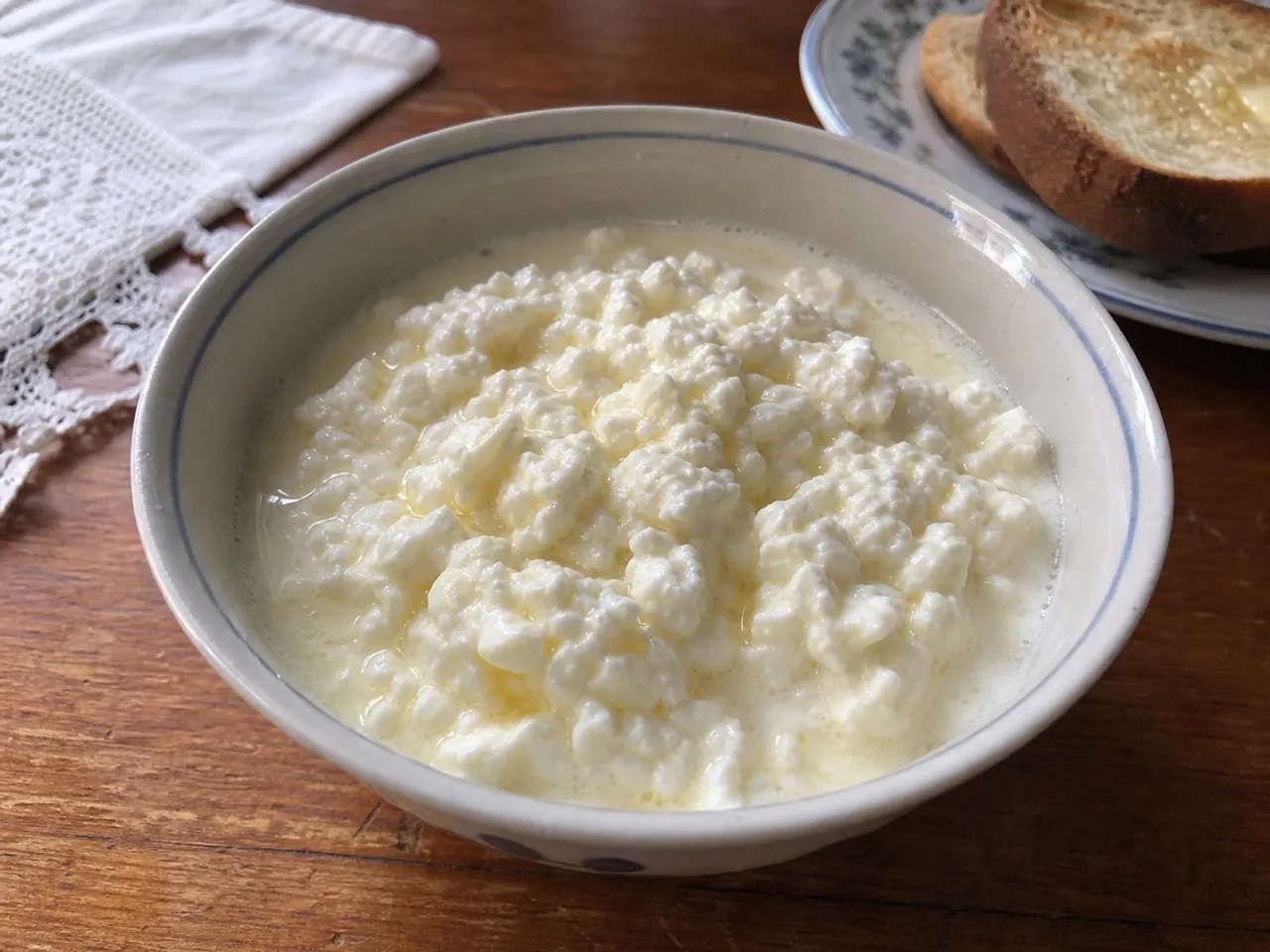 Serving Images are for illustrative purposes only, may be inaccurate, and do not guarantee the presence or absence of specific ingredients.
 Homemade Cottage Cheese
Fresh, tender homemade cottage cheese curds made from soured milk.
Contains common allergens
In the app, Listahan checks these against your household automatically.
Instructions
5 steps- 1
Gently heat the sour milk in a large pot until it reaches 100°F, stirring occasionally so it warms evenly and the curds begin to separate from the whey.
- 2
Pour the warmed milk into a strainer lined with cheesecloth set over a bowl, then pour the quart of hot water over the curds to rinse them.
- 3
Let the curds hang in the cheesecloth until all the whey has drained off, about 20-30 minutes.
- 4
Transfer the drained curds to a mixing bowl and stir in enough heavy cream and the melted butter to moisten to your desired consistency.
- 5
Season with the salt, mix gently, and refrigerate before serving.
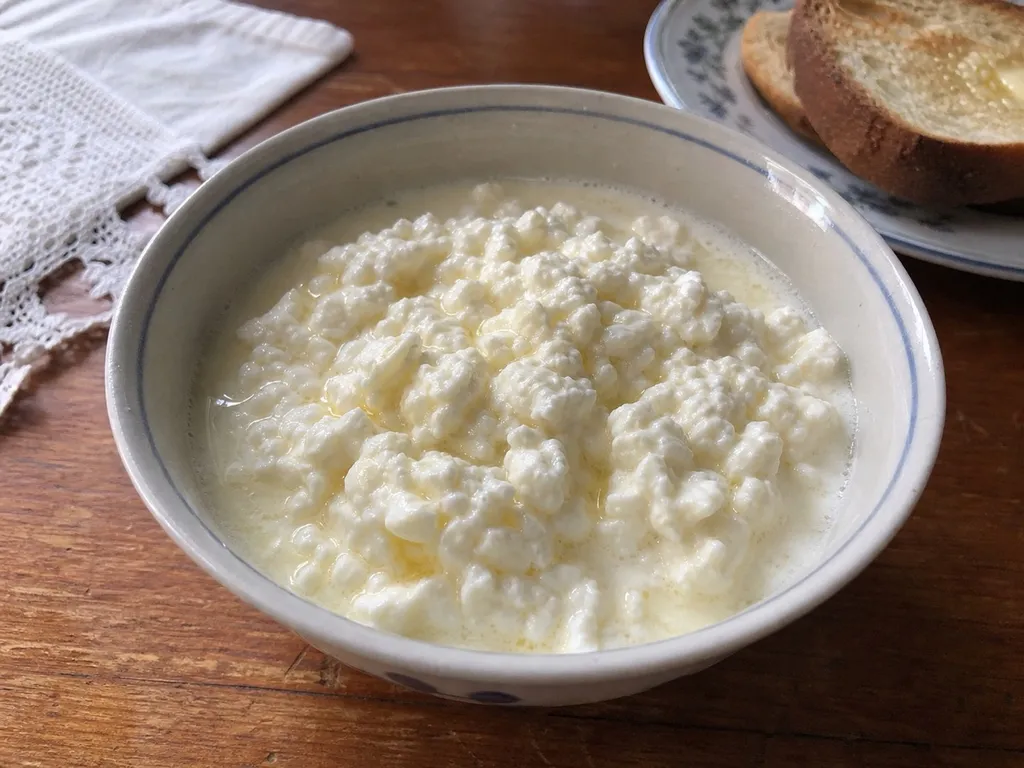 Images are for illustrative purposes only, may be inaccurate, and do not guarantee the presence or absence of specific ingredients.
 Listahan Family Score™
80/100
Good fit for most families
Score reflects how well this recipe fits a typical busy household. In the app, your Family Score is personalized to your household's allergens, kids, and pantry.
Nutrition
per serving100
Calories
0 g
Protein
0 g
Carbs
11 g
Fat
Estimated per serving. Actual values depend on the brands and portions you use.
Listahan cooking guide
Chef notes & practical guide
Technique notes, ingredient swaps, serve-alongside ideas, storage guidance, and equipment for this recipe.
Cultural context
Cottage cheese is one of the oldest and simplest fresh cheeses, traditionally made in farmhouse kitchens from the milk left after churning butter. The name itself nods to its origins as a humble cottage staple made without aging or special equipment. Making it at home is a quick lesson in curds and whey: an acid splits warm milk, the curds are drained, and a little cream and salt bring it back to that familiar pillowy texture.
Listahan note
This version keeps it to milk, an acid, and salt so any cook can make it in under an hour with no special cultures. It finishes with a splash of cream so the curds taste rich rather than dry.
Technique cues
- Heat the milk gently to just below a simmer and stir in the acid off the heat so the curds form soft and tender rather than tough and squeaky.
- Let the pot rest undisturbed for several minutes after adding acid; stirring too soon breaks the curds into grainy bits.
- Rinse the drained curds briefly under cool water to wash off excess acidity, then dress them with cream and salt to taste.
Kitchen flow
- Parallel prep
- While the milk heats, line your colander with cheesecloth and set it over a bowl so you can drain the instant the curds form.
- Make-ahead
- Make a batch ahead and store dressed in the fridge; the flavor settles and improves after a few hours.
- Leftover move
- Stir leftover curds into pancake batter or spread on toast with honey for a high-protein snack.
- Cleanup rhythm
- Rinse the cheesecloth immediately and save the drained whey for smoothies or bread baking rather than pouring it away.
Ingredient brief
Role, handling, and swap guidance for each key ingredient.
whole milk
the cheese itself
Purpose: The milk solids are what curdle into curds, and whole milk yields a richer, more tender result than skim.
Handling: Heat slowly to about 190F, stirring so it does not scorch on the bottom.
Adaptation: Two-percent works with slightly smaller curds; avoid ultra-pasteurized, which curdles poorly.
white vinegar or lemon juice
curdling acid
Purpose: Acid drops the pH and causes the milk proteins to separate cleanly into curds and whey.
Handling: Stir in gradually off the heat and stop as soon as the whey turns clear.
Adaptation: Lemon juice gives a brighter note; vinegar is cleaner and more neutral.
heavy cream
finishing richness
Purpose: A splash of cream stirred into the drained curds restores the creamy mouthfeel of store-bought cottage cheese.
Handling: Fold in cold cream after the curds have cooled slightly.
Adaptation: Whole milk or half-and-half makes a lighter dressing.
salt
seasoning
Purpose: Salt is what turns bland curds into something you actually want to eat at breakfast.
Handling: Add to taste after dressing with cream, starting small and building.
Adaptation: A pinch of flaky salt at serving adds pleasant texture and pop.
Technique notes
- Use a thermometer; pushing the milk past a gentle simmer makes rubbery curds, while too cool a temperature leaves them slimy.
- Drain only until the curds hold their shape but still look moist, since over-draining gives a dry, chalky texture.
- Save the whey, which is rich in protein and adds tenderness to homemade bread and pancakes.
Ingredient swaps
- Lower-fat direction
- Use two-percent milk and dress with whole milk instead of cream for a leaner curd.
- Tangier direction
- Swap lemon juice for vinegar to lean into a brighter, fresher acidity.
- Savory direction
- Fold in cracked pepper, chives, and a little olive oil instead of staying classic for a savory breakfast bowl.
Serve alongside
- Sliced summer tomatoes with pepper
- Fresh peaches and honey
- Everything-spiced toast
- Cucumber and dill
- Black coffee
- Iced green tea
- Fresh orange juice
Serving suggestions only — check pairings for your household's allergens.
Storage & reheating
- Store dressed cottage cheese in an airtight container in the fridge for up to 5 days. Stir before serving as a little whey naturally separates. It does not freeze well, since the curds turn grainy and weep on thawing.
Equipment
- Heavy-bottomed pot to prevent scorching
- Instant-read thermometer
- Fine cheesecloth or a clean cotton towel
- Colander set over a bowl
Make this household-aware
Listahan Pro checks this recipe against your household's allergens, finds pantry-aware swaps, builds the shopping list, and helps you plan the week around it.
Plan it in Listahan
Add Homemade Cottage Cheese to your week, check it against your household's allergens, and build the shopping list automatically.
More Breakfast recipes
 Breakfast Lens Verified Images are for illustrative purposes only, may be inaccurate, and do not guarantee the presence or absence of specific ingredients.
 Matzo Brei
A beloved Passover-week breakfast: matzo soaked in egg, fried until golden, and served sweet with cinnamon-sugar or savory with salt.
 Breakfast Lens Verified Images are for illustrative purposes only, may be inaccurate, and do not guarantee the presence or absence of specific ingredients.
 Avocado Toast with Poached Egg
Crusty toasted sourdough piled with bright, lemony smashed avocado and topped with a soft poached egg that spills its golden yolk on first cut.
 Breakfast Lens Verified Images are for illustrative purposes only, may be inaccurate, and do not guarantee the presence or absence of specific ingredients.
 Savory Steel-Cut Oatmeal
Hearty steel-cut oats simmered in savory broth and topped with a soft egg, sauteed greens, and toasted seeds.