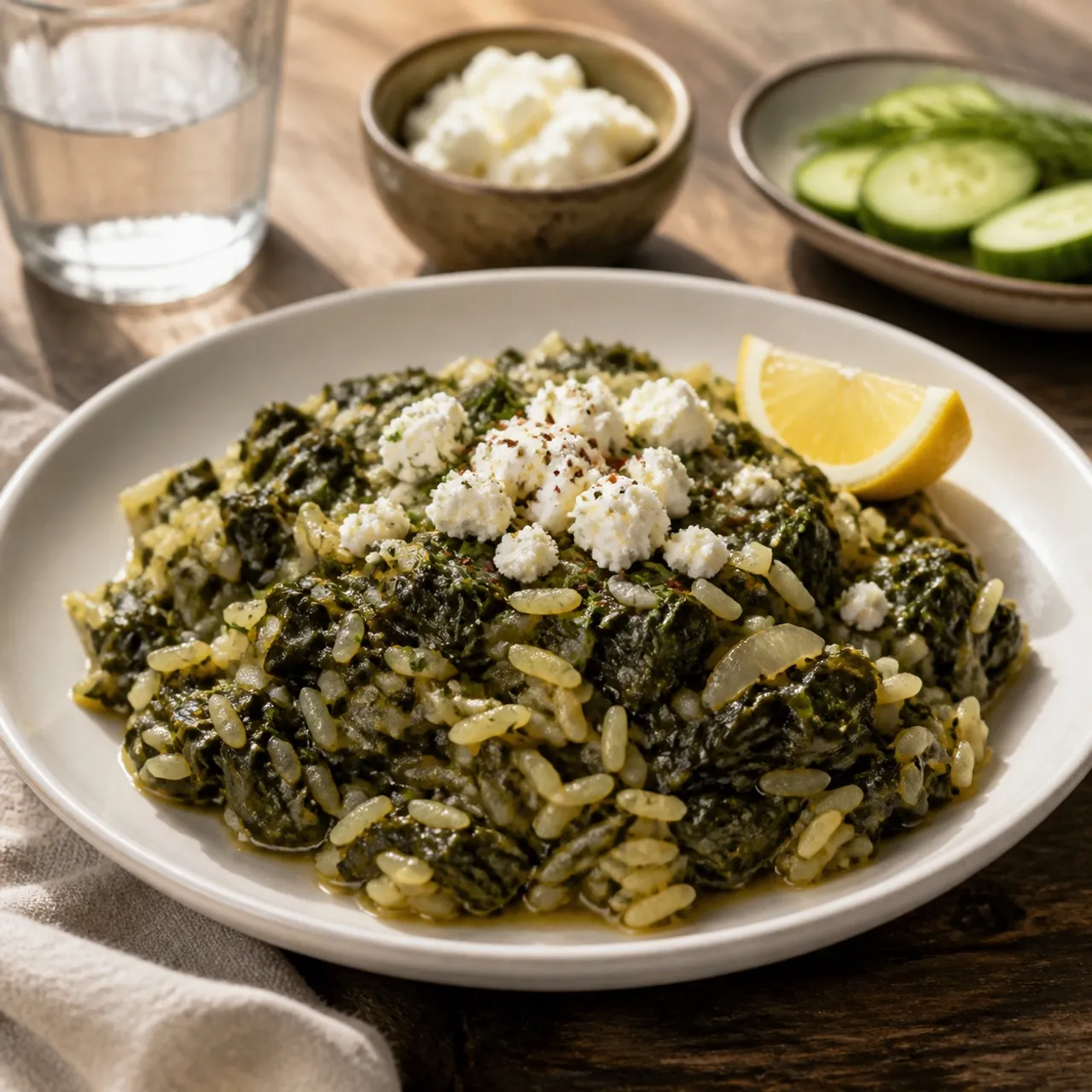
 Greek Images are for illustrative purposes only, may be inaccurate, and do not guarantee the presence or absence of specific ingredients.
 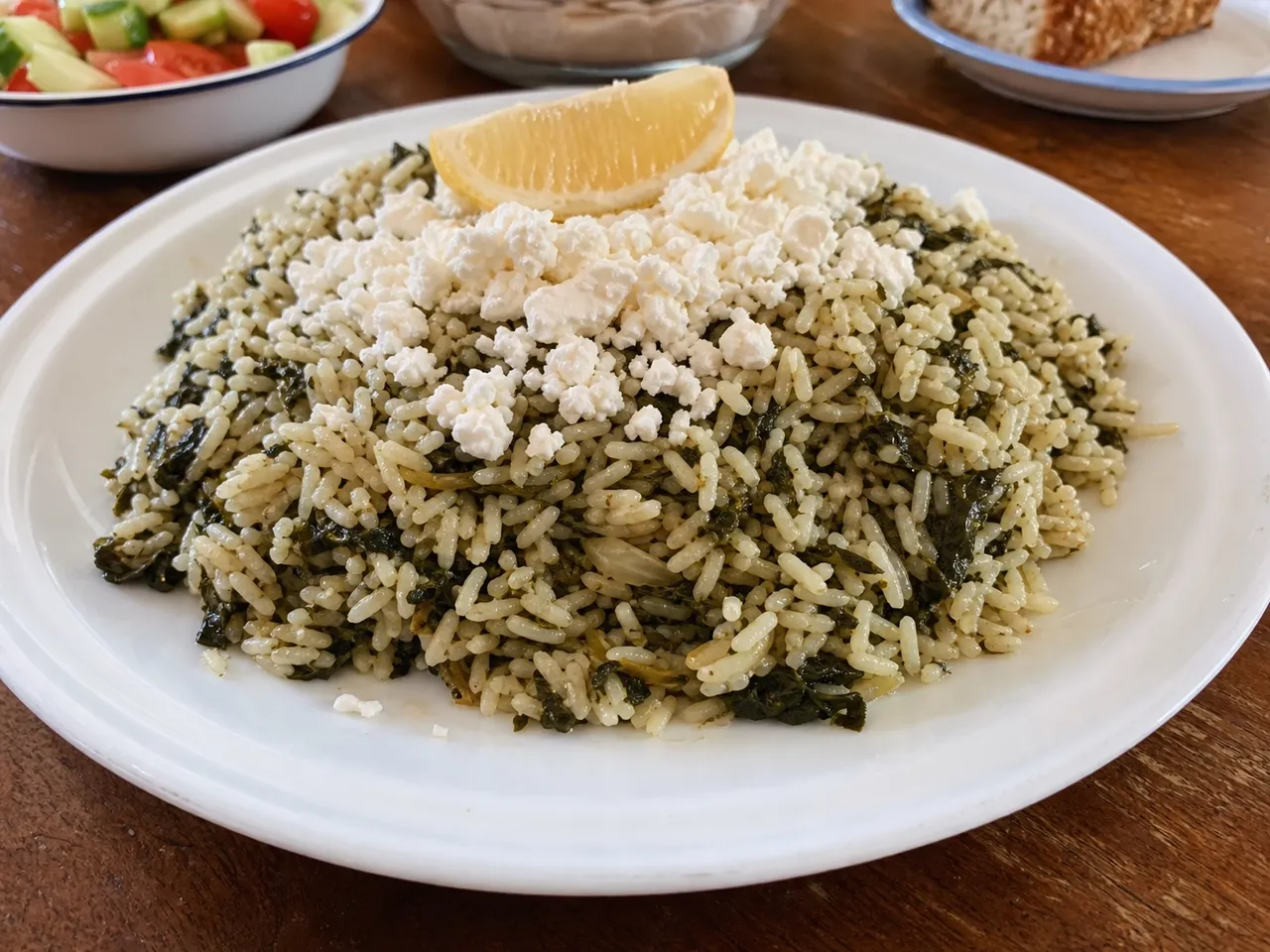 Serving Images are for illustrative purposes only, may be inaccurate, and do not guarantee the presence or absence of specific ingredients.
 Spanakorizo (Spinach and Rice)
A comforting one-pot dish of rice simmered with fresh spinach, dill, and lemon, a simple everyday Greek favorite.
Contains common allergens
In the app, Listahan checks these against your household automatically.
Good to know
- One-pot
Matched from this dish's own ingredients and timing. Browse more: one-pot dinners
Instructions
6 steps- 1
Heat olive oil in a large pot and saute the onion until soft, about 5 minutes.
- 2
Add the garlic and cook for 1 minute, then stir in the chopped spinach and cook until wilted, about 3-4 minutes.
- 3
Add the rice and stir to coat in the oil, then pour in the vegetable stock and bring to a boil.
- 4
Reduce heat, cover, and simmer for 15-18 minutes, until the rice is tender and the liquid is absorbed.
- 5
Remove from heat and stir in the dill, lemon juice, salt, and pepper.
- 6
Serve warm, drizzled with extra olive oil and topped with crumbled feta if desired.
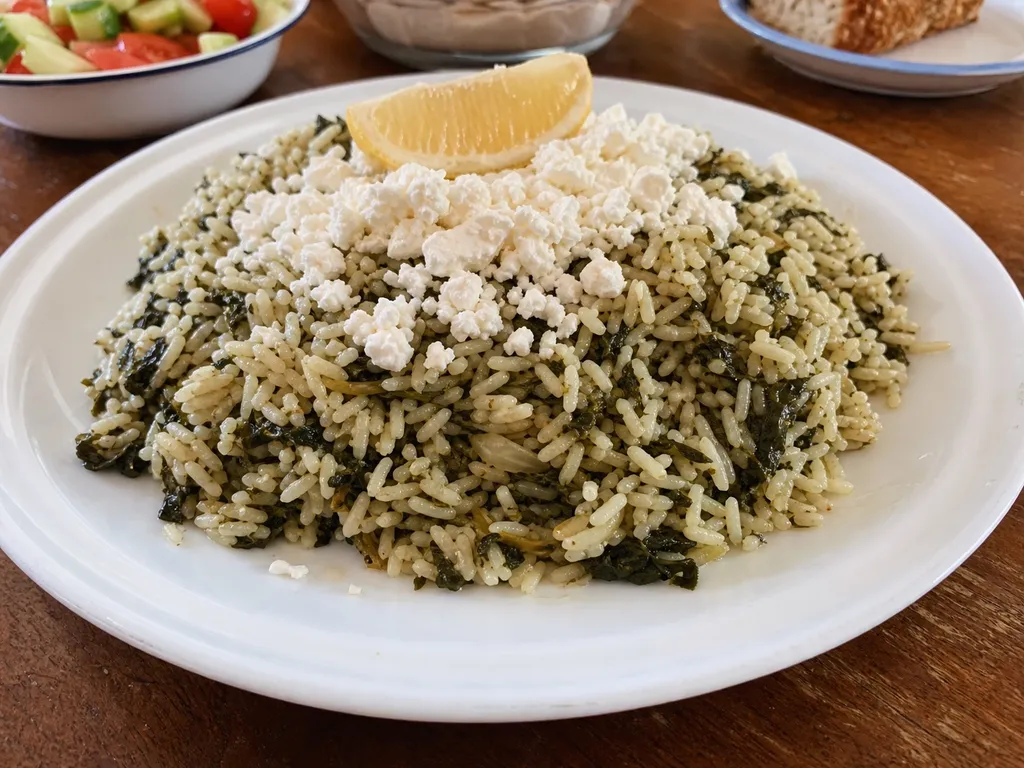 Images are for illustrative purposes only, may be inaccurate, and do not guarantee the presence or absence of specific ingredients.
 Listahan Family Score™
77/100
Good fit for most families
Score reflects how well this recipe fits a typical busy household. In the app, your Family Score is personalized to your household's allergens, kids, and pantry.
Nutrition
per serving385
Calories
9 g
Protein
46 g
Carbs
19 g
Fat
Estimated per serving. Actual values depend on the brands and portions you use.
Listahan cooking guide
Chef notes & practical guide
Technique notes, ingredient swaps, serve-alongside ideas, storage guidance, and equipment for this recipe.
Cultural context
Spanakorizo is a staple of Greek home cooking, a rice pilaf built around wilted spinach that shows up on tables year-round, though it's especially common in early spring when fresh spinach is at its best and often served meatless during Lent alongside feta on the side rather than mixed in.
Listahan note
This version stirs the dill and lemon in at the very end rather than cooking them with the rice, which keeps both tasting fresh and bright against the more savory, simmered base.
Technique cues
- Wilting the spinach fully before adding the rice matters because spinach releases a lot of water as it cooks down, and that liquid needs to be accounted for in the total amount of stock added.
- Coating the rice in the oil and wilted spinach for a minute before adding stock, similar to a pilaf technique, helps each grain stay separate rather than turning gummy.
- Stirring in the dill and lemon juice only after the rice is fully cooked and off the heat preserves both their brightness, cooking them down with the rice would dull their flavor considerably.
Kitchen flow
- Parallel prep
- Chop the spinach and dill while the onion softens in the pot, so both are ready to go in without slowing down the cooking.
- Make-ahead
- Spanakorizo is best made close to serving since rice dishes lose some texture on reheating, though it holds reasonably well covered for an hour or so at room temperature.
- Leftover move
- Reheat leftovers gently with a splash of water or stock to loosen the rice, which firms up considerably once chilled.
- Cleanup rhythm
- Wipe out the pot while any stuck rice at the bottom is still warm and slightly moist, it hardens and becomes difficult to scrub once fully cooled.
Ingredient brief
Role, handling, and swap guidance for each key ingredient.
fresh spinach
the dish's namesake and bulk
Purpose: a full pound of spinach cooks down dramatically, and its wilted volume becomes almost inseparable from the rice, giving the dish its color and character
Handling: roughly chop before adding so it wilts down quickly and distributes evenly through the pot
Adaptation: baby spinach can be used without chopping since the leaves are already small, though it wilts down to a smaller final volume per pound
rice
the pilaf base
Purpose: cooked pilaf-style, coated in oil before the stock is added, the rice absorbs the spinach's moisture and flavor as it simmers
Handling: stir the rice into the wilted spinach and onions before adding any liquid, letting it toast lightly in the residual oil for a minute
Adaptation: a short-grain rice gives a slightly creamier, stickier result closer to traditional versions; basmati works too but yields more separate grains
onion and garlic
aromatic base
Purpose: sauteed first, they build the savory foundation that the spinach and rice cook into, without them the dish would taste flat
Handling: cook the onion until soft before adding garlic, which only needs about a minute to avoid turning bitter
Adaptation: a leek can substitute for the onion for a slightly sweeter, milder aromatic base
fresh dill
the herb signature
Purpose: dill paired with spinach and lemon is one of the most recognizable flavor combinations in Greek cooking, and it's what makes spanakorizo taste distinctly Greek rather than like a generic spinach rice
Handling: chop finely and stir in at the very end, off the heat, so its flavor stays bright rather than cooking flat
Adaptation: fresh parsley can fill in if dill isn't available, though the flavor profile shifts noticeably away from the traditional taste
lemon juice
final brightness
Purpose: stirred in at the end alongside the dill, it cuts the richness of the olive oil and rounds out the dish's flavor
Handling: add just before serving so the acidity stays fresh
Adaptation: a bit of lemon zest added along with a smaller amount of juice can round out the flavor for those who want less tang
Technique notes
- Resist stirring the rice too often once the stock is added and the pot is covered, frequent stirring releases starch and can make the finished dish gummy instead of light.
- Let the rice rest off the heat, covered, for a few minutes after the liquid is absorbed, this evens out the texture before you fluff it with a fork.
- Taste the seasoning again after adding the lemon and dill, since acidity and fresh herbs shift how salty or flat the dish tastes compared to before they went in.
Ingredient swaps
- Dairy-free direction
- Skip the optional feta topping entirely, the base dish is already dairy-free as written.
- Gluten-free direction
- Swap in a certified gluten-free 1:1 flour blend or gluten-free noodles/breadcrumbs wherever the recipe calls for a wheat product, and read packaged-item labels closely. This one leans on the vegetable stock.
- Vegan direction
- Already vegan as written if the optional feta garnish is omitted.
Serve alongside
- crumbled feta
- crusty bread
- Greek salad
- grilled fish
- a dry white wine
- sparkling water with lemon
- a light rose
Serving suggestions only — check pairings for your household's allergens.
Storage & reheating
- Keeps refrigerated for up to 3 days.
- Reheat gently on the stovetop with a splash of water or stock, or in the microwave covered with a damp paper towel.
- Freezing is not recommended, the rice's texture turns mushy after thawing.
Equipment
- large pot with lid
- wooden spoon
- fine-mesh strainer (for rinsing rice, optional)
Make this household-aware
Listahan Pro checks this recipe against your household's allergens, finds pantry-aware swaps, builds the shopping list, and helps you plan the week around it.
Plan it in Listahan
Add Spanakorizo (Spinach and Rice) to your week, check it against your household's allergens, and build the shopping list automatically.
More Greek recipes
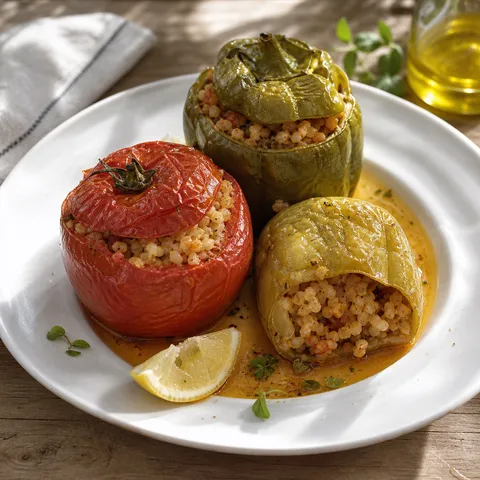 Greek Lens Verified Images are for illustrative purposes only, may be inaccurate, and do not guarantee the presence or absence of specific ingredients.
 Gemista (Stuffed Tomatoes and Peppers with Rice)
Ripe tomatoes and bell peppers hollowed out and stuffed with a savory herbed rice filling, then baked until tender and caramelized.
 Greek Lens Verified Images are for illustrative purposes only, may be inaccurate, and do not guarantee the presence or absence of specific ingredients.
 Kourabiedes (Greek Almond Butter Cookies)
Buttery, crumbly shortbread cookies studded with toasted almonds and generously dusted with powdered sugar.
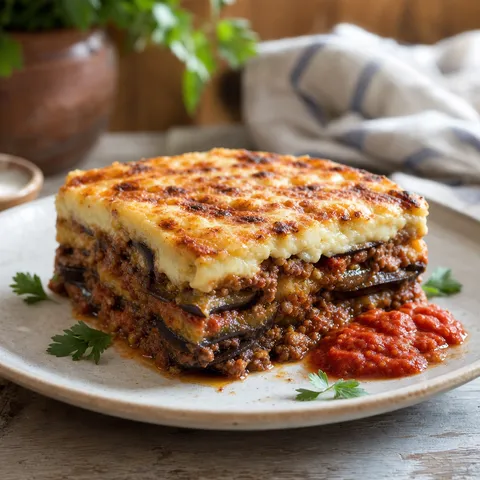 Greek Lens Verified Images are for illustrative purposes only, may be inaccurate, and do not guarantee the presence or absence of specific ingredients.
 Classic Moussaka
A rich, layered Greek casserole featuring roasted eggplant, a hearty spiced meat sauce, and a thick, creamy béchamel topping.