 Nordic Images are for illustrative purposes only, may be inaccurate, and do not guarantee the presence or absence of specific ingredients.
  Serving Images are for illustrative purposes only, may be inaccurate, and do not guarantee the presence or absence of specific ingredients.
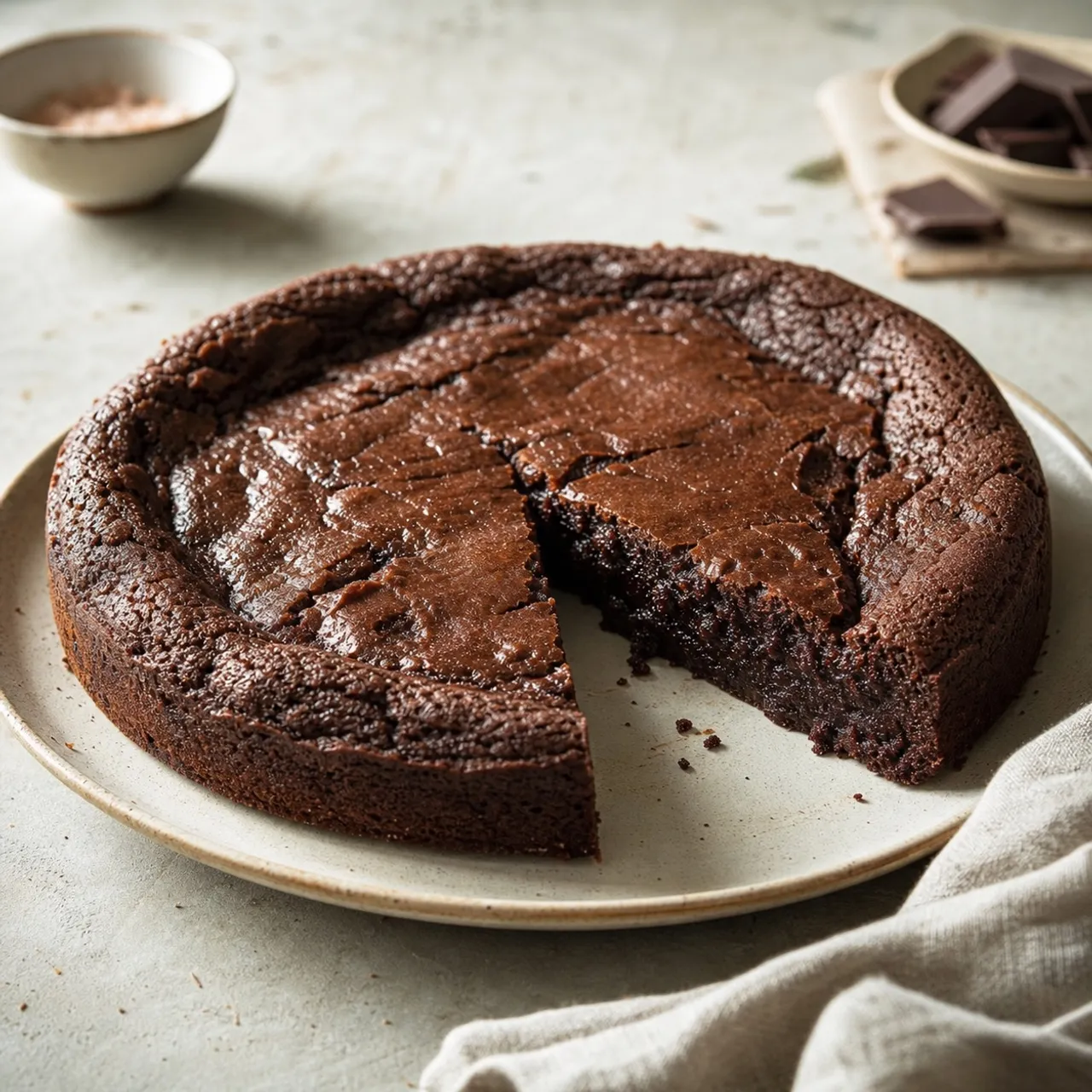
 Kladdkaka
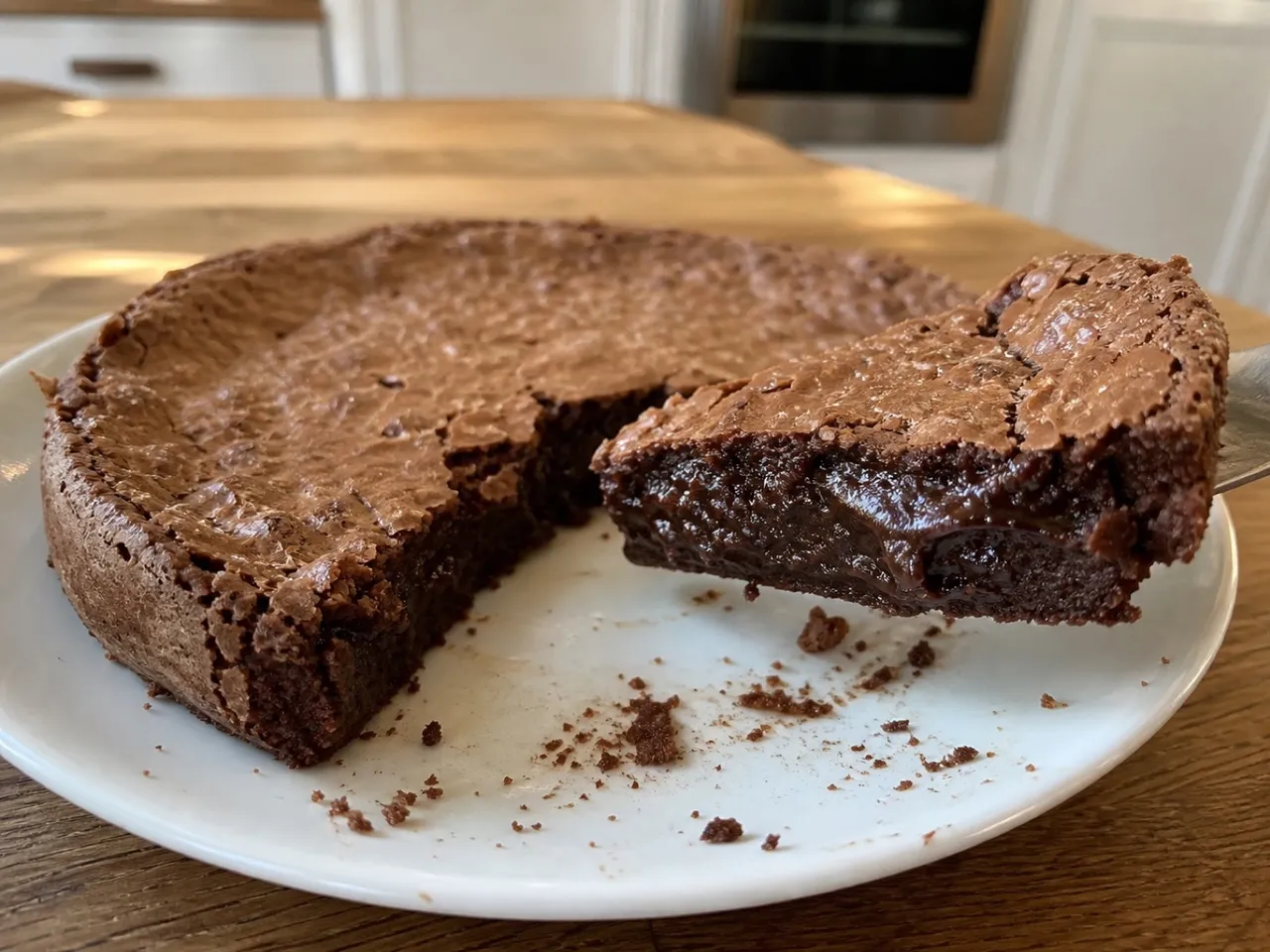
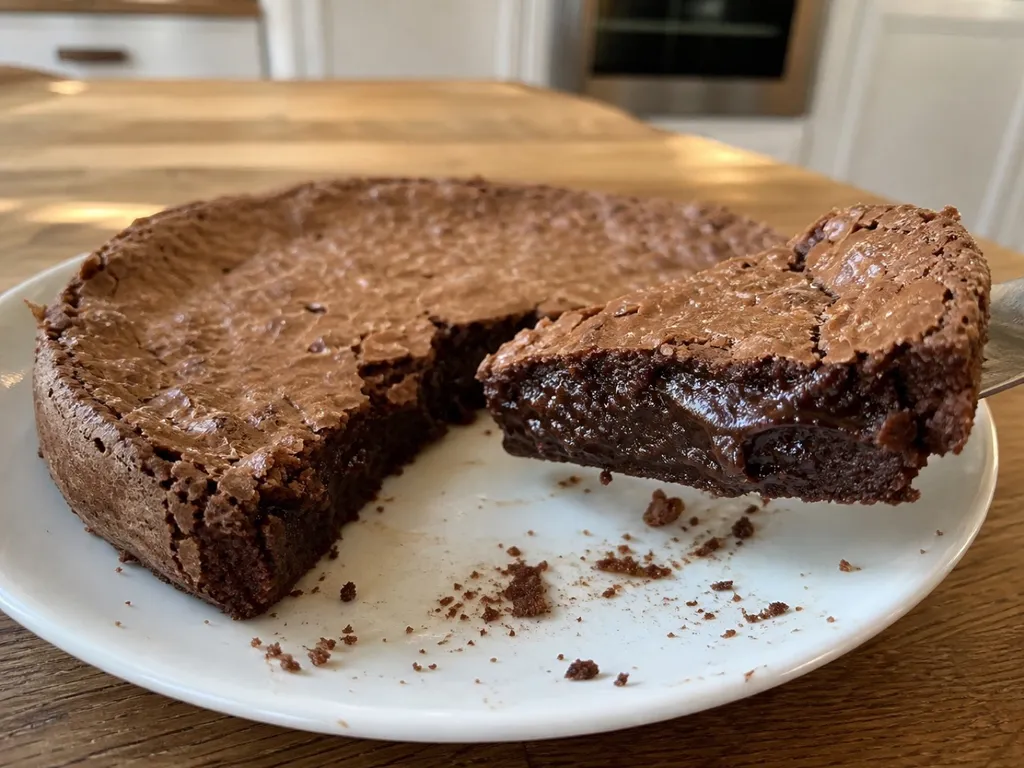
Sweden's gloriously gooey chocolate cake — crisp on top, molten and fudgy within, and so simple to bake it's dangerous to keep the recipe around.
Contains common allergens
In the app, Listahan checks these against your household automatically.
Good to know
- Ready in under 30 minutes
Matched from this dish's own ingredients and timing. Browse more: 30-minute meals
Instructions
6 steps- 1
Preheat the oven to 350°F (175°C). Butter an 8-inch round springform pan and dust it lightly with cocoa powder.
- 2
Melt the butter in a medium saucepan over low heat. Once melted, remove from the heat and stir in the sugar until well combined.
- 3
Whisk in the cocoa powder, vanilla extract, and salt until the mixture is smooth and glossy.
- 4
Add the eggs one at a time, whisking vigorously after each addition until the batter thickens slightly.
- 5
Fold in the all-purpose flour using a spatula, mixing just until no dry streaks remain. Pour the batter into the prepared pan.
- 6
Bake for 18-22 minutes. The edges should be firm and set, but the center should still slightly jiggle when the pan is shaken. Let cool before serving to allow the gooey center to set.
 Images are for illustrative purposes only, may be inaccurate, and do not guarantee the presence or absence of specific ingredients.
 Listahan Family Score™
79/100
Good fit for most families
Score reflects how well this recipe fits a typical busy household. In the app, your Family Score is personalized to your household's allergens, kids, and pantry.
Nutrition
per serving2965
Calories
38 g
Protein
427 g
Carbs
141 g
Fat
Estimated per serving. Actual values depend on the brands and portions you use.
Listahan cooking guide
Chef notes & practical guide
Technique notes, ingredient swaps, serve-alongside ideas, storage guidance, and equipment for this recipe.
Cultural context
Kladdkaka — Swedish for 'sticky cake' — is Sweden's most beloved everyday chocolate cake, appearing at virtually every fika (coffee break) table and bakery counter in the country. Unlike a brownie, which is American and typically chewy, kladdkaka is intentionally underbaked to remain gooey and almost molten at the center — the sticky center is not a mistake but the entire point. Recipes circulated in Swedish newspapers in the mid-20th century and the cake has remained a consistent fixture of home baking, valued for requiring only pantry staples and no mixer.
Listahan note
This version relies on careful timing and a toothpick test to hit the exact moment when the edges are set but the center still wobbles — pulling it 2 minutes early is the most important technique call.
Technique cues
- The high sugar-to-flour ratio is not an error — the sugar acts as a tenderizer that keeps the center gooey even when the eggs have set, which is what distinguishes kladdkaka from a fully baked chocolate cake; reducing the sugar produces a tighter, drier crumb that defeats the purpose.
- Melting the butter completely before adding the cocoa and sugar (rather than creaming) is the method here — creaming would incorporate air and produce a cakey lift, whereas the dense, fudgy texture of kladdkaka comes from the absence of air in the batter.
- The window between underdone (liquid center) and overdone (dry, cakey) is narrow — about 4 minutes at the correct oven temperature; the cake is done when the edges are firmly set and pulling from the pan but the center still has a visible jiggle when you shake the rack, not when a toothpick comes out clean.
Kitchen flow
- Parallel prep
- Preheat the oven and butter and flour the pan while you melt the butter; the batter comes together in under 10 minutes once the butter is cool.
- Make-ahead
- Kladdkaka is better the day it is baked but holds well at room temperature (covered) for up to 2 days; the center firms slightly overnight, which some people prefer.
- Leftover move
- Warm a slice for 10 seconds in the microwave to restore the gooey center; serve with a scoop of vanilla ice cream or a spoonful of creme fraiche for a quick weeknight dessert.
- Cleanup rhythm
- The batter is made in one saucepan and uses a single mixing bowl; wash both while the cake bakes — total active dishes are minimal.
Ingredient brief
Role, handling, and swap guidance for each key ingredient.
150g (2/3 cup) unsalted butter
fat base and texture
Purpose: Melted butter provides the dense, moist crumb that defines kladdkaka; the absence of creaming keeps air out of the batter so the cake stays flat and fudgy rather than rising.
Handling: Melt over low heat or in short microwave bursts and let cool to lukewarm before adding eggs — hot butter scrambles the eggs.
Adaptation: Browned butter (beurre noisette) adds a nutty depth that works beautifully in this format.
300g (1.5 cups) granulated sugar
sweetener and tenderness agent
Purpose: The high sugar quantity keeps the interior soft and sticky at the serving temperature, preventing the eggs from fully coagulating throughout the center.
Handling: Mix directly into the warm butter until dissolved before adding the eggs so the sugar is evenly distributed.
Adaptation: Caster sugar dissolves slightly more readily but produces the same result; brown sugar adds a toffee note and slightly more moisture.
60g (1/2 cup) unsweetened cocoa powder
chocolate flavor
Purpose: Cocoa provides intense chocolate flavor without additional fat from chocolate, keeping the batter thinner and the texture closer to fudge than ganache.
Handling: Sift the cocoa to remove any lumps before adding to the butter-sugar mix — lumps of cocoa in the baked cake are visible and unpleasant.
Adaptation: Dutch-process cocoa gives a darker color and a less acidic flavor, which many Swedes prefer; natural cocoa produces a slightly more acidic, fruitier result.
2 large eggs
structure and binding
Purpose: Eggs provide just enough protein to hold the edges of the cake together while the center remains soft — the ratio of eggs to flour is deliberately low to limit how fully the cake sets.
Handling: Add eggs one at a time to the cooled butter mixture and whisk briefly after each — overmixing incorporates air that will make the cake rise and crack.
Adaptation: A flax egg (1 tbsp ground flax + 3 tbsp water per egg) works for a vegan version but the center will be slightly less fudgy.
120g (1 cup) all-purpose flour
minimal structure
Purpose: The small amount of flour gives the edges enough structure to set around a still-liquid center — it is the smallest structural role of any ingredient in the recipe.
Handling: Fold in gently with a spatula rather than whisking to avoid developing gluten, which would make the finished cake tough and cakey.
Adaptation: A 1:1 gluten-free baking blend substitutes directly; the center may set slightly firmer.
Technique notes
- Use a 9-inch springform pan for the easiest removal — the sticky center means a standard cake pan can cause the cake to break when you try to unmold it without the release mechanism.
- A dusting of powdered sugar applied through a fine sieve just before serving is the traditional Swedish presentation; skip this step if you are serving with ice cream, as the visual contrast is already provided.
- Let the cake cool in the pan for at least 15 minutes before removing the springform ring — cutting into it immediately causes the unset center to run; it will hold its shape better once the edges have had time to firm.
Ingredient swaps
- Gluten-free direction
- Replace all-purpose flour with a certified gluten-free 1:1 baking blend; the texture changes minimally because the flour content is already very low.
- Dairy-free option
- Use a high-quality vegan butter (not coconut oil) in the same quantity; the result is nearly identical because the cocoa provides all the chocolate character.
- Vegan direction
- Combine the dairy-free butter swap with 2 flax eggs (2 tbsp ground flaxseed + 6 tbsp water, rested 5 minutes); the center will be slightly less custardy but still fudgy.
Serve alongside
- lightly whipped creme fraiche with a pinch of vanilla
- vanilla ice cream served alongside the warm slice
- fresh raspberries or strawberries for acidity
- strong black coffee or espresso (the classic Swedish fika pairing)
- cold whole milk
- oat milk latte
Serving suggestions only — check pairings for your household's allergens.
Storage & reheating
- Store at room temperature covered with a cake dome or plastic wrap for up to 2 days; refrigeration firms the center noticeably.
- Refrigerate for up to 5 days if you prefer a denser, firmer slice; bring to room temperature or warm briefly before serving.
- Freeze individual slices wrapped in plastic and foil for up to 1 month; thaw at room temperature for 1 hour and warm briefly in the microwave.
Equipment
- 9-inch springform pan
- medium saucepan
- fine-mesh sieve for sifting cocoa and dusting sugar
- rubber spatula
Make this household-aware
Listahan Pro checks this recipe against your household's allergens, finds pantry-aware swaps, builds the shopping list, and helps you plan the week around it.
Plan it in Listahan
Add Kladdkaka to your week, check it against your household's allergens, and build the shopping list automatically.
More Nordic recipes
 Nordic Lens Verified Images are for illustrative purposes only, may be inaccurate, and do not guarantee the presence or absence of specific ingredients.
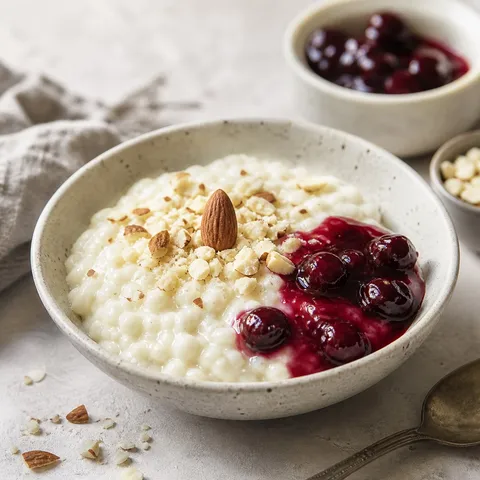
 Risalamande
A creamy Danish cold rice pudding folded with whipped cream and chopped almonds, served with a glossy warm cherry sauce on Christmas Eve.
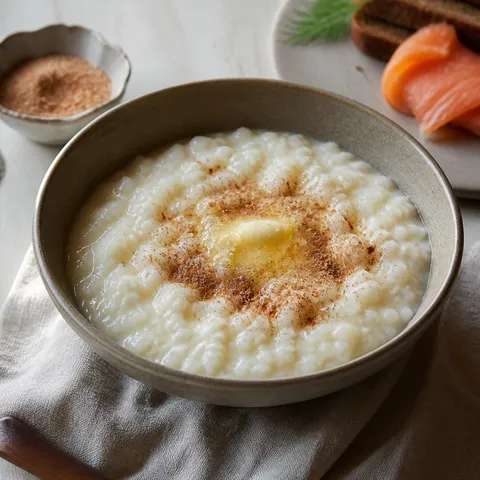 Nordic Lens Verified Images are for illustrative purposes only, may be inaccurate, and do not guarantee the presence or absence of specific ingredients.
 Risgrynsgröt
Creamy Nordic rice porridge, slow-cooked until thick and comforting, scented with cinnamon and served with a pat of melting butter — Christmas morning in a bowl.
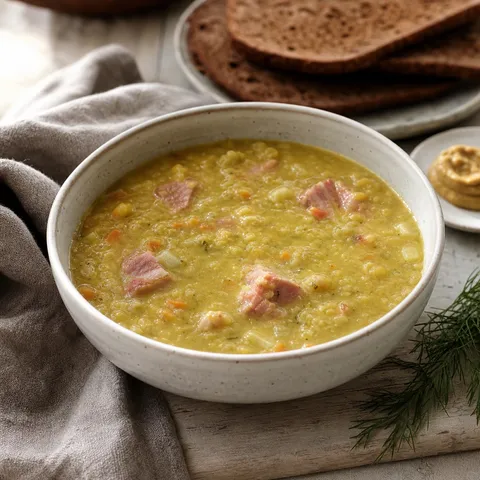 Nordic Lens Verified Images are for illustrative purposes only, may be inaccurate, and do not guarantee the presence or absence of specific ingredients.
 Hernekeitto
Finland's beloved Thursday pea soup — yellow split peas simmered with smoky ham until thick and hearty, traditionally served with a shot of Finnish mustard and pancakes.