 German Images are for illustrative purposes only, may be inaccurate, and do not guarantee the presence or absence of specific ingredients.
  Serving Images are for illustrative purposes only, may be inaccurate, and do not guarantee the presence or absence of specific ingredients.
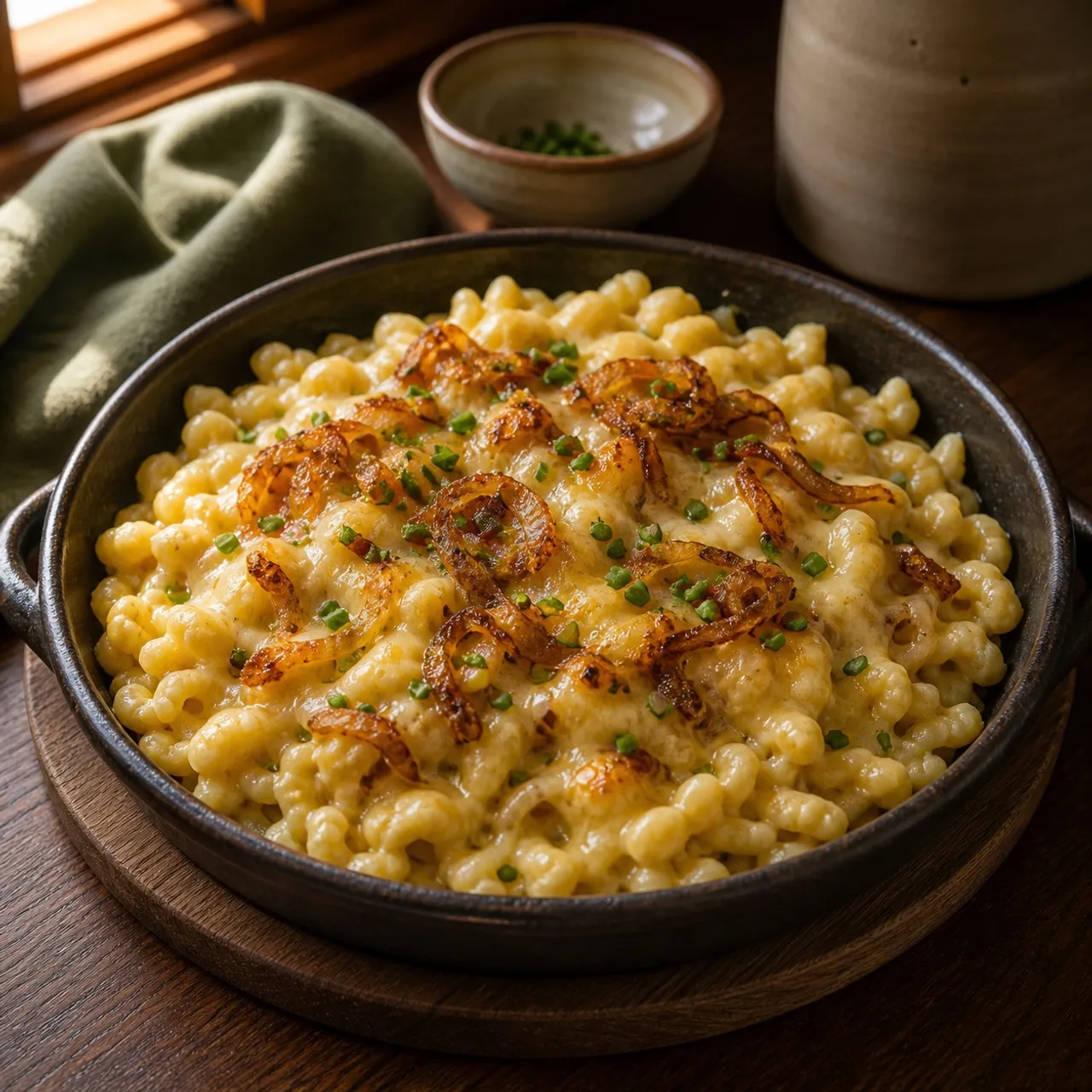
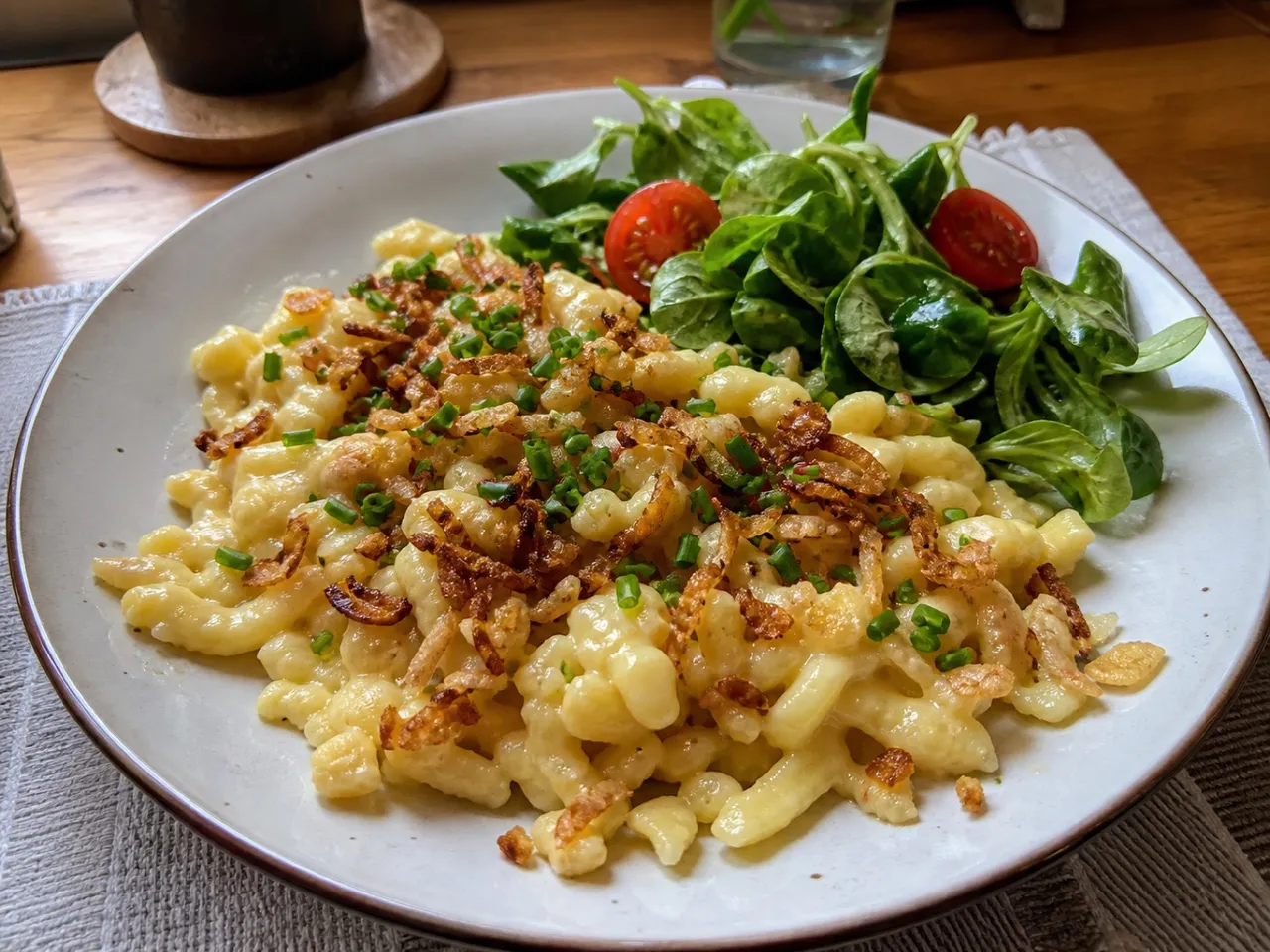
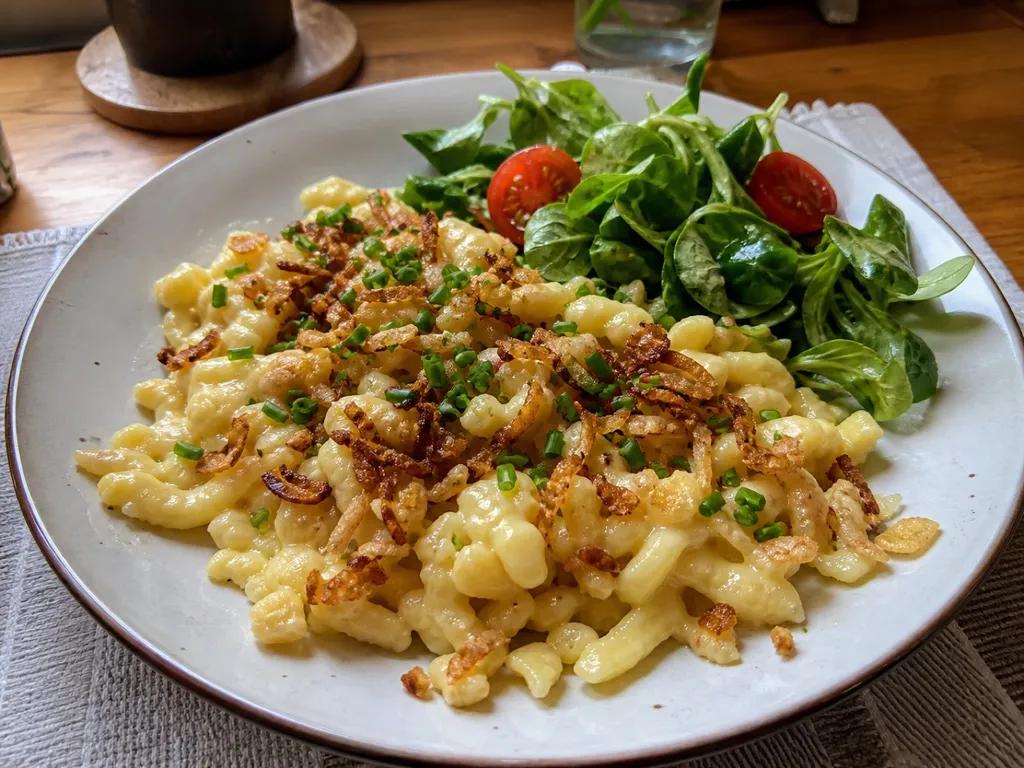
 Käsespätzle (German Cheese Noodles)
Often called the "German Mac and Cheese," this rich and cozy dish features homemade egg noodle drops smothered in melted Swiss cheese and topped with crispy fried onions.
Contains common allergens
In the app, Listahan checks these against your household automatically.
Good to know
- Crispy
- Ready in under 30 minutes
Matched from this dish's own ingredients and timing. Browse more: crispy recipes30-minute meals
Instructions
5 steps- 1
Make Batter: In a bowl, vigorously whisk together the flour, eggs, milk, salt, and nutmeg until it forms a thick, sticky, stretchy batter. Let it rest for 15 minutes.
- 2
Fry Onions: While the batter rests, melt the butter in a skillet over medium-low heat. Slowly caramelize the sliced onions until they are deeply browned and sweet (about 15-20 minutes).
- 3
Boil Noodles: Bring a large pot of salted water to a boil. Using a Spätzle maker (or pressing the batter through the holes of a colander), drop the dough into the boiling water. They are cooked when they float to the top (1-2 minutes). Remove with a slotted spoon.
- 4
Assemble: In a large baking dish or skillet, alternate layers of hot Spätzle and shredded cheese.
- 5
Serve: Top with the caramelized onions. The heat from the fresh noodles and onions should melt the cheese, but you can place it in a warm oven for 5 minutes if needed.
 Images are for illustrative purposes only, may be inaccurate, and do not guarantee the presence or absence of specific ingredients.
 Listahan Family Score™
80/100
Good fit for most families
Score reflects how well this recipe fits a typical busy household. In the app, your Family Score is personalized to your household's allergens, kids, and pantry.
Nutrition
per serving590
Calories
27 g
Protein
51 g
Carbs
30 g
Fat
Estimated per serving. Actual values depend on the brands and portions you use.
Listahan cooking guide
Chef notes & practical guide
Technique notes, ingredient swaps, serve-alongside ideas, storage guidance, and equipment for this recipe.
Cultural context
Käsespätzle comes from Swabia in southwestern Germany, where spätzle, a soft egg noodle scraped or pressed straight into boiling water, is the everyday starch instead of potatoes or rice. Layering the hot noodles with mountain cheese and deeply caramelized onions turns a simple noodle into Swabia's answer to mac and cheese, traditionally served as a full meal rather than a side.
Listahan note
This version leans on a properly rested, sticky batter and slow-caramelized onions rather than quick-fried ones, because a thin batter or rushed onions are the two most common ways homemade Käsespätzle falls short of the version served in a Swabian Gasthaus.
Technique cues
- The batter should be thick enough to cling to a spoon and stretch when lifted; if it pours easily, it needs more flour or a longer rest.
- Spätzle are done the moment they float, usually within a minute or two, so have the slotted spoon ready and pull them before they turn soft.
- Caramelizing the onions low and slow for a full 15-20 minutes builds the sweetness that balances the rich cheese; rushing this step over higher heat gives you browned but not caramelized onions.
Kitchen flow
- Parallel prep
- Start caramelizing the onions as soon as the batter goes in to rest, so both finish around the same time as the noodles come to a boil.
- Make-ahead
- Spätzle can be boiled a day ahead, tossed with a little oil, and refrigerated; reheat by dropping back into simmering water for a minute before layering with cheese.
- Leftover move
- Fry cold leftover Käsespätzle in a skillet until the edges crisp, then top with a fried egg for breakfast.
- Cleanup rhythm
- Rinse the spätzle press or colander immediately after use, before the batter dries and clogs the holes.
Ingredient brief
Role, handling, and swap guidance for each key ingredient.
All-purpose flour
Structure base
Purpose: Forms the dough's stretch and body that separates spätzle from regular pasta.
Handling: Whisk vigorously to develop the gluten strands that give spätzle its chew.
Adaptation: A portion swapped for semolina flour adds bite, but keep most as all-purpose so the batter still flows.
Large eggs
Binder and richness
Purpose: Gives spätzle its yellow color and eggy chew that distinguishes it from plain pasta.
Handling: Use eggs at room temperature for smoother incorporation into the batter.
Adaptation: Fewer eggs plus more milk gives a lighter, less rich noodle.
Emmental or Gruyère cheese
Melting cheese
Purpose: A nutty, well-melting cheese binds the layers without turning greasy.
Handling: Shred it yourself rather than buying pre-shredded for smoother, more even melting.
Adaptation: A young Alpine Bergkäse is the traditional choice; a mix of Gruyère and mild cheddar also melts well.
Onion
Sweet aromatic topping
Purpose: Caramelized onions provide the sweet counterpoint that keeps the rich cheese from feeling heavy.
Handling: Slice thin and cook low and slow without rushing the browning.
Adaptation: Shallots caramelize faster and give a milder sweetness.
Butter
Cooking fat
Purpose: Carries the onions through a long, slow caramelization without burning.
Handling: Use enough to keep the onions moist through the full 15-20 minutes.
Adaptation: A neutral oil works but loses the buttery flavor that rounds out the dish.
Technique notes
- A spätzle press gives more uniform noodles than a colander, but a colander with large holes and a bench scraper works almost as well if you press in batches.
- Add the cheese in layers while the noodles are still steaming hot rather than all at once at the end, so the middle layers melt as thoroughly as the top.
- If the finished dish looks dry, a splash of the spätzle cooking water stirred in loosens the cheese back into a sauce.
Ingredient swaps
- Gluten-free direction
- Gluten-free flour blends can work for the batter but the texture turns gummier; look for a blend with xanthan gum already added and expect a stickier dough that needs a firmer press.
- Lighter direction
- Use part milk and part water, and reduce the cheese by a third for a lighter version that still holds together.
- Heartier direction
- Stir sauteed mushrooms in with the onions for more substance if serving this as a main course rather than a side.
Serve alongside
- Bavarian-style green salad with vinegar dressing
- Sauteed mushrooms
- Simple cucumber salad
- Warm applesauce
- Cold Pilsner
- Dry Riesling
- Sparkling apple juice
Serving suggestions only — check pairings for your household's allergens.
Storage & reheating
- Refrigerate in a sealed container for up to 3 days.
- Reheat in a covered skillet over low heat with a splash of water so the cheese remelts without drying out.
- Freezing is not recommended, as the cheese texture turns grainy once thawed.
Equipment
- Spätzle maker or a colander with large holes
- Large pot for boiling
- Slotted spoon
- Wide skillet or baking dish for layering
Make this household-aware
Listahan Pro checks this recipe against your household's allergens, finds pantry-aware swaps, builds the shopping list, and helps you plan the week around it.
Plan it in Listahan
Add Käsespätzle (German Cheese Noodles) to your week, check it against your household's allergens, and build the shopping list automatically.
More German recipes
 German Lens Verified Images are for illustrative purposes only, may be inaccurate, and do not guarantee the presence or absence of specific ingredients.
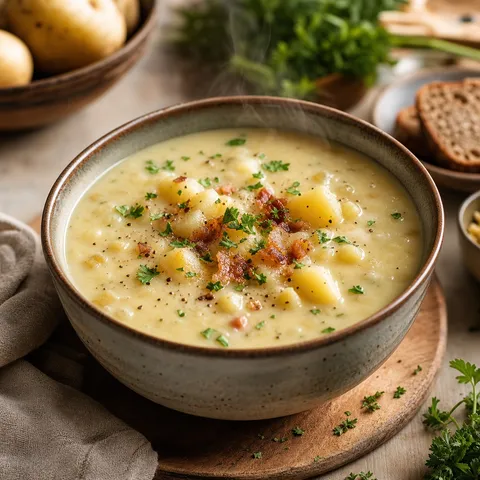
 Kartoffelsuppe (Creamy German Potato Soup)
A creamy, comforting German potato soup with leeks, carrots, and a smoky finish of fried sausage or bacon.
 German Lens Verified Images are for illustrative purposes only, may be inaccurate, and do not guarantee the presence or absence of specific ingredients.
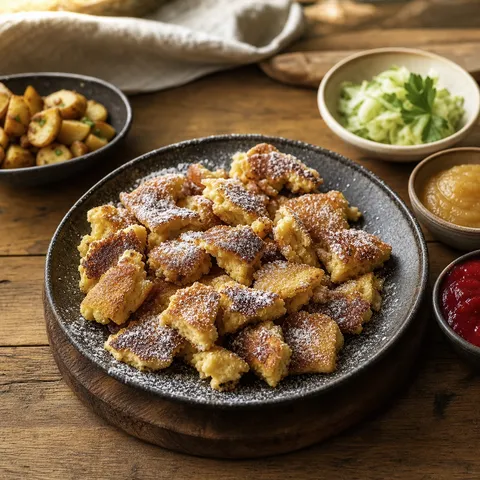
 Kaiserschmarrn (Shredded Sugared Pancake)
A fluffy shredded pancake dusted with powdered sugar and studded with golden raisins, torn into rustic pieces and served with stewed fruit compote.
 German Lens Verified Images are for illustrative purposes only, may be inaccurate, and do not guarantee the presence or absence of specific ingredients.
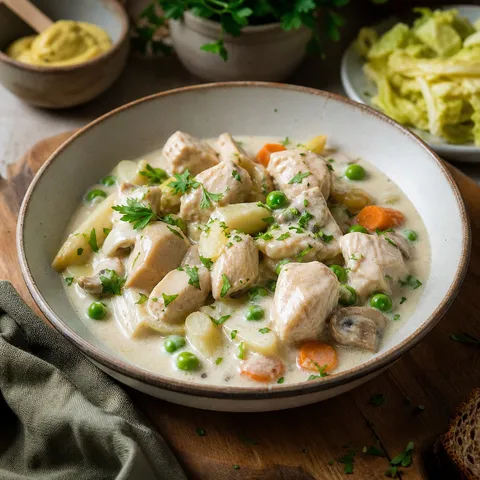
 Hühnerfrikassee (German Chicken Fricassee)
A comforting German chicken fricassee in a silky lemon-cream sauce studded with mushrooms, peas, and capers.