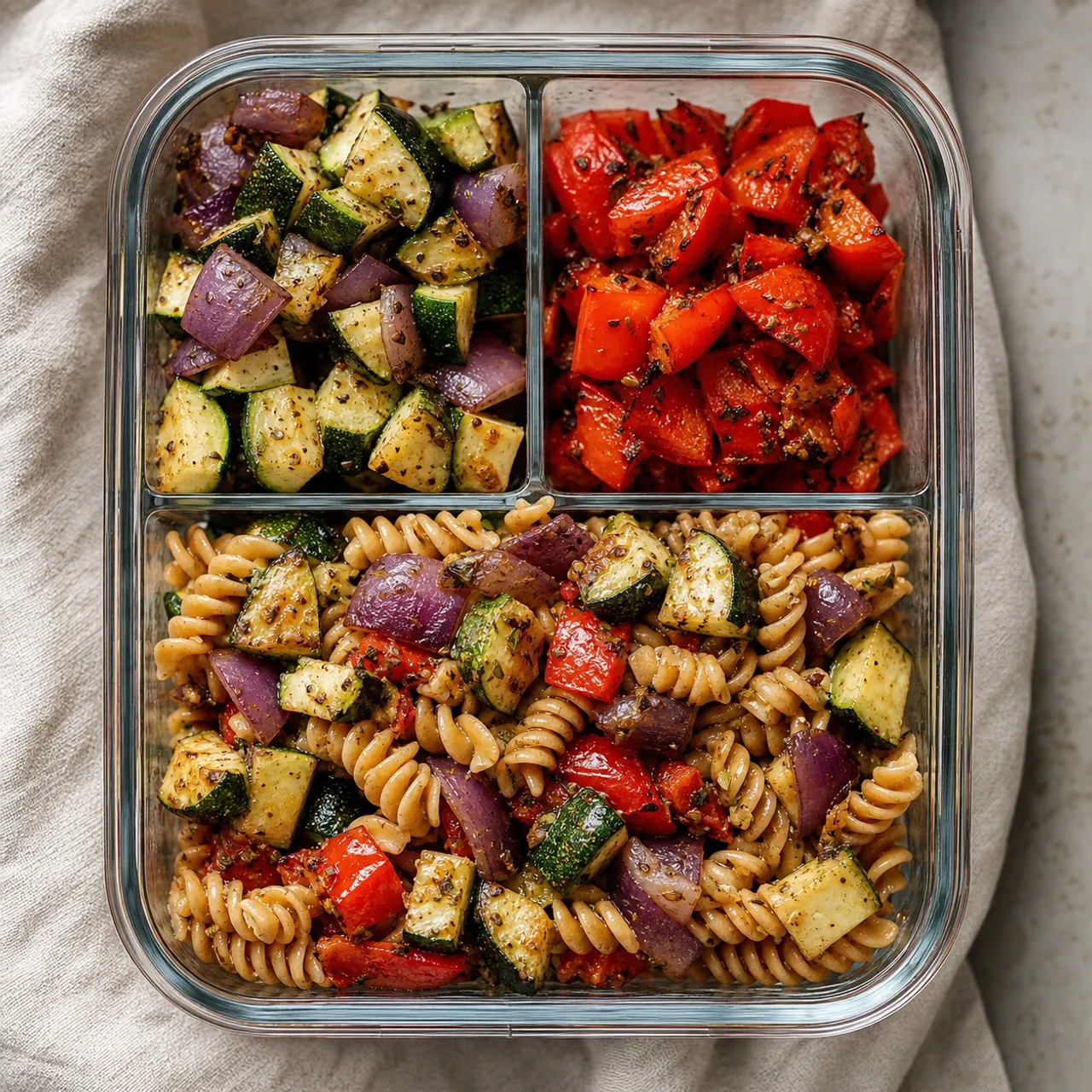
 Meal Prep Images are for illustrative purposes only, may be inaccurate, and do not guarantee the presence or absence of specific ingredients.
 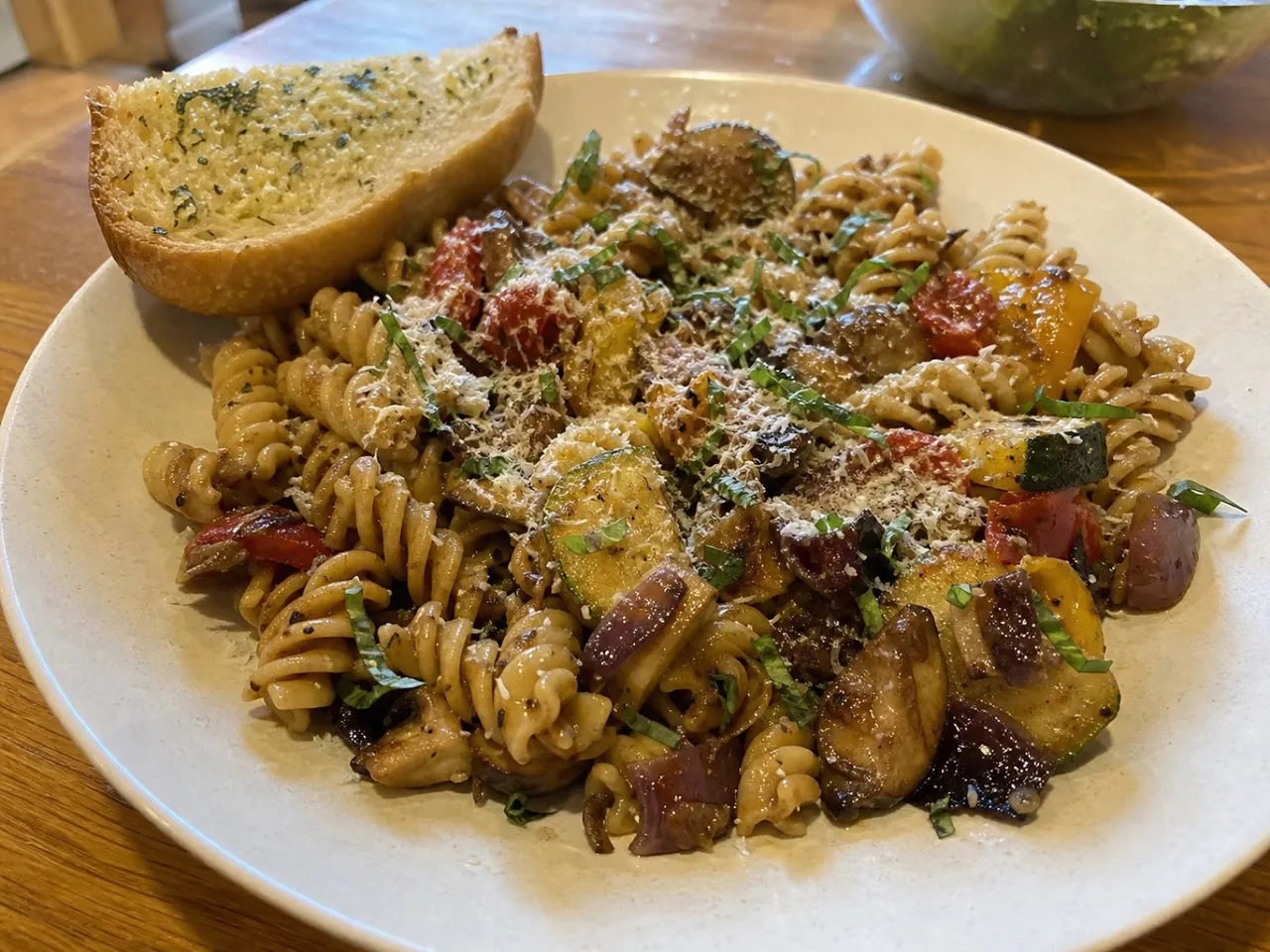 Serving Images are for illustrative purposes only, may be inaccurate, and do not guarantee the presence or absence of specific ingredients.
 Balsamic Roasted Vegetable Pasta
A comforting vegetarian pasta dish bursting with the caramelized sweetness of oven-roasted vegetables.
Contains common allergens
In the app, Listahan checks these against your household automatically.
Instructions
6 steps- 1
Preheat the oven to 425°F (220°C). Line a large baking sheet with parchment paper.
- 2
Spread the diced zucchini, bell peppers, and red onion on the baking sheet.
- 3
Drizzle the vegetables with 2 tbsp of olive oil and the balsamic vinegar. Sprinkle with oregano, garlic powder, salt, and pepper. Toss to coat evenly.
- 4
Roast the vegetables for 20-25 minutes, tossing halfway through, until they are deeply caramelized and tender.
- 5
Meanwhile, boil a pot of salted water and cook the rotini pasta according to package directions. Drain, returning the pasta to the warm pot.
- 6
Toss the cooked pasta with the hot roasted vegetables, adding the remaining 1 tbsp of olive oil. Divide into 4 meal prep containers.
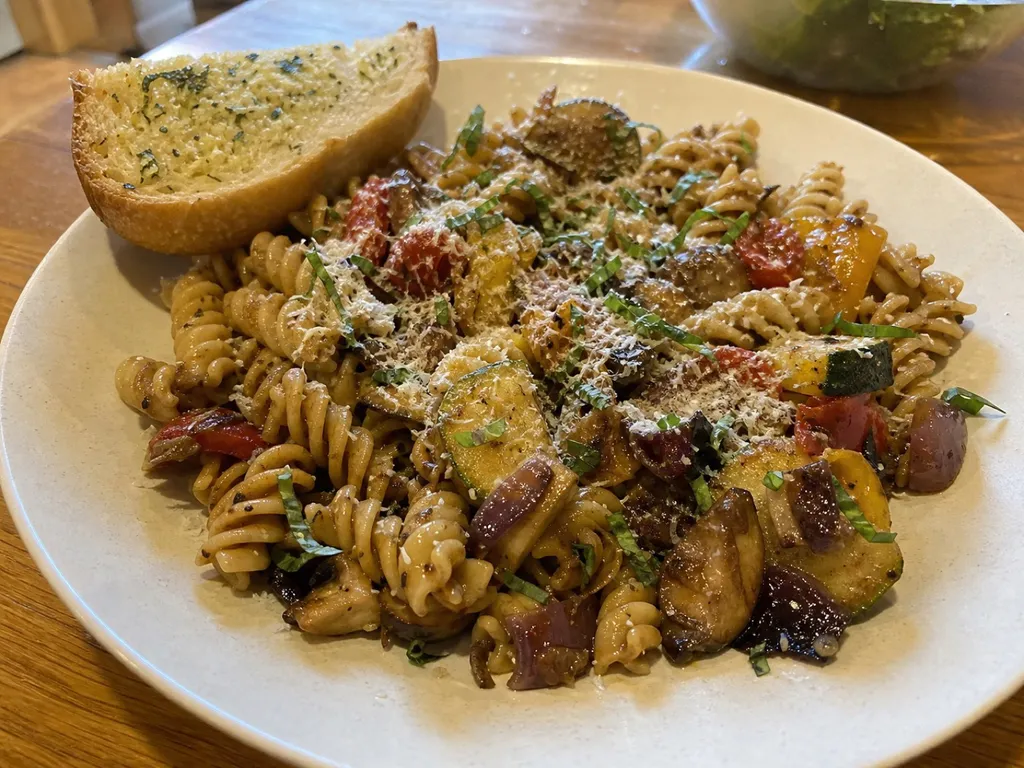 Images are for illustrative purposes only, may be inaccurate, and do not guarantee the presence or absence of specific ingredients.
 Listahan Family Score™
80/100
Good fit for most families
Score reflects how well this recipe fits a typical busy household. In the app, your Family Score is personalized to your household's allergens, kids, and pantry.
Nutrition
per serving660
Calories
18 g
Protein
97 g
Carbs
23 g
Fat
Estimated per serving. Actual values depend on the brands and portions you use.
Listahan cooking guide
Chef notes & practical guide
Technique notes, ingredient swaps, serve-alongside ideas, storage guidance, and equipment for this recipe.
Cultural context
Roasting vegetables with balsamic vinegar became a popular technique in North American home cooking in the 1990s and 2000s as food writers drew attention to how high oven heat transforms the natural sugars of zucchini, bell peppers, and eggplant into deeply caramelized, almost jammy flavors. Tossing those vegetables with pasta and a little pasta cooking water created a vegetarian dinner that felt substantial because the reduced balsamic and vegetable juices formed a sauce without any cream or butter. In the meal prep context, roasted vegetable pasta has the advantage of tasting excellent at room temperature, making it a popular lunch that requires no reheating.
Listahan note
This version roasts the vegetables in a single layer at a very high temperature rather than gently, so the edges char and the balsamic caramelizes rather than just steaming the vegetables in their own liquid.
Technique cues
- Spread the vegetables in a single layer with space between each piece on the baking sheet; any overlapping pieces will steam from each other's moisture rather than roasting and the caramelized edges you are aiming for will not develop.
- Add the balsamic vinegar for the last 5 minutes of roasting time only, not from the beginning, because vinegar burns and turns acidic and bitter if exposed to oven heat for too long.
- Toss the roasted vegetables with the just-drained pasta while both are still warm so the residual heat of the pasta softens the vegetables slightly and the pasta absorbs the balsamic-vegetable juices into its surface.
Kitchen flow
- Parallel prep
- Roast the vegetables first since they take 25 to 30 minutes; start the pasta water about 15 minutes into the roasting so the pasta is ready to drain when the vegetables come out of the oven.
- Make-ahead
- Roast the vegetables up to 3 days ahead and refrigerate; toss with freshly cooked pasta the day you want to assemble to maximize freshness and prevent the pasta from absorbing all the vegetable liquid.
- Leftover move
- Turn the last container into a cold pasta salad by tossing with extra olive oil, capers, and fresh arugula; it eats like a completely different dish at room temperature.
- Cleanup rhythm
- Line both baking sheets with parchment or foil before roasting; the balsamic caramelizes and sticks heavily to an unlined pan and requires significant soaking to clean.
Ingredient brief
Role, handling, and swap guidance for each key ingredient.
mixed vegetables (zucchini, bell peppers, cherry tomatoes, red onion)
hearty vegetable body
Purpose: Each vegetable caramelizes at a different rate, creating a range of textures from jammy tomato to slightly firm zucchini in a single batch.
Handling: Cut all solid vegetables into similar-sized pieces, about 1 inch, so they roast in the same time; cherry tomatoes can go in whole.
Adaptation: Eggplant, portobello mushrooms, and asparagus all roast beautifully with balsamic and can replace or supplement any of the listed vegetables seasonally.
balsamic vinegar
caramelized acidic glaze
Purpose: The natural sugars in balsamic vinegar concentrate under heat into a thick, complex glaze that clings to the vegetables and pasta.
Handling: Use a good-quality aged balsamic for serving drizzle and a standard balsamic for roasting; the expensive bottle is wasted in the oven.
Adaptation: Red wine vinegar with a teaspoon of honey approximates the sweet-tart balance of balsamic; pomegranate molasses gives a similar depth.
short pasta (penne or rigatoni)
textured base
Purpose: Tube and ridged pasta shapes capture the balsamic-vegetable juices inside and along the ridges for a more flavorful bite than smooth pasta.
Handling: Cook in heavily salted water and reserve a cup of pasta water before draining to use as a sauce-loosening agent when assembling.
Adaptation: Whole wheat or legume-based pasta adds protein and fiber; orzo or small shells work well for a different texture profile.
garlic
aromatic foundation
Purpose: Roasted garlic mellows and sweetens dramatically, adding depth without the sharpness of raw garlic.
Handling: Leave the cloves whole and unpeeled to roast alongside the vegetables; they soften in the skin and can be squeezed out and mashed into the sauce.
Adaptation: Roasted garlic paste from a tube saves time with no flavor loss; garlic-infused olive oil used in place of plain oil achieves a similar effect.
fresh basil
herbal brightness and aroma
Purpose: Torn fresh basil added at the end reintroduces the herbal freshness that roasting removes from the vegetables.
Handling: Tear rather than cut the leaves to prevent the cut edges from bruising and turning black.
Adaptation: Fresh parsley provides a cleaner, lighter herbal note; baby arugula wilted into the warm pasta gives a peppery variation.
Technique notes
- A finishing drizzle of a high-quality extra-virgin olive oil over the assembled containers just before closing the lid keeps the pasta from drying out during storage and adds a fruity note that no cooking oil can replicate.
- Add a quarter cup of pasta cooking water to the bowl when tossing everything together; the starchy water emulsifies with the balsamic and olive oil into a glossy, cohesive sauce that coats every piece of pasta.
- If the pasta tastes flat when cold, a squeeze of fresh lemon juice at eating time instantly lifts the whole dish without changing the intended flavor profile.
Ingredient swaps
- Gluten-free direction
- Use certified gluten-free rice-based or chickpea pasta; the roasting technique for the vegetables remains identical and the balsamic sauce works with any pasta shape.
- Vegan option
- Skip any Parmesan garnish and use nutritional yeast for a savory, cheesy note; the rest of the dish is naturally vegan.
- Lower-carb direction
- Reduce the pasta portion and add a greater volume of roasted vegetables; cauliflower florets roast particularly well and provide additional bulk.
Serve alongside
- simple green salad with shaved Parmesan and lemon vinaigrette
- garlic ciabatta toasts
- white bean and herb spread on crostini
- chilled sparkling water with fresh basil
- light Italian red wine such as Barbera for an evening meal
Serving suggestions only — check pairings for your household's allergens.
Storage & reheating
- Refrigerate in airtight containers for up to 4 days; add a drizzle of olive oil before closing the lid each time to prevent surface drying.
- The assembled pasta does not freeze well because the vegetables release water on thawing and make the pasta soggy; freeze only the roasted vegetables on their own for up to 2 months and cook fresh pasta when ready to assemble.
Equipment
- two large rimmed baking sheets
- large pot for pasta
- parchment paper or foil for lining the baking sheets
- large mixing bowl for tossing everything together
Make this household-aware
Listahan Pro checks this recipe against your household's allergens, finds pantry-aware swaps, builds the shopping list, and helps you plan the week around it.
Plan it in Listahan
Add Balsamic Roasted Vegetable Pasta to your week, check it against your household's allergens, and build the shopping list automatically.
More Meal Prep recipes
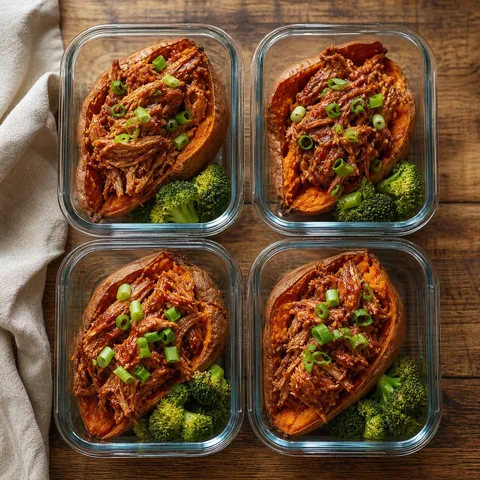 Meal Prep Lens Verified Images are for illustrative purposes only, may be inaccurate, and do not guarantee the presence or absence of specific ingredients.
 BBQ Pulled Pork Stuffed Sweet Potatoes
A hearty, smoky, and sweet combination that balances protein and complex carbohydrates perfectly.
 Meal Prep Lens Verified Images are for illustrative purposes only, may be inaccurate, and do not guarantee the presence or absence of specific ingredients.
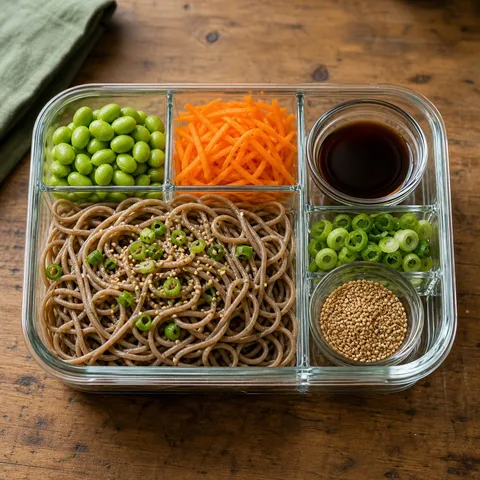
 Soba Noodle Salad
Buckwheat soba noodles tossed in a sesame-ginger dressing with edamame, shredded carrots, and scallions — nutty, refreshing, and endlessly satisfying served cold.
 Meal Prep Lens Verified Images are for illustrative purposes only, may be inaccurate, and do not guarantee the presence or absence of specific ingredients.
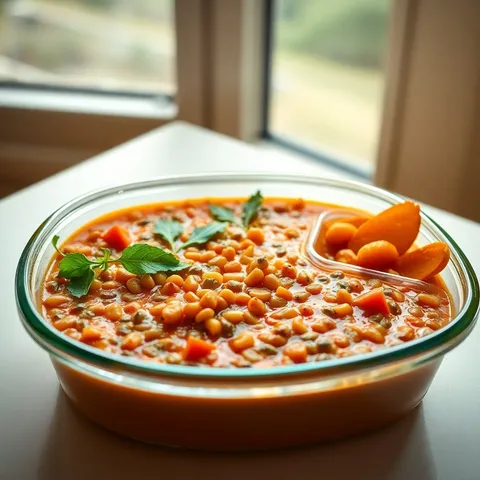
 Rustic French Lentil Soup
A deeply nourishing and earthy soup that is rich in plant-based protein and freezes exceptionally well.