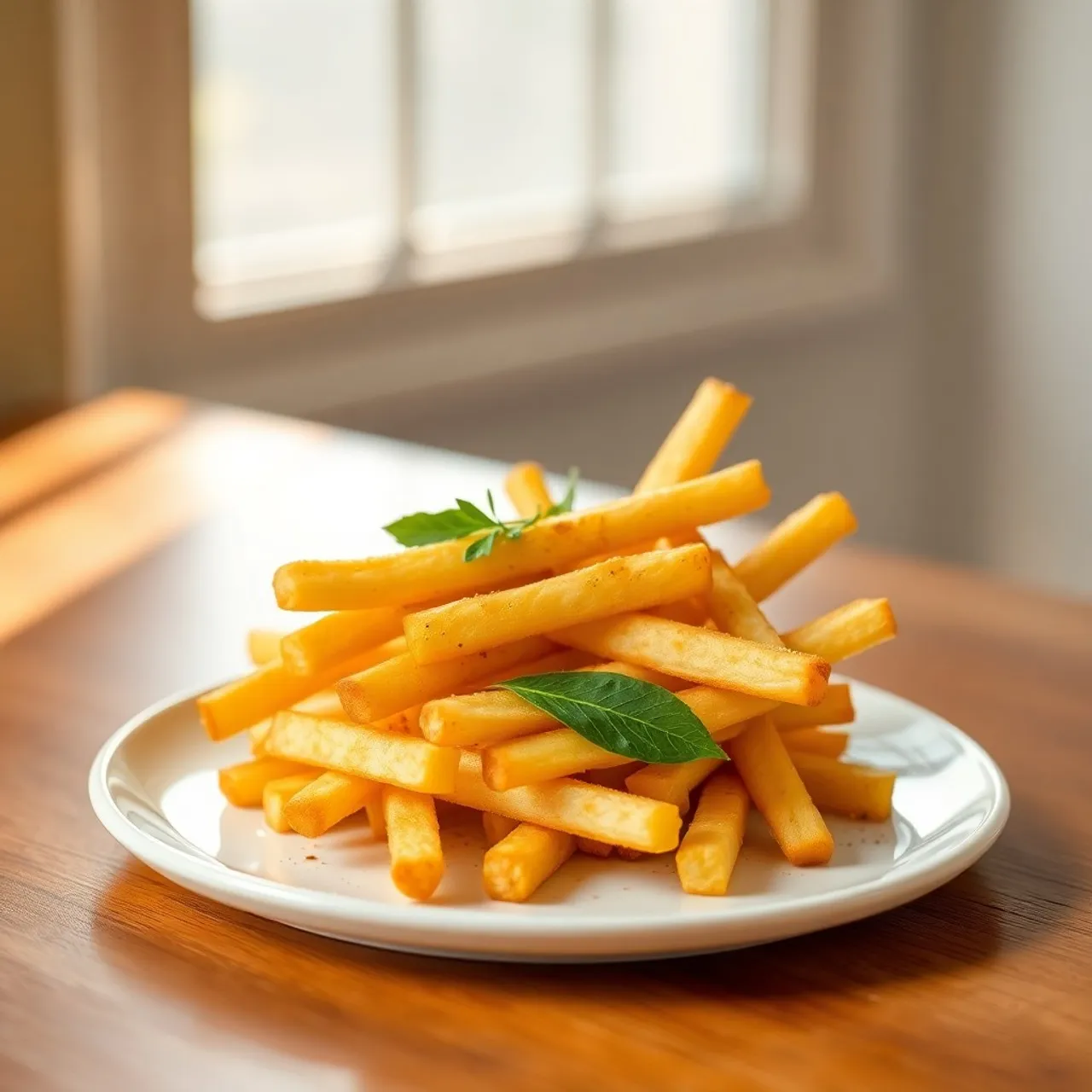
 North American Images are for illustrative purposes only, may be inaccurate, and do not guarantee the presence or absence of specific ingredients.
 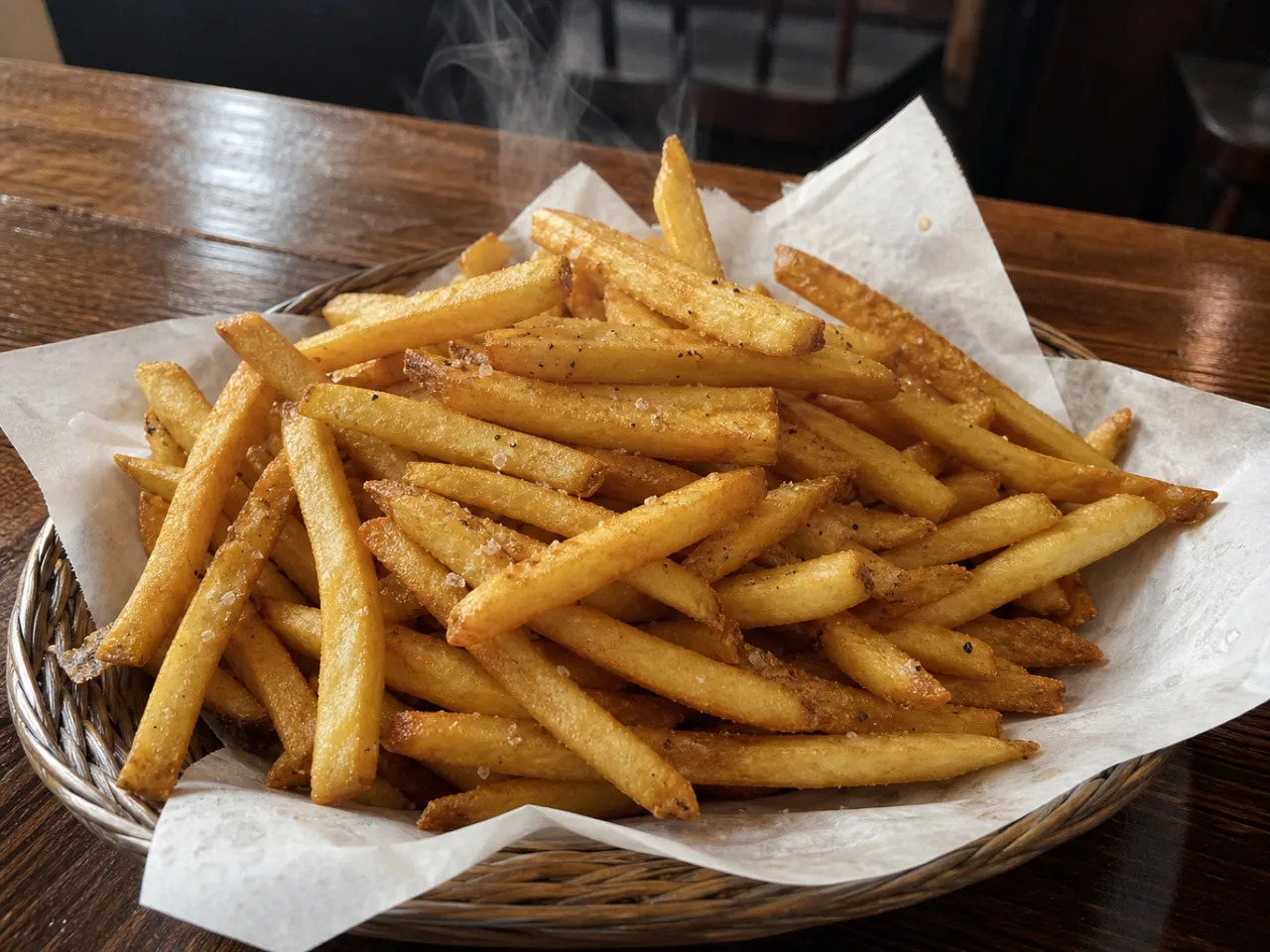 Serving Images are for illustrative purposes only, may be inaccurate, and do not guarantee the presence or absence of specific ingredients.
 French Fries
Crispy golden fries — double-fried for a fluffy inside and a crunchy outside.
Contains common allergens
In the app, Listahan checks these against your household automatically.
Good to know
- One-pot
- Crispy
- Ready in under 30 minutes
Matched from this dish's own ingredients and timing. Browse more: one-pot dinnerscrispy recipes30-minute meals
Instructions
6 steps- 1
Cut: Peel (optional) and cut the potatoes into even 1cm (3/8 in) batons.
- 2
Soak: Soak the cut fries in cold water for 15 minutes to remove excess starch, then drain and pat completely dry.
- 3
First Fry: Heat the oil to 150°C (300°F) and fry the potatoes in batches for 4-5 minutes until soft but not coloured. Remove and drain.
- 4
Rest: Let the par-cooked fries cool for at least 5 minutes.
- 5
Second Fry: Raise the oil to 190°C (375°F) and fry again for 2-3 minutes until deep golden and crisp.
- 6
Season: Drain on paper towels and toss immediately with salt. Serve hot with ketchup.
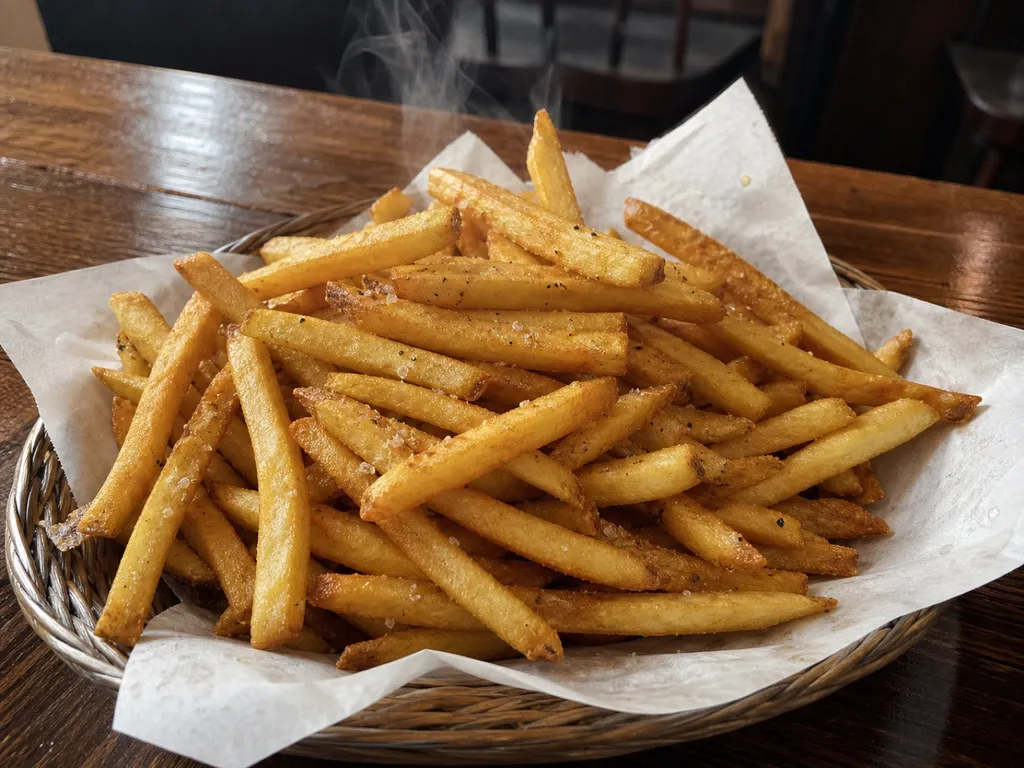 Images are for illustrative purposes only, may be inaccurate, and do not guarantee the presence or absence of specific ingredients.
 Listahan Family Score™
84/100
Good fit for most families
Score reflects how well this recipe fits a typical busy household. In the app, your Family Score is personalized to your household's allergens, kids, and pantry.
Nutrition
per serving135
Calories
3 g
Protein
29 g
Carbs
0 g
Fat
Estimated per serving. Actual values depend on the brands and portions you use.
Listahan cooking guide
Chef notes & practical guide
Technique notes, ingredient swaps, serve-alongside ideas, storage guidance, and equipment for this recipe.
Cultural context
French fries as Americans know them were popularized by Belgian and French vendors, but the roadside drive-in culture of mid-20th-century America turned them into an everyday staple. The double-fry method, long used in Belgian chip shops, became widely understood in home kitchens only after food writers like Julia Child explained why it works. Russet potatoes became the American standard for their low moisture and high starch, which produces the crisp shell and fluffy interior that defines the style.
Listahan note
This version uses the double-fry method at two distinct temperatures, which is the single biggest difference between soggy fries and ones that stay crisp for several minutes after coming out of the oil.
Technique cues
- The cold-water soak pulls surface starch off the cut potato, which otherwise fries into a gummy film that blocks crisping. Pat the fries completely dry before either fry pass or the water will drop the oil temperature sharply.
- The first fry at lower heat cooks the interior through without browning; the second fry at higher heat drives off surface moisture and sets the crust. Skipping the first fry and going straight to high heat browns the outside before the center is done.
- Season immediately after the second fry while the surface is still oily enough to hold salt. Salt added before frying draws out moisture and weakens the crust.
Kitchen flow
- Parallel prep
- Start the soak 15 to 30 minutes before you plan to cook; the fries sit in cold water while you prep anything else.
- Make-ahead
- Complete the first fry, drain, and refrigerate uncovered for up to 24 hours; run the second fry when ready to serve.
- Leftover move
- Reheat leftover fries in a single layer in a 220 C (425 F) oven for 5 to 8 minutes; they will not recover their original crunch but come close.
- Cleanup rhythm
- Let the oil cool completely before straining it for reuse; wipe the pot with paper towels while still slightly warm.
Ingredient brief
Role, handling, and swap guidance for each key ingredient.
Russet potatoes
Main ingredient
Purpose: High starch and low moisture give the cooked fry a dry, fluffy interior that contrasts with the fried crust.
Handling: Cut into even 1 cm batons so each piece finishes at the same time in both fry passes.
Adaptation: Yukon Gold potatoes produce a creamier, slightly denser interior with less crunch; they work but are a different style.
Vegetable or peanut oil
Frying medium
Purpose: A neutral high-smoke-point oil lets the potato flavor come through without adding any competing taste.
Handling: Use enough oil to submerge the fries fully; partial submersion causes uneven browning on the exposed side.
Adaptation: Avocado oil is a good high-smoke alternative; olive oil has too low a smoke point and adds bitterness at frying temperatures.
Salt
Finishing seasoning
Purpose: Applied immediately after frying, salt sticks to the oily surface and seasons the crust evenly.
Handling: Use fine salt rather than coarse for even coverage on small surfaces.
Adaptation: Seasoned salt, smoked salt, or a mix of salt and garlic powder are common additions without changing the method.
Cold water (for soaking)
Starch-removal step
Purpose: Pulling excess surface starch into the water prevents a gummy coating from forming on the potato during the first fry.
Handling: Soak cut fries for at least 15 minutes, then drain and pat completely dry with a clean kitchen towel before any contact with hot oil.
Adaptation: A longer soak up to 2 hours in the refrigerator produces even crisper results; do not skip the drying step regardless of soak time.
Technique notes
- Do not crowd the pot. Frying too many at once drops the oil temperature and the fries stew rather than fry, producing a soft and greasy result. Cook in batches no larger than a single loose layer.
- The fries are done with the second fry when they are deep golden and the bubbling around them slows to a quiet sizzle, which means most surface moisture has left.
- If the fries go limp quickly after serving, the likely cause is incomplete drying before the first fry or oil that was not hot enough for the second pass.
Ingredient swaps
- Air-fryer direction
- Toss dried fries in 1 tsp oil and air-fry at 200 C in batches for 15 to 20 minutes, shaking halfway; less crisp than deep-fried but significantly lower in fat.
- Allergen note
- Peanut oil is common in commercial fryers; use vegetable or canola oil if anyone has a tree-nut or peanut sensitivity.
Serve alongside
- Grilled burger with lettuce and tomato
- Simple coleslaw with apple cider vinegar dressing
- Fried chicken sandwich
- Hot dog with mustard and relish
- Classic vanilla milkshake
- Ice-cold lager or light beer
- Fresh-squeezed lemonade
Serving suggestions only — check pairings for your household's allergens.
Storage & reheating
- Store leftover fries in an open container at room temperature for up to 2 hours; sealed containers trap steam and accelerate sogginess.
- Reheat in a single layer on a sheet pan in a hot oven at 220 C for 5 to 8 minutes, not in a microwave which makes them limp.
- Fully cooked fries do not freeze well at home; the cell walls collapse on thawing and they turn mushy.
Equipment
- Deep heavy pot or Dutch oven with at least 3-litre capacity
- Instant-read or clip-on deep-fry thermometer
- Spider strainer or slotted spoon for lifting fries without draining slowly
- Wire rack set over a sheet pan for draining without steaming the bottom
Make this household-aware
Listahan Pro checks this recipe against your household's allergens, finds pantry-aware swaps, builds the shopping list, and helps you plan the week around it.
Plan it in Listahan
Add French Fries to your week, check it against your household's allergens, and build the shopping list automatically.
More North American recipes
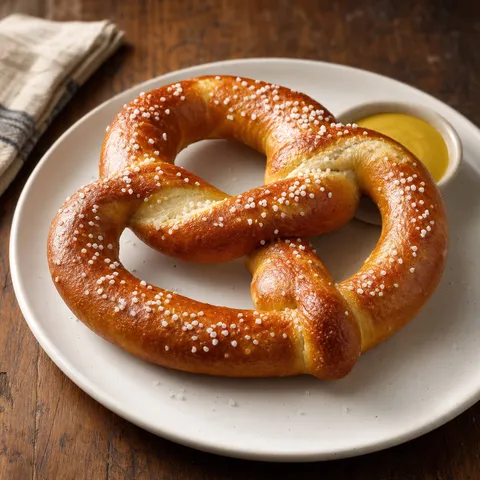 North American Lens Verified Images are for illustrative purposes only, may be inaccurate, and do not guarantee the presence or absence of specific ingredients.
 Soft Pretzels
Chewy golden mall-style pretzels with a salty crust, brushed in butter.
 North American Lens Verified Images are for illustrative purposes only, may be inaccurate, and do not guarantee the presence or absence of specific ingredients.
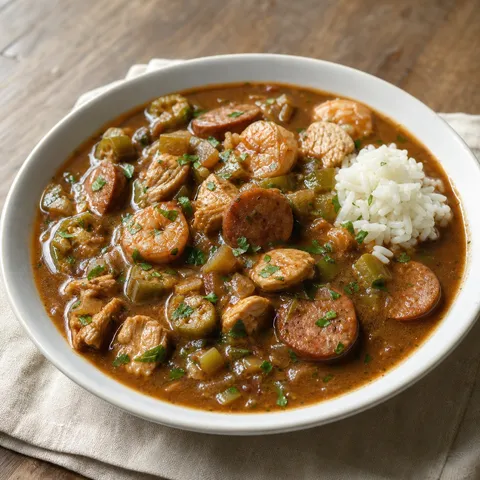
 Gumbo
A Louisiana-style gumbo of chicken thighs and Andouille sausage simmered with okra, the Cajun holy trinity, and a dark roux, served over rice.
 North American Lens Verified Images are for illustrative purposes only, may be inaccurate, and do not guarantee the presence or absence of specific ingredients.
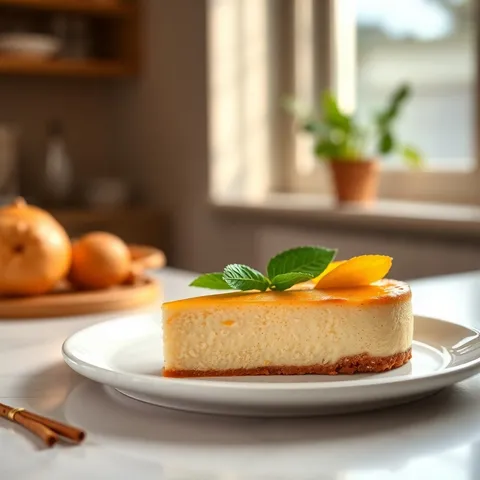
 New York Cheesecake
A dense, ultra-creamy baked cheesecake with a buttery graham cracker crust and a faintly tangy, melt-in-your-mouth filling.