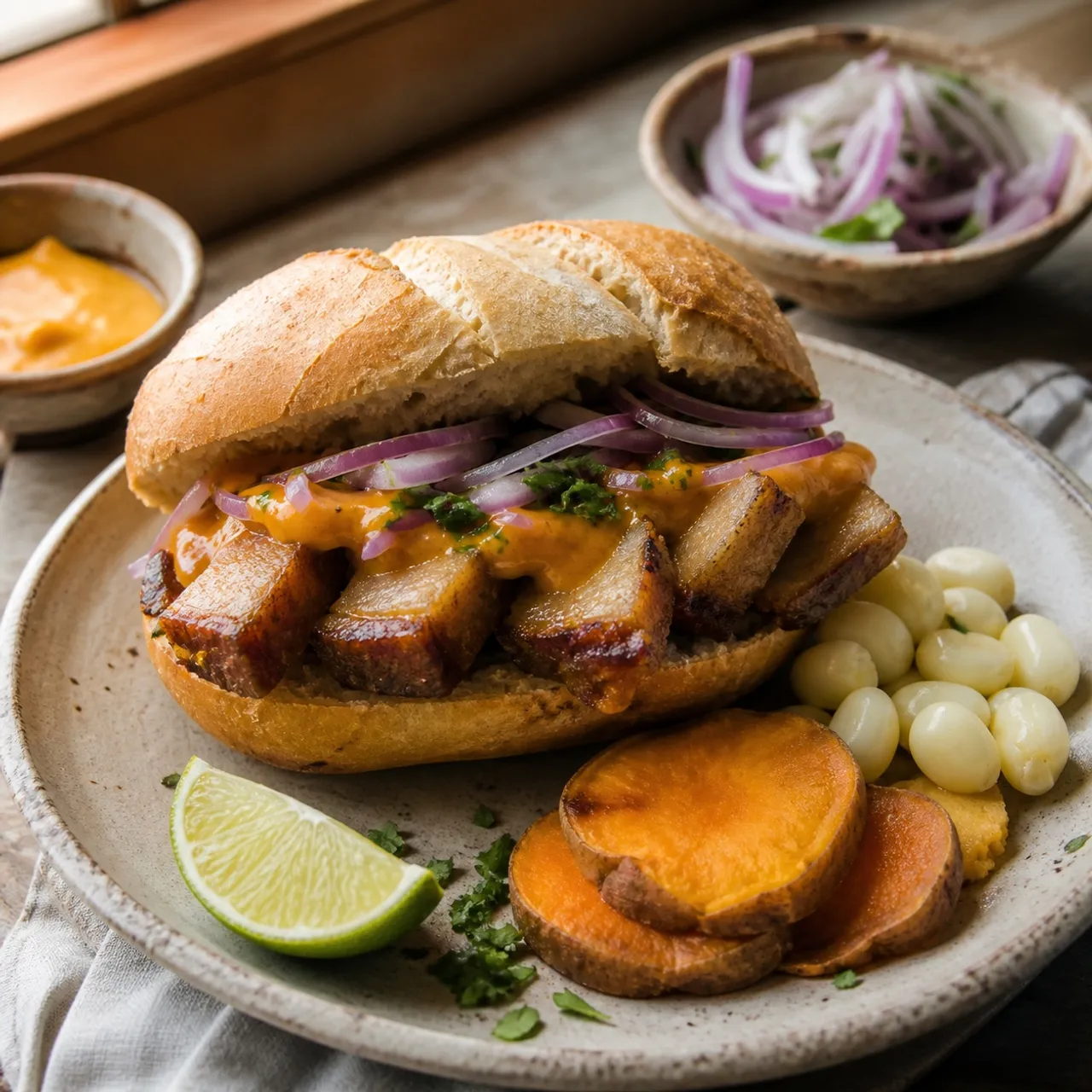
 Peruvian Images are for illustrative purposes only, may be inaccurate, and do not guarantee the presence or absence of specific ingredients.
 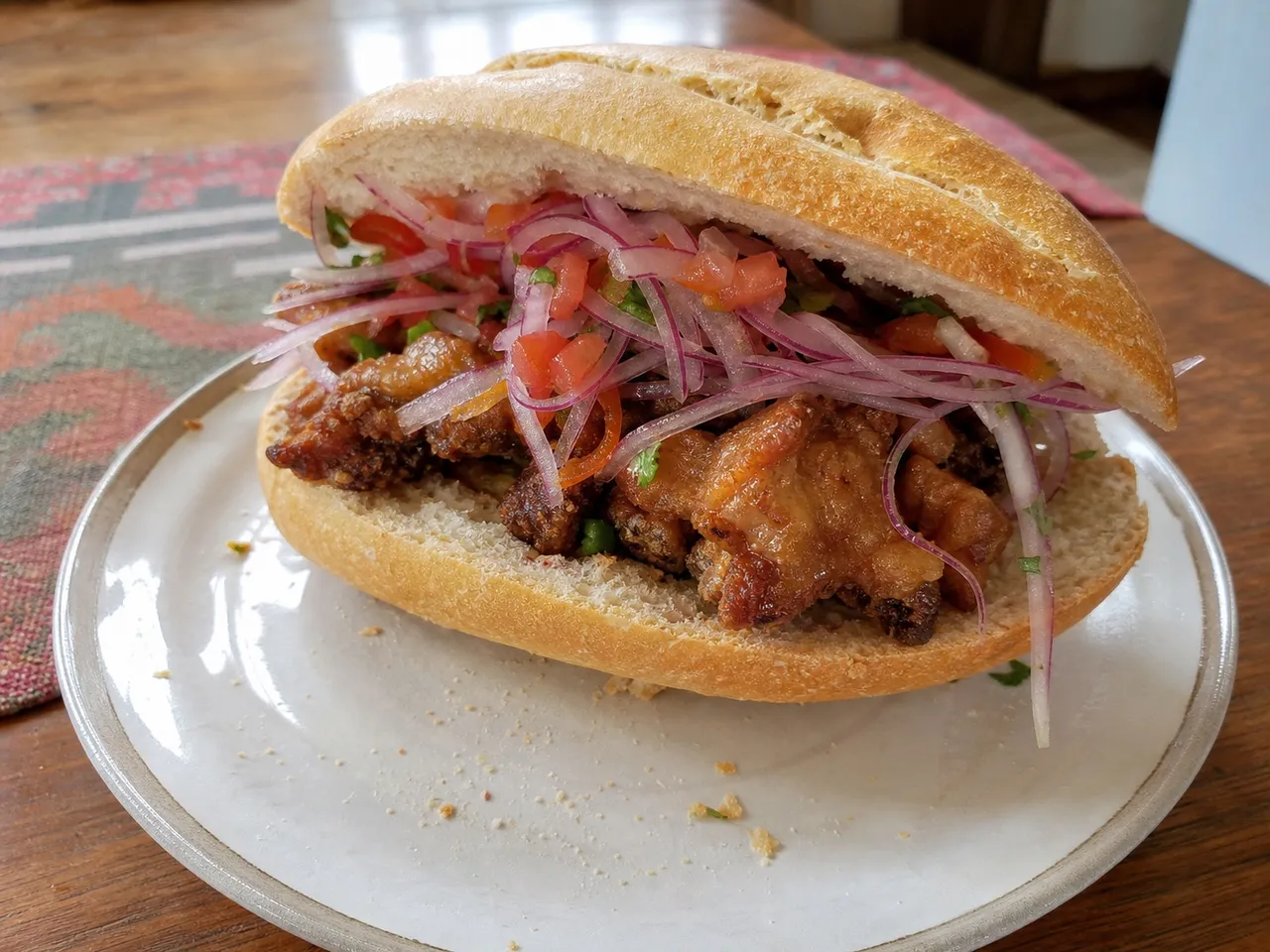 Serving Images are for illustrative purposes only, may be inaccurate, and do not guarantee the presence or absence of specific ingredients.
 Pan con Chicharrón (Peruvian Fried Pork Sandwich)
A hearty breakfast sandwich of crispy fried pork chunks piled onto a crusty roll with salsa criolla and sweet potato, a favorite weekend morning treat.
No common allergens detected
Based on this recipe's ingredient list. Always verify with your own brands and labels.
Good to know
- Crispy
Matched from this dish's own ingredients and timing. Browse more: crispy recipes
Instructions
6 steps- 1
Season the pork chunks with garlic, cumin, salt, and pepper, then place in a pot with the water, orange juice, and bay leaf.
- 2
Simmer, uncovered, for about 1 hour, until the liquid evaporates and the pork begins to fry in its own rendered fat, turning golden and crisp on the outside.
- 3
Meanwhile, make the salsa criolla by combining the sliced onion, tomato, cilantro, lime juice, salt, and pepper.
- 4
Once the pork is deeply browned and crisp, remove from the pot and let rest briefly.
- 5
Split open the crusty rolls and layer in the crispy pork chunks and sliced sweet potato.
- 6
Top generously with the salsa criolla and serve warm.
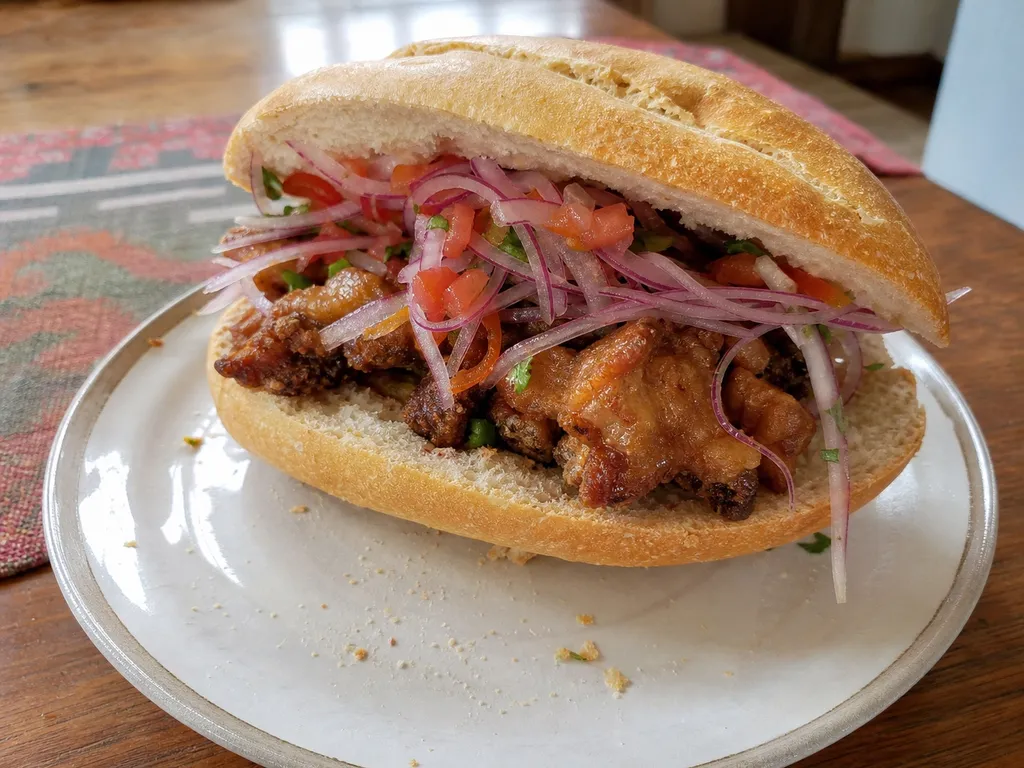 Images are for illustrative purposes only, may be inaccurate, and do not guarantee the presence or absence of specific ingredients.
 Listahan Family Score™
79/100
Good fit for most families
Score reflects how well this recipe fits a typical busy household. In the app, your Family Score is personalized to your household's allergens, kids, and pantry.
Nutrition
per serving495
Calories
48 g
Protein
19 g
Carbs
24 g
Fat
Estimated per serving. Actual values depend on the brands and portions you use.
Listahan cooking guide
Chef notes & practical guide
Technique notes, ingredient swaps, serve-alongside ideas, storage guidance, and equipment for this recipe.
Cultural context
Pan con chicharron is a beloved Peruvian breakfast sandwich, especially popular in Lima on weekend mornings, where crispy fried pork is piled into a crusty roll with salsa criolla and slices of sweet potato, a combination that balances rich, crackly pork against sharp pickled onion and mellow sweetness.
Listahan note
This version uses the classic Peruvian technique of simmering pork in its own liquid until it evaporates and the meat starts frying in its rendered fat, which is what gives the chicharron its deep golden crust without deep-frying.
Technique cues
- The simmer-then-fry technique, cooking the pork in liquid until it evaporates and then letting the fat left behind fry the meat, is the traditional method for chicharron, producing a tender interior with a genuinely crisp, browned exterior without a separate frying step.
- Watching closely as the liquid disappears is critical; the shift from simmering to frying happens quickly once the water's gone, and the pork can go from perfectly golden to burnt within a few minutes if left unattended.
- Making the salsa criolla (thin-sliced onion, tomato, lime, cilantro) while the pork cooks, rather than after, lets the onion mellow slightly in the lime juice by the time it's needed, taking some of its raw sharpness off.
Kitchen flow
- Parallel prep
- Make the salsa criolla and boil the sweet potato while the pork simmers, since the pork stage needs close monitoring near the end anyway.
- Make-ahead
- The pork can be cooked a day ahead and refrigerated, then reheated in a hot dry skillet to re-crisp before assembling sandwiches; the salsa criolla is best made fresh or the morning of.
- Leftover move
- Leftover crispy pork is good chopped into a fried rice or tossed into a simple stir-fry the next day rather than reheated as a sandwich, since the bread turns soggy on a second day.
- Cleanup rhythm
- The pot the pork cooks in will have a layer of rendered fat and browned bits; deglaze it with a little hot water right after cooking so it doesn't harden onto the pan.
Ingredient brief
Role, handling, and swap guidance for each key ingredient.
pork shoulder
main protein
Purpose: Shoulder's good fat marbling is essential for the simmer-then-fry method, since it's the rendered fat that eventually fries the meat crisp.
Handling: Cut into large chunks so each piece has enough surface area to crisp evenly.
Adaptation: Swap pork belly for an even richer, fattier result, adjusting the simmer time down since belly cooks faster.
orange juice
braising liquid and flavor
Purpose: The natural sugars and acidity in orange juice help tenderize the pork while adding a subtle citrus sweetness that balances the richness once fried.
Handling: Combine with the water at the start of cooking rather than adding partway through, so it has the full simmer time to flavor the meat.
Adaptation: Swap pineapple juice for a similar sweet-acidic effect with a more tropical note.
French rolls
sandwich vessel
Purpose: A crusty exterior with a soft interior is what holds up to the juicy pork and salsa without falling apart, matching how the sandwich is traditionally served from Lima carts.
Handling: Split and lightly toast if desired for extra crunch against the tender pork.
Adaptation: Swap a ciabatta roll for a similar crusty-soft contrast if French rolls aren't available.
red onion
salsa criolla base
Purpose: Thin-sliced red onion tossed in lime juice is the classic sharp, bright counterpoint that cuts through the richness of the fried pork.
Handling: Slice very thin and toss with lime juice a few minutes before serving so it softens slightly but keeps its bite.
Adaptation: Swap thinly sliced shallot for a milder version of the same effect.
sweet potato
sweet counterpoint
Purpose: A slice of boiled sweet potato inside the sandwich is a traditional Peruvian touch that adds mellow sweetness against the salty, crisp pork.
Handling: Boil and slice ahead so it's ready to layer in when the pork is done.
Adaptation: Swap roasted butternut squash for a similar sweet, soft contrast.
Technique notes
- Resist stirring too often once the liquid has mostly evaporated; let the pork sit undisturbed in spots so it actually develops a fried crust rather than just steaming in its own fat.
- Salt the pork chunks generously before they go into the pot, since the seasoning needs the full simmer time to penetrate, not just the final fry stage.
- Assemble sandwiches right before eating; pan con chicharron is meant to be eaten hot and crisp, and the crust softens quickly once wrapped or left sitting.
Ingredient swaps
- Dairy-free direction
- This recipe is naturally dairy-free as written, no changes needed for that restriction.
- Gluten-free direction
- Swap the French rolls for a sturdy gluten-free roll or serve the pork, salsa, and sweet potato over rice instead as a bowl.
- Lower-sodium direction
- Reduce added salt during the pork's braising stage and season the salsa criolla lightly instead, letting diners add salt at the table.
Serve alongside
- fried yuca
- a simple green salad
- extra salsa criolla on the side
- chicha morada
- fresh-squeezed orange juice
- Peruvian coffee
Serving suggestions only — check pairings for your household's allergens.
Storage & reheating
- Keeps the cooked pork refrigerated up to 3 days in an airtight container.
- Reheat in a dry skillet over medium heat to restore crispness rather than the microwave, which softens the crust.
- The pork freezes well up to 2 months, thaw before reheating, but assemble sandwiches fresh.
Equipment
- a heavy pot for braising
- tongs for turning the pork
- a sharp knife for slicing onion and sweet potato
- a bread knife for splitting the rolls
Make this household-aware
Listahan Pro checks this recipe against your household's allergens, finds pantry-aware swaps, builds the shopping list, and helps you plan the week around it.
Plan it in Listahan
Add Pan con Chicharrón (Peruvian Fried Pork Sandwich) to your week, check it against your household's allergens, and build the shopping list automatically.
More Peruvian recipes
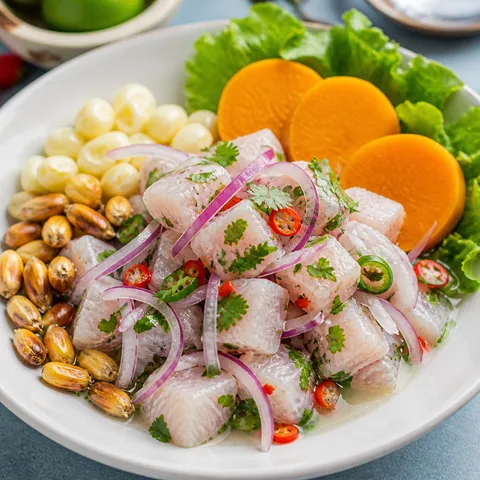 Peruvian Lens Verified Images are for illustrative purposes only, may be inaccurate, and do not guarantee the presence or absence of specific ingredients.
 Ceviche de Pescado
The iconic dish of Peru—exquisitely fresh, raw white fish "cooked" purely by the acidity of freshly squeezed lime juice, infused with chili heat and red onion bite.
 Peruvian Lens Verified Images are for illustrative purposes only, may be inaccurate, and do not guarantee the presence or absence of specific ingredients.
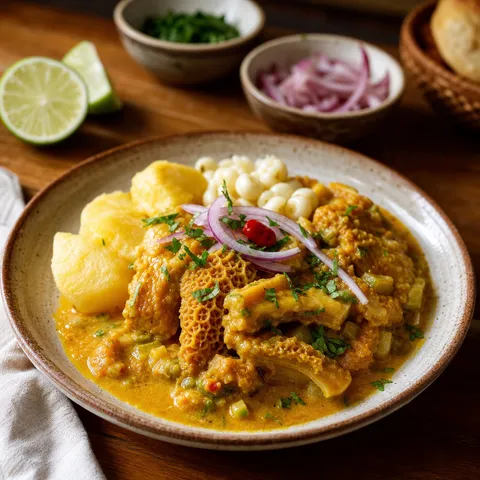
 Cau Cau (Peruvian Tripe Stew)
A hearty yellow stew of tender beef tripe and potatoes simmered in aji amarillo and mint, spooned over rice for a classic home-style meal.
 Peruvian Lens Verified Images are for illustrative purposes only, may be inaccurate, and do not guarantee the presence or absence of specific ingredients.
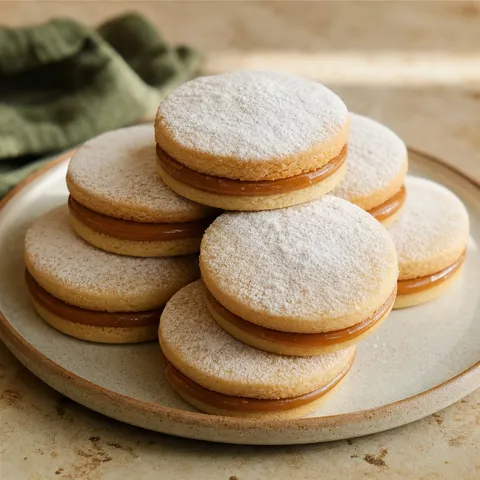
 Alfajores (Peruvian Dulce de Leche Sandwich Cookies)
Delicate, crumbly shortbread cookies sandwiched with rich dulce de leche and dusted with powdered sugar, a favorite Peruvian teatime treat.