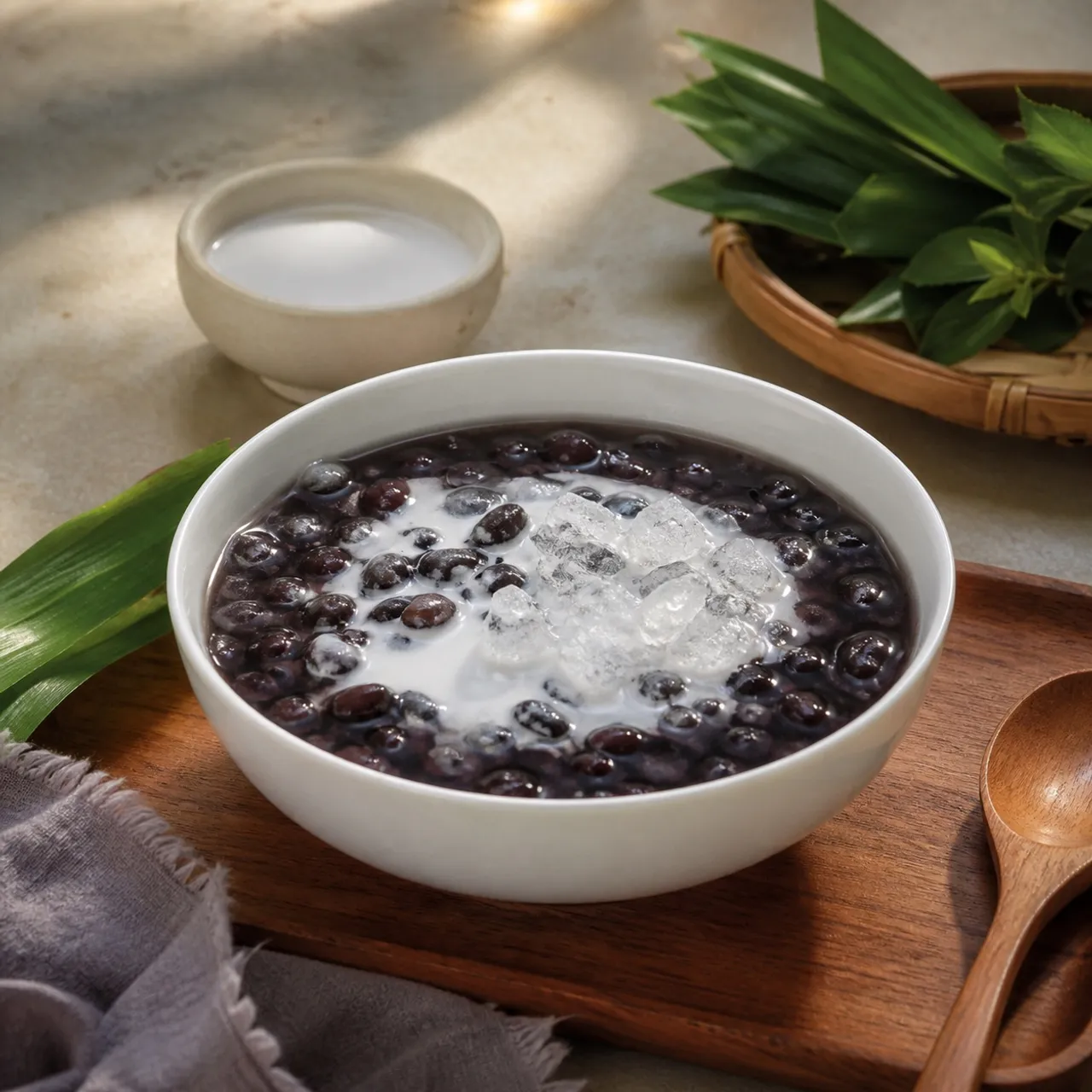
 Vietnamese Images are for illustrative purposes only, may be inaccurate, and do not guarantee the presence or absence of specific ingredients.
 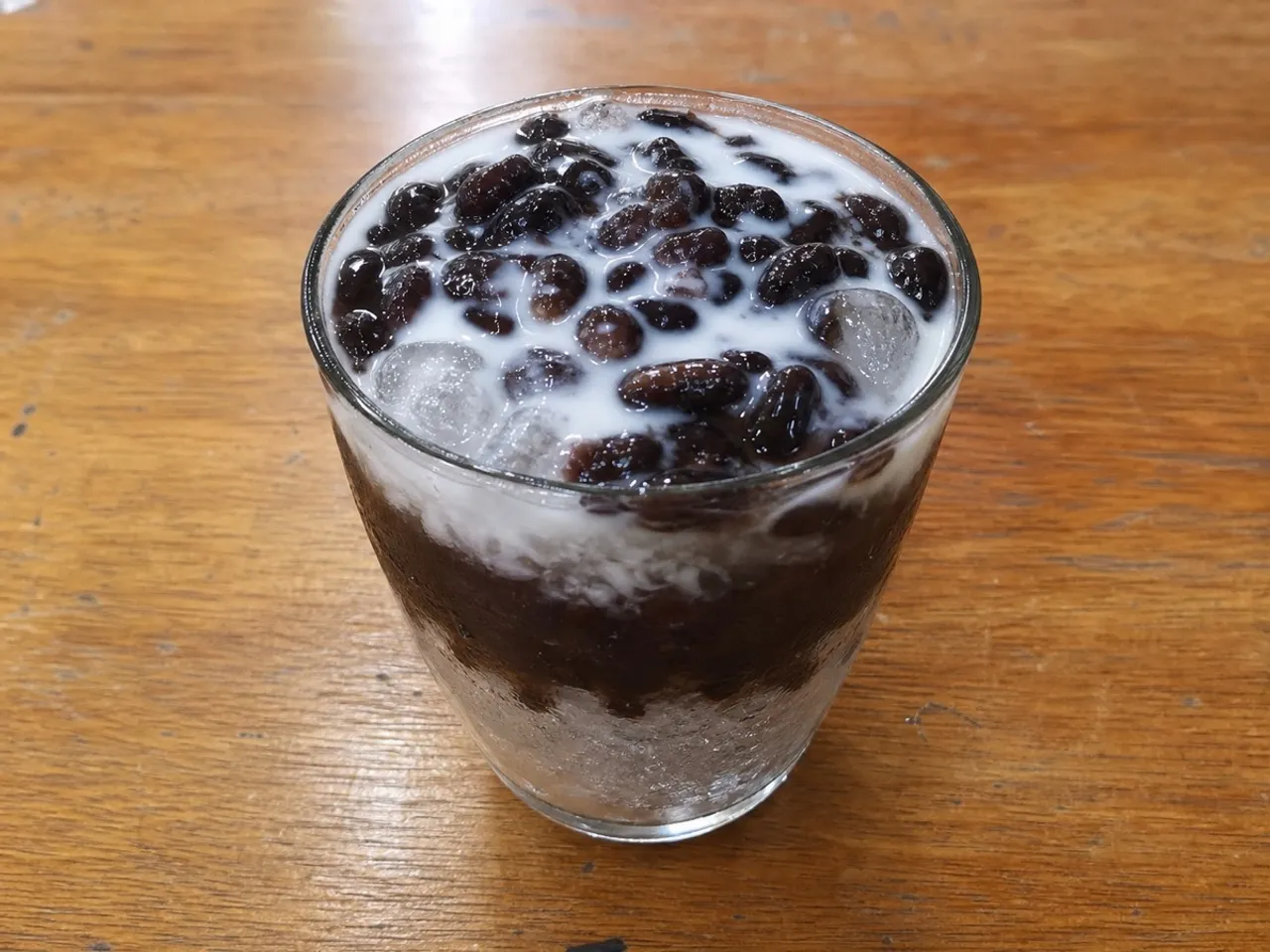 Serving Images are for illustrative purposes only, may be inaccurate, and do not guarantee the presence or absence of specific ingredients.
 Chè Đậu Đen (Black Bean Dessert)
A simple sweet soup made from slow-cooked black beans and sugar.
No common allergens detected
Based on this recipe's ingredient list. Always verify with your own brands and labels.
Good to know
- One-pot
Matched from this dish's own ingredients and timing. Browse more: one-pot dinners
Instructions
6 steps- 1
Soak Beans: Rinse the black beans and soak them in plenty of water for at least 4 hours, or overnight. Drain before cooking.
- 2
Simmer: Place the beans in a pot and cover with 4 cups of water. Bring to a boil, then reduce the heat to the lowest setting. Cover and simmer gently for 1.5 to 2 hours until the beans are very soft and creamy, but still hold their shape. Add more water if it gets too dry.
- 3
Sweeten: Once the beans are completely tender, add the sugar and salt. Stir gently. Simmer for another 15 minutes so the beans absorb the sweetness. (Do not add sugar before the beans are soft, or they will stay hard).
- 4
Flavor: Turn off the heat and stir in the vanilla or banana extract.
- 5
Serve Warm or Cold: For a warm dessert, serve immediately in small bowls, drizzled with a spoonful of thick coconut milk.
- 6
Serve Iced: For a refreshing summer treat, fill a tall glass halfway with the sweetened beans and syrup, top with crushed ice, and drizzle with coconut milk. Mix before eating.
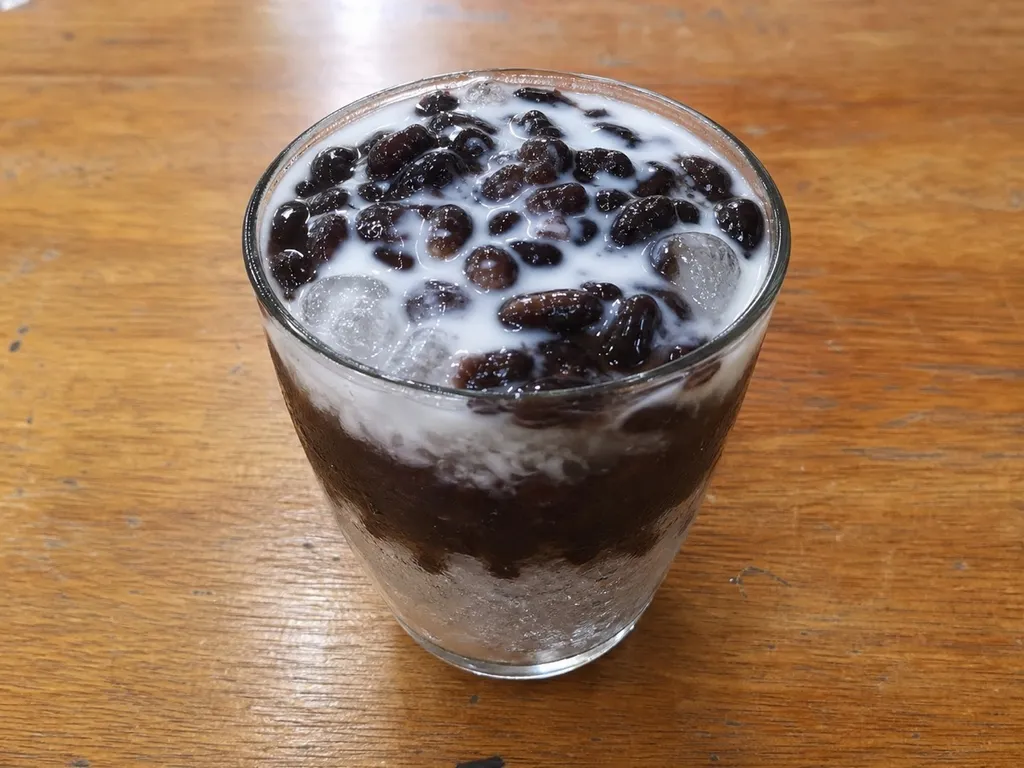 Images are for illustrative purposes only, may be inaccurate, and do not guarantee the presence or absence of specific ingredients.
 Listahan Family Score™
83/100
Good fit for most families
Score reflects how well this recipe fits a typical busy household. In the app, your Family Score is personalized to your household's allergens, kids, and pantry.
Nutrition
per serving135
Calories
2 g
Protein
25 g
Carbs
4 g
Fat
Estimated per serving. Actual values depend on the brands and portions you use.
Listahan cooking guide
Chef notes & practical guide
Technique notes, ingredient swaps, serve-alongside ideas, storage guidance, and equipment for this recipe.
Cultural context
Che dau den is a classic member of Vietnam's broad family of che (sweet soups and puddings), served as a cooling dessert in the hot southern climate or as a warm, comforting sweet in the cooler north. Black beans have long been considered beneficial in both Vietnamese and broader Southeast Asian folk traditions, and the dessert is often served to pregnant women and during recovery. In its most basic street-food form, it arrives in a small bowl over crushed ice with a drizzle of thick coconut cream — no more and no less.
Listahan note
This version keeps the preparation minimal — cooked beans in a sweet, lightly fragrant syrup — because the appeal of che dau den is its simplicity and the interplay of the earthy beans against the coconut cream topping.
Technique cues
- Black beans must be soaked at least 4 hours (overnight preferred) before cooking — unsoaked beans take twice as long and cook unevenly, with some split while others remain firm in the same pot.
- Add sugar only after the beans are fully tender; sugar added early prevents the bean skin from softening properly and can leave the beans firm even after prolonged cooking.
- The coconut milk topping should be served at room temperature or slightly warm over cold che — the temperature contrast between the cold dessert and the room-temperature cream is part of the sensory design of the dish.
Kitchen flow
- Parallel prep
- Soak the beans the night before (no active work required); the next day, simmer beans while you prepare and chill the coconut cream topping so both are ready at the same time.
- Make-ahead
- The entire dessert can be made 1-3 days ahead and refrigerated; the syrup thickens slightly when cold but loosens again when served over ice or when reheated.
- Leftover move
- Leftover che dau den can be blended smooth with a cup of coconut milk and frozen in popsicle molds for a black bean coconut ice pop that is excellent and naturally dairy-free.
- Cleanup rhythm
- The bean-cooking pot has the most residue; soak immediately in hot water after the beans are done since the starchy liquid clings to the pot bottom.
Ingredient brief
Role, handling, and swap guidance for each key ingredient.
1 cup dried black beans
main body and flavor
Purpose: Black beans provide the earthy, subtly sweet base flavor and the visual contrast — their deep color against the white coconut cream is part of the dish's appeal.
Handling: Soak overnight in cold water, drain and rinse, then simmer in fresh water for 45-60 minutes until completely tender; test a bean by pressing it between two fingers — it should crush with minimal resistance.
Adaptation: Canned black beans (drained and rinsed) can be used as a shortcut; reduce the simmering time to 15 minutes to warm through and allow the syrup to develop.
3/4 cup sugar (adjust to taste)
sweetness and syrup body
Purpose: Sugar dissolved into the cooking liquid creates the thin syrup that carries the beans and provides the dessert's characteristic sweet mouthfeel.
Handling: Add after the beans are fully tender; stir until dissolved over low heat.
Adaptation: Palm sugar gives a deeper, caramel-like sweetness that is more complex than white sugar and is traditional in some regional versions.
1 tsp vanilla extract or banana extract
aromatic accent
Purpose: A small amount of extract lifts the earthy black bean flavor and adds a subtle floral or fruity note that makes the dessert smell inviting and rounds the palate.
Handling: Add off the heat after the sugar is dissolved to prevent the volatile aromatics from cooking off.
Adaptation: A half teaspoon of pandan extract is a more traditional Vietnamese aromatic that gives the dessert a distinct green, grassy-sweet fragrance.
1/2 cup thick coconut milk (optional topping)
rich finishing cream
Purpose: The coconut milk topping is the textural and flavor counterpoint to the plain bean syrup — its fat richness against the thin sweet soup is the dish's defining moment.
Handling: Open the can without shaking and spoon the thick cream off the top; warm gently with a pinch of salt and a pinch of sugar before drizzling.
Adaptation: Canned coconut cream (higher fat content than regular coconut milk) requires no separation step and is ready to use directly.
Crushed ice
serving temperature and dilution
Purpose: Crushed ice is half the dish in the warm-weather street-food context — it chills the beans rapidly and dilutes the syrup slightly as it melts, creating a more refreshing, less cloying texture.
Handling: Crush in a blender or use a Lewis bag and mallet; have it ready in the freezer until the moment of serving.
Adaptation: Small ice cubes work; in the winter the dessert is equally authentic served warm in a small cup without any ice.
Technique notes
- A pinch of salt added with the sugar dramatically amplifies the sweetness and the earthiness of the beans — without it the dessert tastes flat even when properly sweetened.
- Do not use the bean-soaking water for cooking; the compounds that leach into the soaking water contribute to digestive discomfort and a slightly bitter edge, so always drain and start fresh.
- For a party-style presentation, serve in small clear glasses so the dark beans are visible beneath the white coconut cream — the layered visual is part of the traditional street-food presentation.
Ingredient swaps
- Vegan confirmation
- This dessert is naturally vegan as written; confirm the sugar used is processed without bone char if that is a concern.
- Lower-sugar option
- Reduce sugar to 1/2 cup and let the natural sweetness of well-cooked black beans carry more of the flavor; the syrup will be thinner but the dessert remains satisfying.
- Pandan direction
- Replace vanilla or banana extract with pandan extract or a few tied pandan leaves simmered with the beans for a more traditional Southeast Asian aromatic character.
Serve alongside
- other Vietnamese che varieties served alongside for a mixed dessert spread
- sticky rice with coconut milk (xoi dua) as a contrasting savory-sweet pairing
- fresh sliced mango for brightness and color contrast
- hot jasmine tea — the astringency balances the sweetness
- iced coconut water for a cooling, coconut-forward pairing
- plain warm water, which is the traditional accompaniment for Vietnamese sweet desserts
Serving suggestions only — check pairings for your household's allergens.
Storage & reheating
- Refrigerate in an airtight container for up to 5 days; the dessert tastes equally good cold over ice or reheated as a warm sweet soup.
- Reheat on the stovetop over low heat, stirring occasionally, adding a splash of water if the syrup has thickened too much.
- Freeze in portion containers for up to 2 months; thaw overnight in the refrigerator and serve cold over ice — the texture of the beans holds well after freezing.
Equipment
- medium heavy-bottomed saucepan
- colander for draining and rinsing soaked beans
- ladle for serving
- small bowl for warming and seasoning the coconut cream topping
Make this household-aware
Listahan Pro checks this recipe against your household's allergens, finds pantry-aware swaps, builds the shopping list, and helps you plan the week around it.
Plan it in Listahan
Add Chè Đậu Đen (Black Bean Dessert) to your week, check it against your household's allergens, and build the shopping list automatically.
More Vietnamese recipes
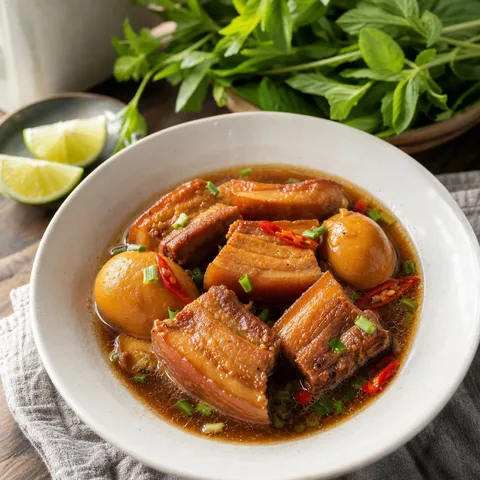 Vietnamese Lens Verified Images are for illustrative purposes only, may be inaccurate, and do not guarantee the presence or absence of specific ingredients.
 Thịt Kho Tàu (Caramelized Pork and Eggs)
Meltingly tender pork belly and hard-boiled eggs braised in a rich, sweet, and savory coconut juice caramel, perfect over steamed rice.
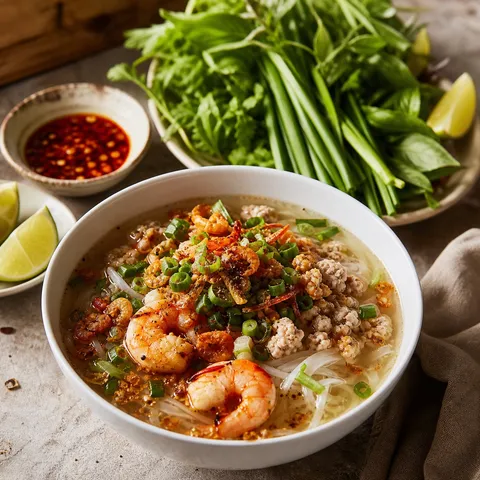 Vietnamese Lens Verified Images are for illustrative purposes only, may be inaccurate, and do not guarantee the presence or absence of specific ingredients.
 Hủ Tiếu (Pork and Seafood Noodle Soup)
A Vietnamese pork-bone broth noodle soup loaded with ground pork, shrimp, and dried shrimp over chewy tapioca noodles, finished with garlic chives and fried garlic.
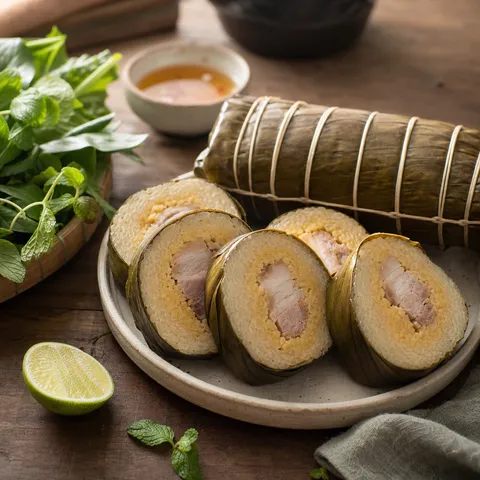 Vietnamese Lens Verified Images are for illustrative purposes only, may be inaccurate, and do not guarantee the presence or absence of specific ingredients.
 Bánh Tét (Cylindrical Sticky Rice Cake)
The Southern equivalent of Bánh Chưng, rolled into a cylinder.